14 July 2025|7 Minutes Read
By : Ganga Realty

What Makes Sector 84 a Rising Hotspot for New Luxury Homebuyers in Gurgaon?

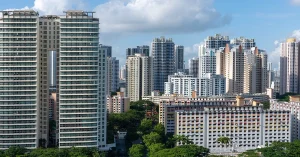
The real estate sector in Gurgaon is still developing and other sectors become the desirable ones where luxury homeowners are preferred to live. Sector 84 is one of them which has fast emerged as a new hotspot with the combination of both strategic location advantages along with the development of world class infrastructure. This emerging sector offers discerning buyers an opportunity to invest in luxury apartments in Gurgaon while enjoying the benefits of a well-planned, modern residential environment that promises exceptional returns and lifestyle enhancement.

The fact that the sector has transitioned over the decades to become an upscale place signifies the developmental trend of Gurgaon. Most of the major infrastructure projects are on the verge of completion and the luxury developers have already staged themselves at Sector 84 therefore this quaint area has everything a modern day aspiring house owner could dream of.

What Infrastructure Developments Are Driving Sector 84’s Growth?

The Dwarka Expressway Advantage

The most significant factor propelling Sector 84’s rise as a luxury hotspot is the Dwarka Expressway development. This 8-lane expressway serves as the backbone of connectivity, linking residents to Delhi’s key areas including Dwarka, Janakpuri, and the international airport within 20-25 minutes. For luxury homebuyers seeking ultra luxury apartments in Gurgaon, this connectivity ensures that their investment provides both convenience and accessibility.

The completion of the expressway has led to immense development of businesses and places of residence along the route and Sector 84 lies as one of the main beneficiaries of the same. This infra infusion has brought high-level developers that appreciate the potential of the sector to develop a luxurious living facility.

Metro Connectivity and Transportation Network

Another critical infrastructural development that makes the sector more attractive is the metro extension that is supposed to open up towards Sector 84. The current proposal of the metro stations will interlink the residents with the already established Delhi Metro leading to smooth underlying connectivity in terms of transportation. This multi-modal connectivity makes luxury houses in Gurgaon investments in Sector 84 particularly attractive to professionals working across Delhi-NCR.

The industry also enjoys good internal road networks, good street lights as well as traffic management systems that make commuting to and fro the city easy for people living in any of the premium residential complexes.

Why Are Luxury Homebuyers Choosing Sector 84 Over Established Areas?

Emerging Market with Premium Positioning

Sector 84 is unlike the matured luxury market in the traditional sectors as they will be able to have new luxury homebuyers who would have the benefit of accessing an emerging market with a huge growth potential. The sector’s development trajectory indicates substantial capital appreciation opportunities, making it an intelligent choice for those seeking luxury apartments in Gurgaon with strong investment returns.

The availability of high class developers who have introduced high grade projects has made the situation highly competitive leading to an increased utility on the part of the buyers that includes the provision of good amenities, competitive rates and also in terms of new and novel designing functionality. This market dynamics is vital in the provision of maximum pay off on investment by luxury home buyers.

World-Class Social Infrastructure

The attractiveness of Sector 84 does not limit residential development but includes the entire social development. The sector gives convenient accessibility to high status schools, such as international schools and colleges which are more inclined in the families with children. Multispeciality hospitals and specialized clinics with international standards of healthcare provision assure quality medical care to residents.

The hotel and food retail structure runs to the vicinity of big shopping malls, restaurants of good taste, and recreational centers improving the lifestyle of luxury living. This comprehensive social infrastructure makes ultra luxury apartments in Gurgaon in Sector 84 particularly appealing to families and professionals seeking a complete lifestyle ecosystem.

What Lifestyle Advantages Does Sector 84 Offer to Luxury Homebuyers?

Green Living and Environmental Sustainability

In the modern day luxury homebuyers have become more concerned about green living features and the sustainability of the environment. Sector 84 meets these preferences by having well-designed green areas, parks, and landscaped-covered areas which ensure that the people have a healthy environment where they can live. The master plan of the sector accords to the practices of sustainable development- the harvesting of rainwater and the management of waste resources.

The availability of open spaces and recreational areas within the sector ensures that residents of luxury houses in Gurgaon projects can enjoy outdoor activities and maintain an active lifestyle without traveling long distances.

Security and Community Living

The intended development strategy in Sector 84 uses security and community living-related features to attract buyers who want luxury homes. The sector is characterised by the gated communities with highly secure systems, CCTV cameras and security staff. This is an uber security system that gives assurance to families purchasing high-income residential real estates.

Discover Nandaka: Sector 84’s Premier Luxury Residential Project

Redefining Luxury Living Standards

Nandaka by Ganga Realty is the epitome of luxury living at Sector 84 that was solely created with the purpose to accommodate luxury home purchasers who value quality, comfort, and good taste. This premium residential project combines contemporary architecture with world-class amenities to create homes that exceed expectations while setting new standards for luxury apartments in Gurgaon.

The project consists of well-designed residential apartments with high-space usage with premium finishing, modern plumbing and electrical and automation features. The apartments will be made to give residents a luxury lifestyle that shows their prosperity and dreams.

Exceptional Amenities and Lifestyle Features

Nandaka presents a splendid mixture of facilities that addresses a multi faceted demand of luxury home owners. A modern and ultra-modern club house with swimming pool, state-of-art-gymnasium rooms as well as multipurpose halls which will be used to host social gatherings and events are some of the features on this project. The grounds of the landscaped gardens and recreational sense are well maintained outdoor spaces that enable its residents to relax and rejuvenate.

For those seeking ultra luxury apartments in Gurgaon, Nandaka provides additional premium features including a spa and wellness center, business center with conference facilities, and 24/7 concierge services. The project also focuses on cooperating with the environmental aspect using environmentally-friendly facilities which include solar panels, a rainwater logic apparatus, and proper waste disposal.

Investment Value and Developer Credibility

Ganga Realty’s established reputation for delivering quality projects on schedule makes Nandaka a trustworthy investment choice for luxury homebuyers. The developer’s commitment to transparency, quality construction, and customer satisfaction ensures that investors receive maximum value for their investment in luxury houses in Gurgaon properties.

The project’s strategic location in Sector 84, combined with Ganga Realty’s proven track record, provides strong potential for capital appreciation while delivering an exceptional living experience. The flexible payment plans and attractive pricing structure make these premium residences accessible to a broader range of luxury homebuyers.

Conclusion: Your Gateway to Luxury Living in Gurgaon’s Rising Hotspot

The Gurgaon sector 84 has become the best future luxury property development of the Gurgaon city that promises new home buyers the best mix of ideal and strategic location, well-developed infrastructure, and profitability. The conversion of the sector to luxury hub captures the sense of the shift that occurred throughout Gurgaon in terms of real estate, as the new standard of luxury living is characterized by pre-planned development and high-end facilities.

Nandaka by Ganga Realty does not miss this opportunity as it offers world-class amenities and quality constructions which caters to high-end clientele. The individuals who are willing to invest in luxury apartments in Gurgaon can avail the advantage of being a part of the amazing growth story of Sector 84, and the best living experience as well.

FAQs

Sector 84 hosts a range of luxury residential developments including high-rise apartments, gated communities, and integrated townships by reputed builders offering modern amenities and premium lifestyle features.

Yes, Sector 84 enjoys excellent connectivity to Delhi, IGI Airport, Manesar, and central Gurgaon via NH-48, Dwarka Expressway, and proposed metro lines, ensuring smooth commute and accessibility.

Yes, several developers have launched ready-to-move-in luxury apartments with high-end specifications, ideal for immediate possession or rental returns.

Yes, with secure gated communities, landscaped parks, clubhouses, and kids’ play areas, Sector 84 offers a family-friendly environment with modern living standards.


Enquire Now

Recent Posts

How Tall Buildings Are Constructed: Engineering, Design & Execution
04 May 2026|16 Minutes Read

How Tall Buildings Are Constructed: Engineering, Design & Execution

From bedrock to skyline — the extraordinary engineering, phased planning, and invisible science behind the world's most ambitious vertical structures. "A skyscraper is not built from the sky down. It is a story told from the earth up — one floor, one beam, one carefully engineered decision at a time." Stand at the base of a skyscraper and look straight up. The sheer scale of it is disorienting — hundreds of metres of steel, glass, and concrete climbing toward the clouds. Yet that structure did not appear overnight. It was the product of years of calculation, excavation, material science, and human ingenuity working in precise sequence. [ez-toc] How Skyscrapers Are Built: Complete Construction Process Explained So how exactly does a tall building get built? The answer involves far more than cranes and concrete. It's a multi-year, multi-discipline endeavour that begins deep underground and only reveals itself to the world long after the hardest work is already done. 01 Site & Survey Geotechnical analysis and site preparation 02 Foundation Deep piles and concrete mat construction 03 Core & Frame Structural skeleton rises floor by floor 04 Envelope Facade, glazing, and weatherproofing 05 MEP & Interior Systems, fit-out, and finishing 06 Commissioning Testing, certification, and handover Phase 1 — Site Investigation and Planning Before a single shovel of earth is moved, engineers spend months — sometimes years — studying the ground beneath a proposed site. Geotechnical surveys drill deep bore holes to understand soil composition, groundwater levels, bearing capacity, and seismic risk. This data is not optional. It dictates everything: how deep the foundations must go, what type of foundation system to use, and whether the site is viable at all. Simultaneously, architects and structural engineers develop the building's design in tandem. This is not a linear handoff — it's an iterative conversation. The structural system must be resolved early because it affects the layout of every floor above. In dense urban settings, planners also model the impact on neighbouring structures, traffic, wind patterns, and sunlight access before permits are granted. Phase 2 — Excavation and Foundations The foundation is the most consequential and least visible part of any tall building. For a 50-storey tower, excavation can descend 20 to 30 metres below ground level to create space for basement floors, car parks, and — critically — the foundation mat itself. KEY CONCEPT Pile Foundations vs. Mat Foundations In weak or variable soil, engineers drive steel or concrete piles — sometimes hundreds of them — down to load-bearing bedrock. In more uniform ground, a thick reinforced concrete "mat" or "raft" is poured to distribute the building's weight across a wide area. Many supertall buildings use a combination of both. The excavation process itself requires retaining walls to hold back surrounding earth and groundwater — often using contiguous or secant pile walls, sheet piling, or diaphragm (slurry) walls. Temporary steel struts or permanent tiebacks anchor these walls as excavation deepens. In urban environments, this stage carries enormous risk: the ground beneath adjacent roads, utilities, and buildings must remain stable throughout. Once the excavation is ready, the foundation mat is poured — often in a single continuous pour that can last 24 to 72 hours, using hundreds of ready-mix trucks arriving in tightly coordinated sequences. The concrete generates enormous heat as it cures; cooling pipes are sometimes embedded to prevent thermal cracking. 0 hours a singlefoundation pour canlast 0 floors in the BurjKhalifa, the world'stallest building 0 typical excavationdepth for a majortower 0 of total build timespent below grade Phase 3 — The Structural Core and Frame This is the phase that most people associate with tall building construction — the visible steel skeleton rising floor by floor against the skyline. But the sequence is more nuanced than it appears from the street. Most tall buildings are built around a central reinforced concrete core — typically housing lift shafts, stairwells, and mechanical risers. This core is constructed using jump-form or slip-form shuttering: a self-climbing steel framework that holds the formwork in place while concrete is poured, then hydraulically "jumps" upward to the next lift once the pour has gained sufficient strength. A well-run jump-form operation can complete one floor every three to four days. Steel vs. Concrete vs. Composite Construction The building's structural frame extends outward from the core via columns and floor plates. Three primary structural approaches are used in tall buildings: Steel frame: Prefabricated steel columns and beams are bolted and welded together. Fast to erect, highly accurate, and allows large column-free floor plates. Common in the US and UK. Reinforced concrete frame: Columns, beams, and slabs are poured in situ. Heavier but more inherently fire-resistant and acoustically dense. Prevalent in Asia and the Middle East. Composite construction: The dominant approach for supertall buildings — using a concrete core with a steel perimeter frame, or concrete-encased steel columns. Combines the speed of steel with the stiffness and mass of concrete. As the building rises, work on lower floors continues simultaneously. While the structural frame climbs at the top, floors below are receiving their concrete slabs, and floors further down are receiving MEP rough-in (mechanical, electrical, and plumbing installations). This parallel sequencing is what makes tall building construction economically viable — the building is effectively being built on multiple fronts at once. "The genius of a tall building's construction schedule is that it treats the structure as a vertical production line — not a single project, but dozens of projects stacked on top of one another." Phase 4 — Wind, Sway, and Structural Engineering Challenges A tall building must be designed not just to stand, but to survive. At height, wind forces are not merely a nuisance — they are a primary structural load that can exceed the building's own weight in lateral force during a severe storm. Engineers use wind tunnel testing (often with 1:300 or 1:500 scale models) to study how wind flows around and between buildings in a city, and to optimise the building's shape accordingly. Many supertall towers use a tapered profile, twisted geometry, or carved corners precisely to disrupt wind vortex shedding — the phenomenon where alternating low-pressure zones on either side of a building cause rhythmic swaying. The Burj Khalifa's Y-shaped cross-section and the Shanghai Tower's spiralling form are directly attributable to wind engineering, not pure aesthetics. For unavoidable sway, buildings above roughly 200 metres are often fitted with a tuned mass damper (TMD) — a large pendulum or fluid-filled tank mounted near the top that oscillates counter to the building's sway, dissipating energy. Taipei 101's 660-tonne steel sphere remains one of the most famous examples. Phase 5 — The Building Envelope Once the structural frame reaches or nears full height, the building envelope — its outer skin — begins installation. For most contemporary towers, this means a unitised curtain wall system: factory-manufactured glass-and-aluminium panels, typically one storey tall and one or two columns wide, that are craned into place and clipped to the structural frame. The envelope serves multiple functions simultaneously: it keeps weather out, provides thermal insulation, controls solar gain, allows natural light, and contributes to the building's acoustic performance. High-performance double or triple-glazed units with selective coatings are standard on energy-efficient buildings. The rate of envelope installation typically follows the structural frame by around 10 to 15 floors, sealing lower levels for fit-out work to begin in conditioned space. Phase 6 — MEP, Fit-Out, and Vertical Transport The largest volume of work in a tall building — by labour hours — happens after the structural frame is complete. Mechanical (HVAC), electrical, and plumbing systems account for a significant portion of a building's total cost and require intricate coordination to install in the correct sequence without clashing. Lift (elevator) installation is a particular challenge. In supertall buildings, a single lift shaft cannot service the full height efficiently — travelling too slowly and consuming too much shaft space. Instead, buildings are divided into sky zones, each served by dedicated lift banks, with sky lobbies at intermediate levels where passengers transfer. KONE, Otis, and Schindler have developed machine-room-less and even rope-free magnetic levitation systems for the latest generation of supertall towers. Concrete Pumping at Height One underappreciated challenge is simply moving concrete upward. On a conventional building, concrete is poured within accessible reach of cranes or hoists. On a 100-storey tower, concrete must be pumped under enormous pressure through pipes running the full height of the building. High-strength concrete mixes with low water content and special admixtures are formulated specifically to remain pumpable at pressures exceeding 200 bar — a feat of materials chemistry as much as engineering logistics. Phase 7 — Technology and Modern Construction Methods Modern tall building construction is increasingly driven by digital technology. Building Information Modelling (BIM) creates a precise three-dimensional digital twin of the entire building before construction begins — allowing clashes between structural, mechanical, and electrical elements to be identified and resolved on screen rather than on site. Prefabrication and modular construction are also transforming the industry. Bathroom pods, plant rooms, and even entire structural modules can be manufactured off-site in controlled factory conditions, then delivered and craned into position. This reduces on-site labour, improves quality control, and compresses programme duration. Drones now conduct regular aerial inspections of facades and structural elements. Robotic total stations track structural movement with millimetre precision throughout construction. And wearables monitoring worker location and fatigue are increasingly deployed on complex high-rise sites. The Invisible Depth of a Skyline Next time you pass a tall building under construction, look past the cranes. Understand that what you're watching is not simply a building going up — it's a precisely coordinated, multi-disciplinary engineering programme executing simultaneously across dozens of floors, built on foundations you'll never see, resisting forces you'll never feel, and designed by teams who resolved hundreds of invisible problems before the first concrete was ever poured. From geotechnical surveys to tuned mass dampers, from slip-form cores to unitised curtain walls, tall buildings represent the full depth of what modern engineering and construction science can achieve. They are, quite literally, the most complex objects human beings regularly build from scratch. And every one of them starts with a hole in the ground. Gurgaon's Tallest Residential Tower - Anantam 85 At 210 metres across 55 to 57 storeys, Anantam by Ganga Realty is Gurgaon's tallest residential tower under construction. Not yet complete — but already the most ambitious residential structure rising on the Dwarka Expressway corridor. All three towers are active on site. Mivan formwork is in place. And for buyers who understand how pre-possession pricing works, that timeline is precisely the point. How Anantam compares to other major luxury towers in Gurgaon: Project Height Floors Location Anantam by Ganga Realty ★ 210m 55–57 Sector 85, Dwarka Expressway Trump Tower NCR (M3M) ~201m 55 Sector 65, Golf Course Ext. Raheja Revanta ~180m 50+ Sector 78, Gurgaon M3M Altitude ~150m 40 Sector 65, Golf Course Ext. DLF Ultima ~130m 37 Sector 81, SPR Conclusion Gurgaon is the clearest example of this transformation. A city that barely existed as an urban entity 30 years ago now hosts over 1,892 high-rise buildings and 14 completed skyscrapers. The Trump Towers Delhi NCR, topping out in 2024 at 201.53 metres, currently stand as the tallest completed structures in the city. But that record won’t last long. With over 170 skyscrapers and 280 high-rises under construction, the Dwarka Expressway corridor is rapidly redefining modern residential architecture in India. At the centre of this shift is Ganga Realty, a luxury real estate developer in Gurgaon, with its flagship Anantam 85 — three towers rising 55 to 60 floors in Sector 85. Designed with global collaborators like UHA London and Macfarlane + Associates, the project reflects a new era of AI-enabled smart homes and resort-style living. More importantly, it signals how New Gurgaon’s Sector 84–85 belt is emerging as a serious contender to the long-dominant Golf Course Road — with developers like Ganga Realty shaping the city’s next luxury address. FAQ: Tall Buildings & Gurgaon Real Estate

Read More
Property Rates in Gurgaon – Real Estate Price & Trends in Gurgaon
20 April 2026|6 Minutes Read

Property Rates in Gurgaon – Real Estate Price & Trends in Gurgaon

Gurgaon's real estate market remains one of India's hottest, driven by infrastructure growth and corporate influx. As of 2026, property rates reflect strong appreciation amid rising demand. Gurgaon (officially known as Gurugram) has transformed into India’s most dynamic real estate hotspot. From luxury high-rises and gated communities to plotted developments and ultra-premium villas, Gurgaon’s property market continues to grow at an aggressive pace. In this detailed guide, we’ll break down property rates in Gurgaon, rental trends, investment insights, and future outlook for 2026 and beyond. [ez-toc] Gurugram Property Rates in 2026 Average property rates in Gurgaon stand at around ₹13,093 per sq ft, with ranges from ₹398 to ₹77,000 per sq ft depending on location and type. Circle rates have surged up to 75% since April 2026, pushing market prices higher in sectors like 15 and along Dwarka Expressway. Overall, residential sales show steady growth, with premium areas commanding top premiums. Average Property Rates (2026) Property TypePrice Range (per sq. ft.)Affordable Housing₹5,000 – ₹8,000Mid-Segment Apartments₹8,000 – ₹14,000Premium Apartments₹14,000 – ₹25,000Ultra-Luxury Projects₹25,000 – ₹45,000+Plots / Land₹60,000 – ₹2,00,000 per sq. yard The rise in property prices is closely linked to infrastructure growth—read our detailed analysis on how infrastructure development is boosting real estate in Gurgaon. Property Rental Options in Gurgaon Rental yields in Gurgaon hover around 2-4%, boosted by proximity to business hubs. Options span budget 1 RK units to luxury 4 BHK apartments in gated societies. Demand peaks for ready-to-move properties near metro lines and highways. Average Monthly Rentals Property TypeRent Range1 RK₹8,000 – ₹18,0001 BHK₹12,000 – ₹30,0002 BHK₹25,000 – ₹60,0003 BHK₹45,000 – ₹1.5 Lakh4 BHK₹80,000 – ₹3 Lakh Gurgaon Flat Rate / Gurgaon Apartment Cost Flats dominate the market, with average prices varying by configuration. A typical 2 BHK costs ₹85 lakhs, while 3 BHK averages ₹2.67 crore. New launches like Sobha Crescent in Sector 63A start at ₹4.66 crore for premium 2 BHK units at ₹23,999 per sq ft. Sector 102 averages ₹13,681 per sq ft for apartments. Average Apartment Prices ConfigurationPrice Range1 BHK₹40 Lakhs – ₹80 Lakhs2 BHK₹70 Lakhs – ₹1.5 Cr3 BHK₹1.2 Cr – ₹3 Cr4 BHK₹2.5 Cr – ₹8 Cr Before choosing the right configuration, explore key factors that influence buying decisions in our Gurgaon real estate investment guide. Plot / Land Rates in Gurgaon Residential plots average ₹60,000–₹150,000 per sq yard, with luxury spots like Golf Course Road hitting ₹170,000–₹205,000 per sq yard. Emerging areas along Dwarka Expressway offer value at lower rates with high appreciation potential. Plots in Sector 88A go for around ₹12,045 per sq ft. Average Plot Prices AreaPrice RangeDLF Phases₹1.5L – ₹2L per sq. yardGolf Course Extension₹1L – ₹1.8L per sq. yardSohna₹40K – ₹80K per sq. yardNew Gurgaon₹60K – ₹1.2L per sq. yard If you're considering long-term returns, compare options in our plots vs apartments in Gurgaon ROI comparison. Average Cost of Independent Houses in Gurgaon Independent houses average ₹2-4 crore across zones, with Central Gurgaon at ₹4.75 crore and Dwarka Expressway at ₹2.39 crore. Smaller units in Sohna Road start from ₹1.1 crore. Prices reflect built-up area and amenities like private gardens House Rates in Gurgaon (Independent) In Sector 88A, 3 BHK houses sell for ₹2.39 crore, while Sector 89 offers 3.5 BHK at ₹1.78 crore. DLF Phase II tops at ₹15.5 crore for premium independent homes. Palam Vihar averages ₹4.4 crore. ZoneAvg PriceProperties AvailableCentral Gurgaon₹4.75 Cr511Golf Course Road₹10.25 Cr22Dwarka Expressway₹2.39 Cr77Sohna Road₹1.1 Cr58 Property Rents in Gurgaon Rents have risen 10-15% year-on-year, fueled by IT and corporate migrations. Average yields improve near premium towers. A 2 BHK in key sectors fetches ₹22,000 monthly Average Monthly Rentals Property TypeRent Range1 RK₹10,000 – ₹18,0001 BHK₹15,000 – ₹25,0002 BHK₹22,000 – ₹40,0003 BHK₹45,000 – ₹1.5 Lakh4 BHK₹60,000 – ₹3 Lakh 2 BHK Rent in Gurgaon: 2 BHK rentals average ₹22,000-₹40,000 in sectors like 63A and 37D, higher in Golf Course areas. Furnished options add 20% premium. 3 BHK Rent in Gurgaon: Expect ₹45,000-₹1.5,000 for 3 BHK in New Gurgaon or Dwarka Expressway. Luxury societies charge up to ₹80,000 with amenities. 4 BHK Rent in Gurgaon: 4 BHK rents range ₹60,000-₹3 lakh, peaking in Central Gurgaon. Independent 4 BHK villas command top rates. 1 BHK Rent in Gurgaon: 1 BHK units rent for ₹15,000-₹25,000, ideal for young professionals near Rapid Metro. 1 RK Rent in Gurgaon: Compact 1 RK options go for ₹10,000-₹18,000, popular in areas like Sector 88A for budget renters. Why Gurgaon has High Property Rates Gurgaon's rates soar due to proximity to Delhi, world-class infrastructure like the Dwarka Expressway, and MNC hubs. Gurgaon consistently ranks among the costliest cities in India due to several key factors: 1. Corporate Hub of India: Home to global companies like: Google India Microsoft India Accenture 2. Excellent Connectivity: NH-48 Dwarka Expressway Rapid Metro 3. Infrastructure Growth: Smart city planning Metro expansion Premium commercial hubs 4. High Rental Yield: Rental yields range between 3% to 6% annually, making it investor-friendly. 5. Luxury Real Estate Boom: Demand for ultra-luxury projects has surged post-2023. Circle rate hikes up to 75% align market values, while limited supply in premium sectors drives premiums. Corporate demand and luxury projects further inflate prices. Top Sectors with Highest Property Prices CategoryLocation / SectorsKey HighlightsPremium ZonesSector 42, 43 (Golf Course Road)Ultra-luxury apartments, high-end infrastructure, prime connectivitySector 54, 56Premium residential hubs with strong rental demandDLF Phase 1–5Established luxury neighborhoods with high property valueEmerging HotspotsDwarka Expressway SectorsHigh growth potential, upcoming infrastructure, strong investment interestSector 79–95Affordable to mid-segment housing with future appreciation scopeSohna RoadRapid development, improving connectivity, budget-friendly options Emerging corridors like Dwarka Expressway are witnessing rapid growth—explore our Dwarka Expressway property guide for detailed insights. Affordable vs Luxury Areas in Gurgaon CategoryLocations / AreasKey HighlightsAffordable AreasSector 92–95Budget-friendly housing, good for first-time buyers and investorsSohnaRapidly developing area with lower entry prices and future growth potentialNew GurgaonEmerging hub with modern projects at competitive pricingLuxury AreasDLF PhasesPremium locality with high-end villas and independent floorsGolf Course RoadUltra-luxury apartments, top connectivity, corporate proximityGolf Course ExtensionModern luxury projects with better pricing than Golf Course Road Affordable areas like New Gurgaon and Sohna offer strong appreciation potential, while luxury zones such as Golf Course Road and DLF Phases continue to attract high-net-worth buyers and deliver premium living experiences. Locations like Sohna are becoming strong investment zones—read our Sohna Road real estate investment guide for deeper insights. Future Price Trends & Investment Potential The future of Gurgaon real estate looks extremely promising. Key Growth Drivers Dwarka Expressway completion Metro expansion Corporate expansion NRI investment Expected Price Growth 10–20% annual appreciation in prime areas 15–30% growth in emerging corridors Gurgaon’s growth trajectory continues to strengthen—read our Gurgaon real estate market forecast for future insights. Investment Tips for Buyers Verify RERA registration and circle rates before purchase. Factor in 10-15% for stamp duty and maintenance. Consult locals for sector-specific insights; emerging corridors offer best value. For Ganga Realty projects, prioritize proximity to amenities for long-term appreciation. Invest early in developing sectors Focus on connectivity-driven locations Choose reputed developers Consider rental yield potential Conclusion Gurgaon continues to dominate India’s real estate landscape with strong appreciation, high rental demand, and premium infrastructure, with reputed developers like Ganga Realty playing a significant role in shaping the city’s evolving skyline and modern living standards. Whether you are a homebuyer or investor, Gurgaon offers opportunities across all segments—from affordable housing to ultra-luxury living. If you're planning to invest in Gurgaon property in 2026, now is the right time to enter before prices rise further. FAQs About Property Rate in Gurgaon Here are some of the most commonly asked questions about property rates in Gurgaon:

Read More

Luxury Living In Gurugram

Discover thoughtfully designed residences that blend modern architecture,
premium amenities, and sustainable living in the heart of the city.

--> -->