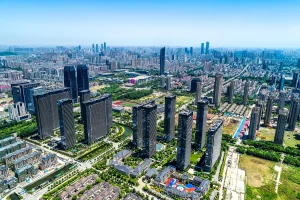
Future of luxury real estate in India
21 May 2025|9 Minutes Read
By : Admin

What is The Future of Luxury Real Estate in India 2025?

The luxury real estate in India at present is in the process of undergoing a huge and revolutionary change, which is much needed as we enter 2025. This time is an exciting time for the Indian real estate industry. This change in high-end property market in India is being fueled by a mix of changing consumer lifestyles, incredible technological leaps, and strong economic growth, which all go towards the high-end real estate market being in the process of undergoing huge and significant changes.

What we will do in this blog is go into great depth about the emerging trends that are taking shape, examine the dynamics of the market at play, and talk about the bright future prospects of luxury housing in India in the process of evolves further.

The Future of Luxury Real Estate In India 2025 and Beyond

As India’s economy continues to grow and high-net-worth individuals increase, the demand for luxury real estate is entering a transformative phase.

Over the past two years, the luxury real estate India 2025 sector has seen record growth. Reports from the industry indicate that the luxury housing sector saw a 28% year-on-year growth in Q1 2025, fueled by Delhi-NCR sales. This is due to increased disposable incomes, the increasing number of high-net-worth individuals (HNWIs), and changing consumer behavior towards high-end residential areas.

To better evaluate the actual usable space in ultra-luxury developments, you can use our Carpet Area Calculator for precise measurements.

Urban hubs like Delhi-NCR, Mumbai, and Bengaluru are seeing a rise in ultra-luxury developments that cater to global tastes while embracing Indian cultural sensibilities. With evolving buyer expectations, the future of luxury real estate in India is poised to be more personalized, experience-driven, and future-ready than ever before.

Key Trends Shaping Luxury Housing in 2025

The definition of luxury in Indian real estate is rapidly evolving. No longer confined to opulent interiors and prestigious addresses, luxury housing in 2025 is about offering a holistic lifestyle experience—one that blends technology, sustainability, wellness, and personalization. Several key trends are shaping the future of high-end living across India’s top cities.

Sustainable and Smart Living

Today’s consumers are more likely to opt for homes that are sustainable and smart. Installation of AI-driven security systems, green roofs, temperature-regulated pools, and technology-driven wellness spaces is shaping the future of luxury homes.

Customization and Personalization

As you might be aware that luxury residents often look for customized spaces that almost mirror their luxurious lifestyles and personal tastes. To meet this rightful demand of these top end buyers, real estate developers are happy to provide customizable floor plans, bespoke interiors, and high-end amenities that are tailored to personal tastes.

Wellness-Oriented Amenities

So, post-pandemic, everybody’s really health- and wellness-focused. Luxury developments are all about those trendy amenities these days—private fitness centers, spa spaces, meditation areas, and pretty open green spaces to address what people desire.

High demand for premium real estate is often enabled by liberal FSI policies—dive into how this works with our explainer on FSI meaning & calculation.

Also Read: Luxury Apartment Living: Gurgaon’s Prestigious Communities

Growth in High-End Property Markets of Tier-1 and Tier-2 Cities

The Indian luxury housing market is controlled by the large cities such as Mumbai, Delhi, and Bengaluru, but the movement is now shifting towards Tier-2 cities. New luxury apartment clusters are now emerging out of rapidly growing cities such as Ahmedabad, Mysore, and Lucknow on the back of increased infrastructure and urbanization.

The erstwhile belief that India’s premium real estate is all about Tier-1 cities such as Delhi, Mumbai, or Bengaluru is fading rapidly. Sure enough, Tier-1 cities are still the center of action when it comes to premium real estate in India, but you would find Tier-2 cities taking things seriously in 2025.

The government’s infrastructural drive — metro extensions, expressway construction, and smart city projects — is redefining the look of Tier-2 cities. Ahmedabad, Pune, Kochi, Indore, and Lucknow are all seeing an unmistakable demand for high-end living, fuelled by the return of NRIs, growth in the IT sector, and increasing incomes of middle-upper-income Indians.

What is unique about luxury real estate in Tier-2 cities is that consumers are offered world-class amenities and specifications at relatively lesser costs compared to Tier-1 cities. The cost benefit, coupled with better quality of life as well as less congestion, makes these cities extremely appealing to end-users as well as investors.

With growing emphasis on buyer confidence in luxury projects, understanding RERA’s rules on carpet area is crucial—learn more in our post on RERA carpet area definitions and how to calculate them.

Besides, developers are also realizing the untapped potential in these markets and are launching premium residential projects that match — and in some cases, exceed — the benchmark in major metros. With in-built townships, resort-lifestyle facilities, and architectural elegance, Tier-2 cities are now defining the future of luxury real estate in India 2025.

Also Read: Vastu Shastra Tips For Home

Premium Residential Projects: What Buyers Can Expect

The Indian premium residential projects scene in 2025 is marked by:

  • Strategic Locations: Access to commercial centers, schools, and hospitals.
  • Architectural Excellence: Creative designs that combine beauty with functionality.
  • Advanced Security: Latest generation surveillance and access control systems.
  • Community Living: Areas that allow for community engagement while providing privacy.

Contemporary Real estate developers are now also focusing on green building techniques, making sure that luxury is not at the cost of the environment. For insights into how changing preferences for luxury space are shaping investment and marketing strategies, explore the latest Indian real estate market trends in 2025

The premium living idea has evolved dramatically in the past few years, and in 2025, the Luxury housing trends India 2025 will be more than just extravagant interiors and sky-high towers. Premium residential complexes in India today offer a sophisticated lifestyle that harmonizes exclusivity with functionality, community with seclusion, and beauty with purpose.

Strategic Location Is Crucial:

Real estate developers are luckier today to be able to focus on buying their land in well-developed areas that offer connectivity to key locations such as business districts, highways, and major hospitals or even schools. An example would be areas such as Sector 84 in Gurgaon, which is a good example of hotspots due to their good connectivity along the Dwarka Expressway and near the new Global City project.

Design & Architecture That Inspire:

Luxury residences are adopting international architectural norms with breathtaking facades, large balconies, garden-style terraces, and majestic entrance lobbies. Properties tend to have world-class architecture by award-winning architectural groups, providing residents with the finest in shape and functionality.

World-Class Amenities & Clubhouses:

It’s not just about having a swimming pool or gym anymore.Some prime Luxury real estate projects are even providing heated infinity pools, rooftop lounges, co-working areas, wellness centers with yoga and Ayurveda facilities, libraries, and even pet parks. Such amenities are able to provide a self-contained ecosystem where people can live, work, and relax — all within the complex.

Green Living and Smart Homes

Buyers of today are greener, and luxury projects now have solar panels, EV charging points, waste management, and water harvesting installations. Spaces are equipped with intelligent automation — lighting and temperature regulation to voice-activated security — to provide the ultimate contemporary abode.

Exclusivity and Community

Residents of high-end projects get to experience a selected community of individuals with similar interests. With minimal units per floor, private lifts, and gated compounds, such homes provide both exclusivity and security — two aspects highly coveted by today’s luxury buyer of homes.

Also Read: Luxury Apartments in Gurgaon Sector 84: Penthouse Living Redefined

Investment Opportunities in Luxury Apartments

While the demand for ultra-premium homes increases, luxury apartments in India 2025 are not merely a way of life desire — they also happen to be one of the wisest investments to be had in the Indian real estate market.

High Capital Appreciation Potential

Owing to their quality, location, and limited availability, luxury properties value higher than mid-segment homes. Investors in good locations such as Gurgaon, Bengaluru, and Pune have witnessed double-digit annual appreciation, particularly while investing in new launch projects or ongoing construction projects by well-known developers.

Secure and Stable Rental Yields

Upscale houses draw in professionals, expats, and high-end renters who are prepared to pay a premium rent. Near commercial destinations, like Sector 84 of Gurgaon or Whitefield in Bengaluru, luxury apartments enjoy steady rent demand, thereby fetching a robust yield of 3–5% per year — and more if fully kitted out.

Portfolio Diversification

Real estate remains one of the safest long-term investments, and luxury property provides a hard, appreciating asset to any portfolio. In contrast to stock exchanges or cryptocurrency, luxury real estate is less volatile and provides insurance against inflation and deceleration of the economy.

NRI and Foreign Investor Interest

India’s luxury real estate industry is also a hub of NRI investment. With a falling rupee and high-end construction in places such as Gurugram, Dubai- and London-based investors are investing their money in luxury homes to hedge and benefit from increasing demand.

Developer Reliability & Transparency

Due to RERA and tighter regulation, investing in luxury projects is more transparent than ever before. Reputed developers with a track record of delivering luxury projects — like Ganga Realty — are now providing flexible payment schedules, assured returns during construction, and robust after-sales support, ensuring the investment process is hassle-free and risk-free.

Conclusion

Forward to 2025, Indian luxury property appears to be headed in a completely exciting way. There’s a definite tilt towards intelligent design, eco-friendly homes, and homes that help you live better. As living is changing, so are tastes—developers now raising the ante—not just constructing opulent flats, but creating homes that are comfortable, sought after, and connected. Whether or not one is looking to invest or even just find his or her own ideal house, there is much to be optimistic about in this area.

Ganga Realty, one of the fastest-growing and most trusted real estate company in Gurgaon, is at the forefront of this shift. With landmark projects like Anantam 85 and Nandaka 84, Ganga Realty is redefining luxury by blending modern design with world-class amenities, ensuring that every home is not only aspirational—but future-ready. Whether you’re an investor or a discerning homebuyer, the opportunities in this segment have never been more promising.

FAQs About Luxury Real Estate in India

Delhi-NCR, Mumbai, Bengaluru, and emerging Tier-2 cities like Ahmedabad and Lucknow are witnessing significant growth in luxury housing projects with Premium residential projects India.

Q3: Are luxury properties a good investment in 2025?

Yes, with increasing demand and limited supply, luxury properties offer high returns on investment and serve as a stable asset class.

Common amenities include smart home features, wellness centers, concierge services, advanced security systems, and sustainable design elements can be found in luxury real estate India 2025

Technology is playing a pivotal role in dictating Luxury housing trends India 2025, with features like AI-powered security, home automation, and energy-efficient systems becoming standard in luxury homes.

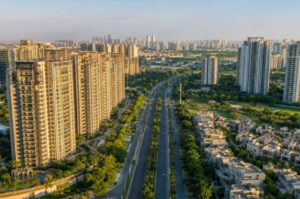
Enquire Now

Recent Posts

How to Pay Property Tax in Gurgaon: A Step-by-Step Guide (Online & Offline)
16 January 2026|6 Minutes Read

How to Pay Property Tax in Gurgaon: A Step-by-Step Guide (Online & Offline)

Paying property tax in Gurgaon is a mandatory civic responsibility for all property owners within the limits of the Municipal Corporation of Gurugram (MCG). The revenue collected through MCG property tax Gurgaon is used for the development of city infrastructure, maintenance of roads, sanitation, street lighting, parks, and other essential public services. Many homeowners and property investors often find the tax payment process confusing. This guide simplifies everything by explaining how to pay property tax in Gurgaon—both online and offline—in a step-by-step manner. For a detailed breakdown of rates and tax slabs, read our guide on MCG property tax in Gurgaon. What is Property Tax in Gurgaon? Gurgaon property tax (also referred to as Gurugram property tax or MCG Gurgaon property tax) is an annual tax levied on residential, commercial, and industrial properties within the city. The amount depends on factors such as: Property type (residential, commercial, industrial, or vacant land) Property size and built-up area Location and zone Usage (self-occupied, rented, or commercial use) For homeowners in premium developments like Nandaka 84 in Sector 84, paying house tax Gurgaon on time is essential not only for legal compliance but also for ensuring well-maintained civic infrastructure around their residences, including roads, drainage, and public amenities. How to Pay Property Tax in Gurgaon Online (Step-by-Step) Whether you own a home in a modern residential complex like Anantam 85 or an independent house, the online MCG portal offers a convenient way to manage your property tax obligations without visiting municipal offices. The easiest and most convenient way to pay MCG property tax Gurgaon is through the official online portal of the Municipal Corporation of Gurugram. Step 1: Visit the Official MCG Website: Go to the official Municipal Corporation of Gurugram website. Step 2: Click on ‘Property Tax’ Section :On the homepage, look for the Property Tax tab and click on it. Step 3: Select ‘Property Tax Bill’: Choose the option labelled “Property Tax Bill” to proceed with your payment. Step 4: Enter Property Details: You will be asked to enter details such as: Property ID Owner Name Zone and Ward Locality and Address Make sure all details are correct before proceeding. Step 5: Verify and Search: Click on Search to retrieve your property tax record. Step 6: Check Your Tax Amount: Your Gurugram house tax or property tax amount will be displayed on the screen. Step 7: Choose Payment Method : Select your preferred payment option: Debit Card Credit Card Net Banking UPI Step 8: Complete Payment: Follow the payment gateway instructions and complete the transaction securely. Step 9: Download Receipt: Once the payment is successful, download and save the receipt. This serves as proof of your Gurgaon MCG property tax payment. Tip: Always double-check your property details before final submission to avoid discrepancies. How to Pay Property Tax in Gurgaon Offline If you are not comfortable with online payments, you can pay property tax Gurgaon offline using the following steps: Step 1: Visit MCG Office or Collection Centre: Go to the nearest Municipal Corporation of Gurugram office or authorized tax collection centre. Step 2: Provide Property Details: Submit your: Property ID Owner’s name Address Step 3: Make Payment: Pay your MCG Gurgaon property tax using cash, debit card, or credit card. Step 4: Collect Receipt: Ensure you receive an official payment receipt as proof. Alternatively, certain authorized bank branches in Gurugram also accept MCG property tax payments after verifying property details. To understand how your tax is calculated, refer to our detailed guide on MCG property tax in Gurgaon. Penalty for Late Payment of Property Tax in Gurgaon Failing to pay Gurgaon property tax on time can lead to financial penalties: 1.5% interest per month on the outstanding amount Additional fines may apply in cases of misreporting or tax evasion To avoid extra charges, it is advisable to pay your house tax Gurgaon before the due date. Property Tax Rebates in Gurgaon MCG provides exemptions and rebates on Gurugram property tax for certain categories, including: Small flats in housing societies Self-occupied residential properties Properties in Lal Dora areas If you are eligible, you can significantly reduce your MCG property tax Gurgaon liability. Why Timely Payment of Property Tax is Important Paying property tax in Gurgaon on time ensures: Better civic amenities Improved sanitation and waste management Well-maintained roads and street lighting Legal compliance and peace of mind Your contribution through Gurgaon MCG property tax directly supports city development and public welfare. Your property tax directly supports smart city development in Gurgaon, improving roads, sanitation, and public infrastructure. For homeowners in nature-integrated developments like Ganga Valley 78, timely payment of Gurgaon MCG property tax contributes directly to cleaner surroundings, better landscaping, and improved civic services in and around their community — aligning with the vision of sustainable and eco-conscious living. How Ganga Realty Can Help with Property Tax Payment At Ganga Realty, we assist homeowners and investors with: Understanding their property tax calculation Navigating the online payment process Checking eligibility for rebates and exemptions Ensuring compliance to avoid penalties Maintaining accurate records and documentation If you need help with MCG Gurgaon property tax, our team can guide you every step of the way. For residents enjoying luxury living in Gurgaon, timely property tax payment is just as important as choosing the right home. Whether you live in a smart modern residence like Ganga Kashi Residencies in sector 90, a luxury development like Nandaka 84, a visionary community like Anantam 85, or a nature-focused project like Ganga Valley 78, our team ensures that your MCG Gurgaon property tax process remains smooth, transparent, and hassle-free. Final Thoughts Knowing how to pay property tax in Gurgaon makes the process simple, transparent, and hassle-free. Whether you choose to pay online or offline, staying informed and compliant helps you avoid penalties while contributing to the city’s growth. Choosing a reliable real estate partner like Ganga Realty further adds value to this process. Beyond helping you find the right property, Ganga Realty ensures that homeowners remain well-informed about tax obligations, rebate opportunities, and compliance requirements. Our expertise in property documentation and legal procedures provides added security and convenience to property owners. FAQs – (Property Tax in Gurgaon)

Read More
Vastu vs Modern Architecture: The Surprising Way They Can Coexist
15 January 2026|5 Minutes Read

Vastu vs Modern Architecture: The Surprising Way They Can Coexist

As Indian cities grow taller, denser, and smarter, homebuyers are asking a new question:Can traditional Vastu principles coexist with modern architecture? On one hand, buyers want open layouts, floor-to-ceiling windows, smart home systems, and contemporary aesthetics. On the other hand, many still care deeply about orientation, natural flow, balance, and well-being — all central ideas in Vastu Shastra. So, is it a conflict? Or is it actually a design opportunity? Let’s explore how Vastu vs Modern Architecture is no longer a debate — but instead, a blend that defines the future of Indian housing. What Is Vastu Shastra — In a Modern Context? Vastu Shastra is often misunderstood as rigid rules or superstition. However, in reality, it is an ancient system of spatial planning based on: Sunlight orientation Airflow and ventilation Functional zoning of spaces Human comfort and psychological balance In other words, Vastu is less about rituals and more about design logic. Traditionally, Indian spatial planning focused heavily on climate-responsive design, orientation, and ventilation — principles also reflected in government-backed building guidelines from institutions like the Central Public Works Department of India. For example, east and north orientations maximise natural light. Similarly, proper zoning separates noisy, active spaces from quiet, restful ones. As a result, balanced layouts improve comfort and reduce stress. Vastu Shastra is often misunderstood; however, when applied thoughtfully, it helps improve natural light, airflow, and comfort — as explained in our guide on choosing the best facing house as per Vastu. What Defines Modern Architecture Today? Modern architecture prioritises: Clean, minimal design Open floor plans Large windows and natural light Sustainable materials Smart home technology Efficient space usage Moreover, urban architecture must now respond to high-rise living, limited land availability, environmental responsibility, and the lifestyle expectations of younger buyers. Therefore, architecture has become more functional, more sustainable, and more human-centric. Interestingly, these priorities are not very different from Vastu’s core ideas. Why Are Vastu and Modern Architecture Seen as Conflicting? Many people assume they conflict because Vastu is seen as traditional and restrictive, whereas modern architecture is seen as free-form and design-driven. However, this is a surface-level perception. In reality, the conflict arises when Vastu is applied rigidly, without considering urban constraints — or when architecture ignores human comfort in favour of pure aesthetics. Therefore, the problem is not Vastu or modern design — it is how they are interpreted. How Vastu and Modern Architecture Actually Complement Each Other When interpreted intelligently, they complement beautifully. Vastu PrincipleModern EquivalentNatural light orientationEnergy-efficient daylight planningCross ventilationPassive cooling designBalanced zoningFunctional space planningHarmony with natureBiophilic and sustainable design Therefore, instead of opposing forces, they are two perspectives aiming for the same outcome — better living. How Vastu Fits into Apartments and High-Rise Living Many people believe Vastu is only relevant for independent houses. However, that is no longer true. In fact, in modern apartments: Entry direction can be optimised Kitchen and bedroom placement can follow zoning logic Light and ventilation can align with Vastu principles Small layout adjustments can enhance energy flow For example, in luxury high-rise projects, architects often integrate east-facing living areas, central green spaces, and balanced floor plate planning. In fact, many luxury residential projects in Gurgaon are now designed with balanced layouts, abundant natural light, and green spaces that reflect both Vastu principles and contemporary design. Sustainability — The Shared Foundation Perhaps the strongest bridge between Vastu and modern architecture is sustainability. Notably, both promote efficient energy usage, respect for natural elements, reduced dependency on artificial systems, and better thermal comfort. As a result, Vastu becomes a philosophical layer over green architecture — not a competitor. Moreover, this philosophy aligns closely with the idea of smart city development in Gurgaon, where sustainability and livability shape modern urban planning. Buyer Checklist: Choosing a Vastu-Friendly Modern Home When evaluating a property, consider the following: Good natural light and airflow Logical room zoning Quiet bedroom placement Minimal structural obstructions Open yet balanced layouts Therefore, before finalising a home, buyers should also refer to our residential property buyer’s guide for Gurgaon to understand market trends and long-term value. The Future: Integrated Design Is the New Luxury Today’s luxury is not just marble floors or tall towers. Rather, it is comfort, well-being, sustainability, and emotional satisfaction. Therefore, the future belongs to homes that combine traditional spatial wisdom with modern technology and design. Ultimately, developers who understand this shift are creating spaces that feel good to live in — not just impressive to look at. Conclusion In summary, the question is no longer Vastu vs Modern Architecture. Rather, the real question is how well they are integrated. When tradition informs design and design respects human comfort, homes become more than structures — they become spaces that support better living. That is the true future of Indian real estate. At Ganga Realty, we believe that thoughtful design creates better living — which is why our premium residential communities in Gurgaon focus on harmony, sustainability, and modern comfort. FAQs (People Also Ask)

Read More
--> -->