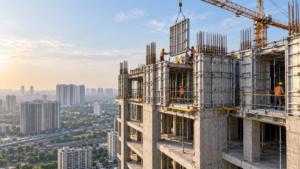
Choosing builder for your dream home
30 October 2025|6 Minutes Read
By : Ganga Realty

Mistakes to Avoid When Choosing a Builder for Your Dream Home

Choosing the right builder is perhaps the most crucial decision you’ll make in your journey toward homeownership. Your dream home represents years of savings, countless aspirations, and the promise of a better future for your family. Yet, many homebuyers rush into partnerships with dream home developers without adequate research, leading to costly mistakes, project delays, and compromised quality. Understanding what to avoid can save you from heartache and financial stress while ensuring your investment translates into the home you’ve always envisioned.

Prioritizing Price Over Quality and Reputation

One of the most common pitfalls in dream home construction is choosing a builder solely based on the lowest quote. While budget considerations are important, an unusually low price often signals compromised materials, shortcuts in construction, or hidden costs that emerge later.

Quality construction requires investment in superior materials, skilled labor, and adherence to safety standards. Reputable property developers in Gurgaon understand this balance and price their projects transparently. Before committing, research the builder’s track record, visit their completed projects, and speak with current residents about their experiences.

A builder’s reputation is built over years of consistent delivery and customer satisfaction. Don’t let an attractive price tag blind you to potential quality issues that could haunt you for decades.

Ignoring Legal Credentials and Certifications

Many homebuyers overlook the importance of verifying a builder’s legal credentials, licenses, and project approvals. This oversight can lead to serious complications, including legal disputes, possession delays, or even fraudulent schemes.

Always verify that your chosen real estate company in Gurgaon possesses all necessary approvals from relevant authorities like RERA (Real Estate Regulatory Authority), environmental clearances, and building permits. Check for IGBC certifications if sustainability is important to you, as these indicate commitment to green building practices.

Request complete documentation and don’t hesitate to consult a legal expert before signing any agreements. Legitimate builders will welcome your due diligence and provide transparent access to all required paperwork.

Neglecting to Assess the Builder’s Financial Stability

A builder’s financial health directly impacts their ability to complete your project on time. Several residential projects in Gurugram have faced indefinite delays because developers ran into financial difficulties midway through construction.

Research the builder’s financial standing through their previous project completions, bank partnerships, and credit ratings. Financially stable builders have consistent funding sources and rarely delay projects due to cash flow issues.

Ask about the project’s funding structure and whether the builder has tied up with reputed financial institutions. This transparency indicates reliability and reduces the risk of mid-project complications affecting your dream home construction.

Failing to Inspect Construction Quality Standards

Many buyers wait until possession to discover construction defects, by which point corrections become difficult and expensive. During the building homes process, regular site visits and quality checks are essential.

Examine the quality of materials being used, structural integrity, finishing standards, and adherence to the approved plans. Good residential projects in Gurgaon maintain transparency and welcome buyer inspections at various construction stages.

Don’t rely solely on glossy brochures and promises. Insist on visiting ongoing construction sites to observe actual workmanship and material quality firsthand.

Overlooking Post-Possession Support and Warranties

Your relationship with the builder doesn’t end at possession. Structural warranties, maintenance support, and responsiveness to defect complaints are crucial for long-term satisfaction.

Inquire about warranty coverage, defect liability periods, and the builder’s reputation for after-sales service. Dream home developers who stand behind their work offer comprehensive warranties and maintain dedicated customer support teams even after project completion.

Ganga Realty – Tathastu: Building Dreams with Integrity and Excellence

When it comes to avoiding these common mistakes, Ganga Realty stands as a beacon of trust and quality in Gurugram’s real estate landscape. With a philosophy that “virtue flows unbridled” through everything they do, Ganga Realty has established itself as one of the most reliable property developers in Gurgaon, partnering with world-renowned design and development houses to deliver exceptional living spaces.

Introducing Tathastu: Where Dreams Become Reality

The name “Tathastu” itself embodies the fulfillment of aspirations—a Sanskrit blessing meaning “so be it.” This philosophy drives every aspect of this remarkable project, one of the most anticipated residential projects in Gurugram today.

Tathastu offers thoughtfully designed 2 and 3 BHK affordable residential apartments that don’t compromise on quality, amenities, or sustainability. This project represents the perfect balance between accessibility and premium living standards.

Sustainability at the Core

Unlike builders who treat green initiatives as mere marketing tools, Ganga Realty has embedded sustainability into Tathastu’s DNA. The project proudly holds IGBC certification, utilizing sustainable materials and energy-efficient designs that benefit both residents and the planet.

This commitment to environmental responsibility reflects a builder who thinks beyond immediate profits and considers the long-term impact of their building homes practices on future generations.

Legal Transparency and Financial Strength

Ganga Realty maintains complete transparency in legal documentation, with all necessary RERA approvals and certifications readily available for buyer verification. Their financial stability is evident through consistent project completions and partnerships with leading financial institutions, ensuring zero risk of mid-project delays.

Quality You Can See and Feel

Every residential apartment at Tathastu is crafted with meticulous attention to detail. The project is nestled in greenery and features carefully curated amenities that enhance everyday living. From structural integrity to finishing quality, Ganga Realty’s commitment to excellence is visible in every corner.

Connectivity and Location Advantage

Tathastu offers excellent connectivity to major highways, business districts, and essential services, making it an ideal choice for those seeking dream home construction in a location that supports both professional and personal growth.

After-Sales Commitment

Ganga Realty’s reputation extends beyond project completion. Their dedicated customer support ensures that homeowners receive comprehensive assistance and prompt resolution of any concerns even after possession.

Conclusion: Your Dream Home Deserves the Right Builder

Choosing a builder for your dream home is not a decision to be taken lightly. By avoiding these common mistakes and partnering with a trusted real estate company in Gurgaon like Ganga Realty, you ensure that your investment translates into lasting happiness and peace of mind.

Tathastu represents more than just affordable apartments—it’s a promise fulfilled, a dream realized, and a future secured. With Ganga Realty’s proven track record, sustainable practices, and unwavering commitment to quality, your journey from dream to reality becomes smooth, transparent, and rewarding.

Ready to build your dream home with a builder you can trust? Explore Tathastu by Ganga Realty and experience the difference that virtue, quality, and integrity make in dream home developers. Your perfect home awaits.

FAQs

IGBC (Indian Green Building Council) certification indicates that a project meets stringent environmental and sustainability standards. It ensures energy-efficient design, use of sustainable materials, and reduced environmental impact, leading to lower utility costs and healthier living spaces.

Absolutely. Established builders offer quality construction, timely delivery, legal compliance, proper documentation, and reliable after-sales support. The slightly higher cost protects you from expensive repairs, legal issues, and possession delays that often occur with unreliable builders.

Excellent connectivity to major highways, business districts, schools, hospitals, and shopping centers significantly enhances property value and quality of life. Good connectivity reduces commute times, improves accessibility to essential services, and typically ensures better appreciation potential.

Enquire Now

Recent Posts

GST on Under-Construction Property in India (2026): Rates and Calculation
17 July 2026|10 Minutes Read

GST on Under-Construction Property in India (2026): Rates and Calculation

Planning to buy an under-construction flat? Before you book your dream home, it's important to understand how GST on under-construction property works. Unlike ready-to-move-in homes, properties that are still under construction are subject to GST because they are treated as a construction service under Indian tax laws. Knowing the applicable GST rates, how the tax is calculated, and when it applies can help you estimate the actual cost of your purchase and avoid unexpected expenses. In this guide, we'll explain everything you need to know about GST on under-construction properties in 2026 in a simple, easy-to-understand way. To better understand how GST impacts residential and commercial property transactions, read our complete guide on GST on real estate. What is GST on Under-Construction Property? The Goods and Services Tax (GST) applies to under-construction properties because developers provide an ongoing construction service until the project is completed. Therefore, buyers purchasing a home before completion must pay GST along with the property's base price. However, if you purchase a ready-to-move-in property after the developer has obtained a Completion Certificate (CC) or Occupancy Certificate (OC), the transaction is treated as the sale of immovable property rather than a construction service, making it exempt from GST. Not sure which option is right for you? Compare both in our guide on Under-Construction vs Ready-to-Move Property. Latest GST Rates on Under-Construction Property (2026) Property CategoryGST RateInput Tax Credit (ITC)Affordable Housing1%NoNon-Affordable Residential Property5%NoCommercial Property12%Yes (subject to applicable rules) The current residential GST rates introduced in 2019 continue to apply in 2026. If you're considering a premium home, explore our guide to Luxury Apartments in Gurgaon to understand the costs and benefits of luxury living. When is GST Applicable? You need to pay GST when: You purchase an apartment before completion. The builder receives payments before the Completion Certificate or Occupancy Certificate. Construction is still ongoing. You do not pay GST if: The property is ready to move in. The builder has already received the Completion Certificate or Occupancy Certificate before the sale. You purchase a resale property from an existing owner. How to Calculate GST on Under-Construction Property (2026) You calculate GST on an under-construction flat by first reducing the agreement value by one-third as a standard land deduction, then applying the correct GST rate (1% or 5%) on the remaining two‑thirds, and adding this GST to your cost. Calculating GST on an under-construction property is straightforward once you know whether the home qualifies as affordable housing or non-affordable housing. The GST is calculated on the base sale price of the property (excluding stamp duty, registration charges, and other government levies). Formula: GST Amount = Base Property Price × Applicable GST Rate The final amount payable is: Total Cost = Base Property Price + GST Let's understand this with a few practical examples. Besides GST, buyers should also account for stamp duty and registration charges in Haryana when estimating the total property cost. Example 1: Affordable Housing Flat Suppose you're buying an under-construction flat in a non-metro city for ₹38 lakh. The apartment has a carpet area of 85 sq. m., which falls within the affordable housing criteria. ParticularsAmountBase Property Price₹38,00,000Applicable GST Rate1%GST Payable₹38,000Total Purchase Cost₹38,38,000 Takeaway: Since the property qualifies as affordable housing, you pay GST at only 1%, keeping the overall tax burden relatively low. Example 2: Non-Affordable Under-Construction Flat Now consider a buyer purchasing a 2 BHK apartment in a metro city for ₹95 lakh. Although the carpet area is 75 sq. m., it exceeds the affordable housing limit for metro cities, so the property falls under the non-affordable category. ParticularsAmountBase Property Price₹95,00,000Applicable GST Rate5%GST Payable₹4,75,000Total Purchase Cost₹99,75,000 Takeaway: Properties that don't qualify as affordable housing attract 5% GST, resulting in a higher overall purchase cost. Example 3: GST on Instalment-Based Payments Most under-construction properties are purchased through construction-linked payment plans, where buyers pay in stages as construction progresses. GST is applicable only on instalments paid before the Completion Certificate (CC) or Occupancy Certificate (OC) is issued. Any payment made after the project receives the CC/OC is not subject to GST. Construction StageInstalment AmountGST (5%)Total PayableBooking Amount₹10,00,000₹50,000₹10,50,000Foundation Completion₹15,00,000₹75,000₹15,75,000Slab Completion₹20,00,000₹1,00,000₹21,00,000Final Payment (After CC/OC)₹50,00,000₹0₹50,00,000 Key Point: GST is charged only on payments made while the property is under construction. Once the builder receives the Completion Certificate (CC) or Occupancy Certificate (OC), any remaining payment is treated as the sale of a completed property and is not liable to GST. GST on Luxury Apartments in Gurgaon Most premium residential projects in Gurgaon fall under the 5% GST category, as they generally exceed the affordable housing limits. If you're planning to invest in a luxury apartment, it's important to calculate: GST Stamp Duty Registration Charges Maintenance Deposits Club Membership Charges Parking Charges Knowing the complete acquisition cost helps you plan your investment more accurately. Before investing, compare the latest property rates in Gurgaon to make a well-informed buying decision. Affordable Housing vs Luxury Housing FeatureAffordable HousingLuxury HousingGST1%5%Property ValueUp to ₹45 lakh (subject to eligibility)Above affordable thresholdITCNoNoTarget BuyersFirst-time buyersPremium buyers What is the Difference Between GST and Stamp Duty? Many buyers assume GST replaces stamp duty, but these are different charges. In many states, both GST (where applicable) and stamp duty must be paid during the purchase process. AspectGSTStamp DutyLevied byCentral Government (via GST Council)State GovernmentApplies toUnder-construction property purchase (as a service)All property transactions (registration)Rate1% or 5% (residential)Typically 5–8%, varies by stateWhen paidDuring construction, per instalmentAt the time of property registrationApplicable on resale/ready properties?NoYesGoverning lawCGST Act, 2017State Stamp Act Common Mistakes Homebuyers Make While Paying GST on Under-Construction Property Buying an under-construction property involves more than just comparing prices. Many homebuyers misunderstand how GST works, which can lead to unexpected costs or confusion during the purchase process. Here are some of the most common mistakes to avoid. Assuming GST applies to every property purchase. Forgetting to check whether the project has a Completion Certificate. Ignoring additional charges such as registration fees and stamp duty. Calculating GST only on the advertised property price without understanding the payment structure. Not asking the developer for a detailed cost sheet. Tips Before Buying an Under-Construction Property Buying an under-construction property can be a smart investment, but it also requires careful planning. Before making your decision, keep these important tips in mind to avoid unnecessary risks and unexpected costs. Before booking your dream home: Verify the project's RERA registration. Check construction progress. Review the payment schedule. Confirm GST applicability. Ask for the latest demand letter. Verify Completion Certificate timelines. Compare the total acquisition cost instead of just the base price. Always verify whether the project is RERA registered. Learn more about RERA in Real Estate and why it matters. Pro Tip: Before paying the booking amount, request a detailed cost sheet from the developer that clearly lists the base price, GST, stamp duty, registration charges, PLC (if applicable), parking charges, maintenance deposits, and any other applicable fees. Understanding the complete financial commitment upfront helps you make an informed and confident home-buying decision. Why Buyers Choose Under-Construction Projects Under-construction properties continue to attract homebuyers and investors because they often offer better value, flexible payment options, and stronger long-term appreciation. When purchased from a reputable developer, these projects can provide significant financial and lifestyle advantages. Despite GST, under-construction homes continue to attract buyers because they often offer: Lower entry prices Flexible payment plans Better appreciation potential More inventory choices Newer amenities and layouts For many long-term buyers, these advantages can outweigh the additional GST cost. Avoid costly mistakes by following our complete Home Buying Checklist before booking your property. How Does GST Affect the Real Estate Sector? The introduction of the Goods and Services Tax (GST) has significantly changed India's real estate sector by bringing greater transparency and simplifying the indirect tax structure. Instead of multiple state and central taxes, GST introduced a unified tax system for under-construction properties, making property transactions more streamlined and easier to understand. While ready-to-move-in properties with a Completion Certificate (CC) or Occupancy Certificate (OC) remain exempt from GST, under-construction residential properties attract GST based on the applicable rate. Here's how GST has influenced the real estate market: 1. Increased Transparency GST replaced multiple indirect taxes such as VAT, service tax, and various state-level levies with a single tax system. This has made pricing more transparent, helping buyers better understand the overall cost of purchasing a property. 2. Simplified Tax Structure A uniform GST framework has reduced the complexity of property taxation. Buyers no longer need to calculate multiple indirect taxes separately, making transactions more straightforward. 3. Greater Confidence for Homebuyers The combination of GST and the Real Estate (Regulation and Development) Act (RERA) has improved transparency and accountability across the sector. Buyers now have clearer information about pricing, project timelines, and regulatory compliance. 4. Impact on Under-Construction Properties GST is applicable only to under-construction residential properties, while completed properties with a valid Completion Certificate (CC) or Occupancy Certificate (OC) are not subject to GST. Buyers should therefore factor GST into the total cost when purchasing an under-construction home. 5. Boost to the Affordable Housing Segment The reduced 1% GST rate for eligible affordable housing projects has helped make homeownership more accessible for many first-time buyers, supporting the government's affordable housing initiatives. 6. Better Compliance Across the Industry GST has encouraged developers to maintain more accurate financial records, adopt digital invoicing, and follow standardized tax compliance practices, contributing to a more organized real estate sector. 7. Improved Buyer Awareness Homebuyers today are more informed about taxes, payment schedules, and the total cost of ownership. This has encouraged greater due diligence before making a property purchase. 8. Continued Long-Term Market Growth Despite GST increasing the upfront cost of under-construction properties, India's real estate sector continues to grow, driven by rapid urbanisation, infrastructure development, rising incomes, premium housing demand, and increasing institutional investment. For most buyers, choosing the right project, location, and developer remains far more important than GST alone when evaluating long-term returns. If you're looking for premium homes in Gurgaon, explore Ganga Realty projects to discover thoughtfully designed luxury residences in some of the city's most sought-after locations. Anantam 85 Ultra-luxury residences on Dwarka Expressway offering expansive green spaces and world-class amenities. View Project Nandaka 84 Modern residential community in New Gurgaon designed for connectivity, comfort, and lifestyle. View Project Ganga Kashi Residences Premium residential development offering peaceful living with contemporary amenities. View Project Ganga Valley 78 Integrated township living with lush green spaces and a complete lifestyle ecosystem. View Project Conclusion Understanding GST on under-construction property is essential before making any real estate investment. While GST increases the upfront purchase cost for under-construction homes, these projects often offer attractive pricing, flexible payment plans, and long-term appreciation potential. At Ganga Realty, transparency is a key part of the buying experience. Whether you're looking for a luxury apartment or a long-term investment in Gurgaon, you receive clear information about pricing, taxes, payment schedules, and project documentation. FAQs About GST on Under-Construction Property

Read More
Indian Real Estate Market Statistics 2026: Latest Facts, Data & Trends
17 July 2026|14 Minutes Read

Indian Real Estate Market Statistics 2026: Latest Facts, Data & Trends

💡 Quick Answer India's real estate sector continues to be one of the country's fastest-growing industries, driven by rapid urbanisation, large-scale infrastructure development, and rising residential demand. The market is projected to surpass USD 1 trillion by 2030, with premium housing, Grade A commercial offices, warehousing, logistics, data centres, and REITs emerging as the key growth segments. Major cities such as Gurgaon, Bengaluru, Hyderabad, Mumbai, and Pune continue to lead residential and commercial real estate activity, supported by metro expansion, expressways, smart city initiatives, and increasing institutional investment. The Indian Real Estate Market Statistics 2026 below provide a comprehensive snapshot of the latest market trends, investment opportunities, sector performance, and the future outlook of India's rapidly evolving property market. India's property sector has stopped behaving like the boom-and-bust market it used to be. The Indian real estate market statistics 2026 paint a picture of steady, end-user-driven growth rather than speculative spikes — bigger deal sizes, sharper city-wise divergence, and a decisive shift toward premium housing. Whether you're a homebuyer, investor, or industry professional, here's what the numbers actually say about where the market stands today. In this guide, you'll discover the latest insights into the India real estate market, including market size, housing demand, commercial office leasing, luxury housing, infrastructure-led growth, and emerging investment opportunities. Indian Real Estate Market at a Glance The table below provides a quick snapshot of the industry's current position. MetricLatest StatisticsMarket OutlookOne of the world's fastest-growing real estate marketsProjected Market SizeUS$1 trillion+ by 2030Long-Term OutlookApproximately US$5.8 trillion by 2047Major Growth DriversUrbanization, Infrastructure, Premium Housing, Commercial ExpansionLeading Residential MarketsGurgaon, Mumbai, Bengaluru, Hyderabad, Pune, NoidaFastest Growing SegmentPremium & Luxury HousingCommercial GrowthRecord Grade A Office LeasingEmerging Asset ClassesData Centres, Warehousing, REITs, Life SciencesInstitutional InterestStrong Domestic & Global Investment Quick Indian Real Estate Statistics (2026) Here are some of the most important numbers shaping India's real estate market. Before investing, it's helpful to understand market cycles, risk factors, and long-term appreciation. Our Real Estate Investment Guide covers these aspects in detail. Residential Market Premium housing demand continues to outpace many other residential segments. Integrated townships remain among the most preferred development formats. Luxury apartments are witnessing strong demand in major metropolitan cities. Homebuyers increasingly prefer larger homes with wellness-focused amenities. The growing demand for premium homes is also reflected in the popularity of Luxury Apartments in Gurgaon, where buyers are prioritizing larger homes, modern amenities, and excellent connectivity. Commercial Market Office leasing reached record levels during the first half of 2026, driven by Global Capability Centres (GCCs) and multinational companies. Grade A office buildings remain the preferred choice for occupiers. Flexible workspaces continue expanding across major business districts. Investment Market Institutional investment activity remains strong across office, residential, and logistics assets. Domestic investors are playing a larger role in India's real estate capital markets. Listed REITs continue attracting both retail and institutional investors. If you're evaluating investment opportunities, our detailed guide on Property Rates in Gurgaon provides city-specific price trends, appreciation potential, and sector-wise analysis. Why the Indian Real Estate Market Is Growing India's property market is supported by a combination of structural and economic factors rather than short-term market cycles. 1. Rapid Urbanization India's urban population continues to grow steadily, creating sustained demand for residential housing, commercial office space, transportation infrastructure, retail developments, and mixed-use communities. Large cities are expanding outward while new micro-markets are emerging around metro corridors, expressways, and industrial zones. 2. Infrastructure Development Infrastructure has become one of the strongest catalysts for property appreciation. Major projects include: Delhi–Mumbai Expressway Dwarka Expressway Regional Rapid Transit System (RRTS) Dedicated Freight Corridors Metro Rail Expansion New International Airports Bharatmala Highway Network These developments improve connectivity, reduce travel time, attract businesses, and support long-term residential and commercial demand. 3. Rising Disposable Income India's growing middle class and higher disposable incomes are encouraging more families to upgrade from affordable housing to premium apartments and integrated townships. Today's buyers increasingly prioritize: Better connectivity Larger homes Wellness amenities Smart home technology Green open spaces Lifestyle-focused communities This shift has contributed to the strong performance of the premium and luxury housing segments. Many investors prefer under-construction developments because of competitive pricing and future appreciation. Discover the benefits of investing in under construction projects. 4. Institutional Capital India has become an attractive destination for domestic and global institutional investors. Capital is flowing into: Grade A Offices Residential Townships Warehousing Logistics Parks Retail Assets Data Centres Mixed-use Developments Recent market reports highlight continued momentum in private equity and institutional investments, supported by improving market depth and diversified deal activity. Indian Real Estate Market Size Statistics India's real estate industry spans residential housing, commercial offices, retail, industrial parks, hospitality, healthcare, education, and logistics infrastructure. Key Market Statistics IndicatorCurrent OutlookLong-Term GrowthStrongResidential DemandHealthyLuxury HousingRapid ExpansionCommercial OfficesRecord LeasingWarehousingHigh GrowthInstitutional InvestmentIncreasingInfrastructure SpendingStrong Government Support The sector's continued expansion is underpinned by public infrastructure spending, a favorable demographic profile, and increasing participation from institutional investors. As India continues to urbanise and invest in modern infrastructure, cities such as Gurgaon, Mumbai, Bengaluru, Hyderabad, Pune, and Chennai are expected to remain key growth centres. At the same time, emerging Tier-II cities are gaining momentum due to improving connectivity and affordability. Whether you are a first-time homebuyer, experienced investor, or industry professional, staying informed through verified Indian real estate statistics, housing market data, and property market trends can help you make better long-term decisions 1. Indian Real Estate Market Size 2026: The Big Picture Market research firms differ slightly on the exact figure, which is normal given differing methodologies, but the direction is consistent. Mordor Intelligence pegs the Indian real estate market size at USD 585.09 billion in 2026, growing at a 9.63% CAGR to reach USD 926.56 billion by 2031. MarkNtel Advisors estimates it slightly lower at USD 0.58 trillion in 2026, projecting a steeper 13.04% CAGR through 2032. Expert Market Research puts 2025's value at USD 620.02 billion, forecasting an 8.70% CAGR through 2035. The takeaway for anyone tracking real estate market trends in India for 2026: regardless of which model you use, India's property sector is compounding at nearly double the pace of the broader economy, and residential real estate continues to be the single biggest driver, contributing anywhere from 46% to 78% of total market value depending on how "real estate" is defined (with or without land and industrial assets included). Segment-Wise Breakdown Residential: 70–78% of total market share — the dominant segment by a wide margin Commercial: Smaller in volume but faster-growing, projected at a 10.79% CAGR through 2031 Industrial & logistics: The fastest-expanding niche, driven by e-commerce and manufacturing Individuals/households: Account for 66.1% of transaction value; corporates and SMEs are growing faster at 11.01% CAGR 2. Indian Housing Market Data 2026: Sales, Launches & Inventory The residential real estate India statistics for the first half of 2026 show a market in transition — strong on value, more selective on volume. Q1 2026 headline numbers (top 7 cities) Housing sales: 70,631 units, up 8% YoY (a sharp reversal from the 12% decline in Q1 2025) New launches: 90,023 units — a record quarter, up 13% YoY and 32% quarter-on-quarter Bengaluru, Mumbai, Pune, and Delhi-NCR together accounted for roughly 77% of all units sold Q2 2026 saw a correction in volume, per ANAROCK data: sales dipped to 90,715 units, an 11% sequential fall and the lowest quarterly figure since January 2023, while new launches fell 16% quarter-on-quarter and unsold inventory rose about 10% YoY to over 6.16 lakh units. Industry voices largely read this as developer discipline rather than weakening demand — a deliberate pullback on new supply after a record-setting Q1. The Premiumisation Trend Is the Real Story If there's one number that defines Indian real estate in 2026, it's this: homes priced above ₹1 crore now make up 71% of total sales, up from 59% just a year earlier. Meanwhile, the sub-₹10 million (roughly ₹1 crore) segment has contracted by around 24% YoY. The ₹15–30 million bracket alone grew 67% YoY. This isn't a niche trend — it's a structural shift. Rising disposable incomes, a growing HNI/NRI buyer base, and lifestyle-driven upgrades (larger homes, better amenities, integrated townships) are steadily pricing out entry-level demand while supercharging the premium and luxury segments. 3. City-Wise Real Estate Price Trends 2026 Property price trends in India for 2026 show clear winners, with growth ranging from 8% to as high as 24% YoY across the top seven cities. CityYoY Price Growth (2026)NotesBengaluru~24%Top-performing market nationallyDelhi-NCR12–15% (up to 13% in some quarters)Steepest growth among major metros in Q2Chennai12%+Strong, steady appreciationKolkata12%+Emerging as a logistics and warehousing hub tooHyderabad~8%Fastest-growing city by longer-term CAGR (11.44% through 2031)Mumbai Metropolitan RegionSteadyStill holds the largest revenue share nationally at 28.4% Average residential prices across India's top 8 cities have crossed the ₹10,000 per sq. ft. mark for the first time — a symbolic threshold signalling sustained buyer confidence even as overall sales volumes moderate. Delhi-NCR and Gurugram: The Standout Performer Delhi-NCR has emerged as the strongest-performing housing market in India through much of 2026, with Gurugram doing the heavy lifting. A few numbers worth flagging for anyone tracking Gurugram real estate market 2026 data specifically: NCR home prices rose as much as 13% YoY in Q2 2026 — the steepest among major metros — led by Gurugram's premium corridors: Dwarka Expressway, Southern Peripheral Road (SPR), and Golf Course Extension Road Gurugram's Golf Course Road and GCER micro-markets have delivered 35–55% appreciation over three years Dwarka Expressway has seen 30–50% appreciation, driven by infrastructure maturation Between 2019 and 2024, key Gurugram micro-markets appreciated nearly 160%, touching around ₹19,500 per sq. ft. in premium corridors Delhi-NCR housing sales rose 30% in Q1 2026 alone, with new launches surging 64% YoY to 13,631 units For the first time since the post-pandemic boom, household income growth in Delhi-NCR is projected to outpace property price appreciation — a sign the market is stabilising rather than overheating Analysts largely agree this is not a speculative bubble. Strong corporate hiring in IT and BFSI, sustained NRI investment, and genuine end-user demand — not investor flipping — are driving the Gurugram cycle. That said, some premium micro-markets are pricing in infrastructure completion (metro extensions, Dwarka Expressway, Jewar Airport) somewhat optimistically, which is worth watching for anyone evaluating real estate investment in India in 2026. Sector-specific luxury developments are also gaining traction, particularly Luxury Apartments in Gurgaon Sector 84, which offer premium lifestyle amenities and strategic connectivity. 4. Home Loan Interest Rates & Affordability in 2026 Affordability is quietly improving even as absolute prices rise. As of early 2026, home loan interest rates from major Indian banks range from roughly 7.10% to 12.50%, with the best rates now near 7% — the lowest since 2022 — following successive repo rate cuts by the RBI (down to 5.25% by late 2025). For the first time in years, income growth in several markets, including Delhi-NCR, is projected to outpace property price appreciation, gradually easing EMI-to-income ratios. Mumbai reportedly saw its EMI-to-income ratio fall below 50% for the first time. Still, upfront costs and absolute price levels remain a real barrier for first-time buyers, especially in core urban locations — which is part of why rental demand keeps climbing in parallel. 5. Commercial Real Estate & Office Leasing Trends India 2026 Commercial and office space demand tells a complementary growth story: India's office market recorded 83.30 million sq. ft. of gross leasing in 2025, with Q4 2025 alone hitting a record 26.80 million sq. ft. 2026 net absorption is projected between 40–55 million sq. ft., depending on the source, positioning India as one of APAC's most active office markets Global Capability Centres (GCCs) now account for roughly 40% of total office demand, up from the mid-30s in 2024 — a major structural shift in who's leasing space Flex/managed office space is expected to make up nearly 20% of Grade A leasing in 2026, with total flex stock projected to reach 85–90 million sq. ft. Industrial and logistics leasing hit 27.1 million sq. ft. in H1 2025 alone, up 63% YoY, fuelled by e-commerce and third-party logistics expansion Retail real estate is set to add 5.9 million sq. ft. of new Grade A mall space in 2026 6. Investment & Institutional Capital Flows Institutional confidence in Indian real estate has strengthened noticeably: Capital inflows into Indian real estate hit a historic USD 5.1 billion in Q1 2026, a 72% YoY jump from USD 2.9 billion in Q1 2025 Domestic investors dominated with a 96% share, led by developers and REITs 2025 institutional investments crossed USD 7.5 billion, an all-time high 2026 institutional investment is projected at USD 6–7 billion, split between foreign and domestic capital FDI in construction activities between April 2000 and June 2025 touched ₹3,23,987 crore (USD 36.85 billion) REITs and SM-REITs continue to expand, with new listings and IPOs expected to further democratise access to commercial real estate 7. Luxury Housing & NRI Demand Luxury real estate is one of the clearest bright spots in the Indian real estate market statistics for 2026: Sales of homes priced ₹4 crore and above rose nearly 28% YoY across India's top 7 cities in 2025 Q1 2025 alone saw 1,930 luxury home units sold, up from 1,510 units in the same period the previous year NRIs and HNIs remain among the biggest contributors to luxury and premium housing demand, supported by rupee depreciation and confidence in India's broader growth story ICRA projects new project launches across the top 7 cities to rise 6–9% in FY2026, reaching 620–640 million sq. ft. 8. What's Driving the Market in 2026 A few consistent themes emerge across every major research report: Infrastructure-led growth: Metro extensions, expressways (Dwarka Expressway, Jewar Airport), and improved connectivity are unlocking new micro-markets Premiumisation: Buyers are consistently choosing larger, higher-spec homes over budget housing Institutionalisation: REITs, SM-REITs, and platform-led acquisitions are professionalising the sector RERA and regulatory maturity: Greater transparency continues to build buyer and investor confidence GCC expansion: Global Capability Centres are reshaping commercial demand, especially in Bengaluru, Hyderabad, Delhi-NCR, and Chennai Selective affordability pressure: Budget and affordable housing (sub-₹45 lakh) continue to face supply constraints even as mid and premium segments thrive Key Takeaways India remains one of the world's fastest-growing real estate markets. Residential housing continues to dominate overall market activity. Premium and luxury housing are among the strongest-performing segments. Commercial office leasing remains resilient, supported by technology companies and Global Capability Centres. Infrastructure projects such as expressways, metro corridors, and airports continue to influence property appreciation. REITs and institutional investments are increasing transparency and liquidity in the market. Sustainability, PropTech, AI, and smart homes are shaping the future of real estate. Tier-II cities are emerging as attractive investment destinations alongside established metropolitan markets. Buyers interested in premium living can also explore Ganga Realty's luxury residential projects to understand how modern amenities, connectivity, and long-term value are influencing today's homebuying decisions. Anantam 85 Ultra-luxury residences on Dwarka Expressway offering expansive green spaces and world-class amenities. View Project Nandaka 84 Modern residential community in New Gurgaon designed for connectivity, comfort, and lifestyle. View Project Ganga Kashi Residences Premium residential development offering peaceful living with contemporary amenities. View Project Ganga Valley 78 Integrated township living with lush green spaces and a complete lifestyle ecosystem. View Project Conclusion The Indian Real Estate Market Statistics 2026 highlight a sector that continues to evolve through infrastructure-led development, institutional investment, technological innovation, and changing buyer preferences. Residential housing remains the foundation of the market, while luxury homes, Grade A commercial offices, warehousing, logistics, and REITs are creating new opportunities for investors. As India continues to urbanise and invest in modern infrastructure, cities such as Gurgaon, Mumbai, Bengaluru, Hyderabad, Pune, and Chennai are expected to remain key growth centres. At the same time, emerging Tier-II cities are gaining momentum due to improving connectivity and affordability. For those exploring opportunities in Gurgaon, keeping track of local market trends is equally important. As a leading real estate developer, Ganga Realty is contributing to the city's growth through thoughtfully planned residential and commercial developments across key growth corridors. Frequently Asked Questions

Read More

Luxury Living In Gurugram

Discover thoughtfully designed residences that blend modern architecture,
premium amenities, and sustainable living in the heart of the city.

--> -->