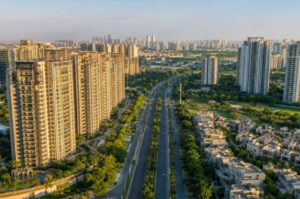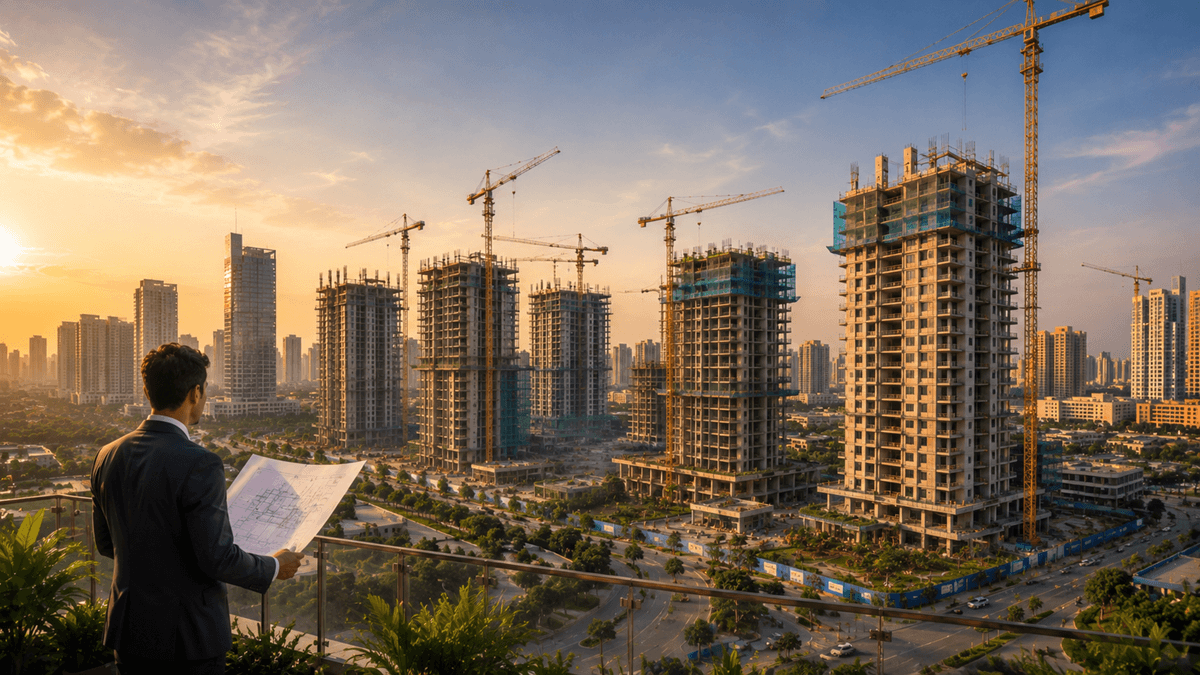
luxury under-construction residential development
05 June 2026|16 Minutes Read
By : Ganga Realty

The Benefits of Investing in Under-Construction Projects: A Complete Guide for Smart Investors

Investing in real estate has long been one of the most reliable wealth-creation strategies, and in 2026, one approach continues to stand out for both first-time buyers and seasoned investors alike — investing in under-construction projects. Also known as under-construction, off-plan, or pre-launch property investment, this strategy involves purchasing a property before or during the construction phase, often at a significant discount compared to ready-to-move-in (RTM) alternatives.

With the global real estate market valued at approximately 4.58–4.74 trillion in 2026 and India’s residential construction sector alone worth USD 263.89 billion in 2025 (growing at a CAGR of ~6.6%), the opportunity for investors willing to enter early in a project’s lifecycle is substantial.

Table of Contents

But what makes under-construction projects so attractive? Let’s explore the key benefits, backed by the latest data and expert insights.

What Is an Under-Construction Projects/Property?

An under-construction (or under-development) property is a real estate project that is currently in the planning or building phase and has not yet received its occupancy certificate (OC) or completion certificate (CC). These projects are typically sold by developers at various stages:
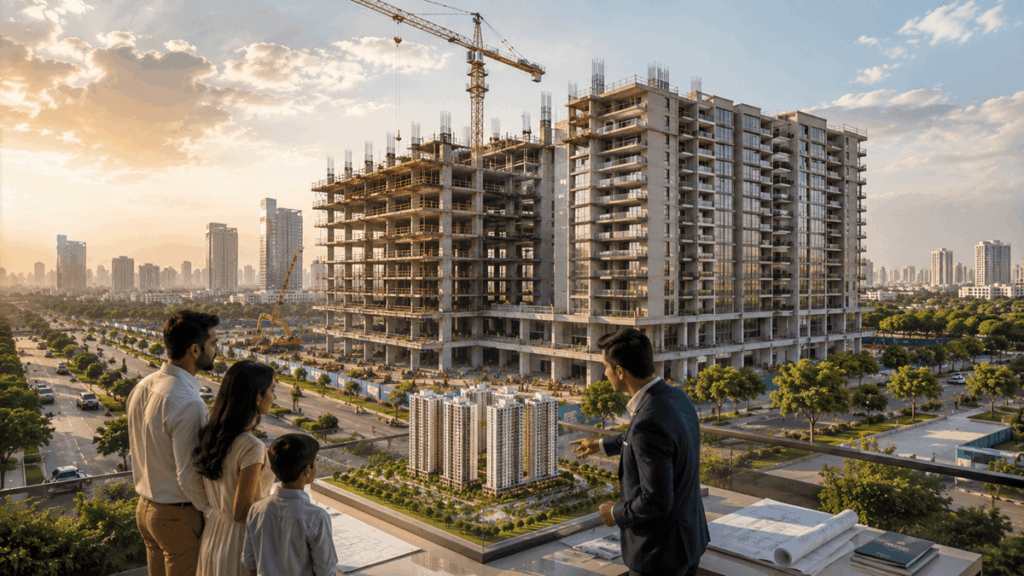
Urban construction preview

Stages of Property Development:

StageDescriptionTypical Pricing
Pre-LaunchProject announced but construction not yet started; approvals may be in progressLowest entry price (20–30% below market)
Under-ConstructionConstruction actively underway; RERA registered15–25% below completed property price
Nearing Completion70–90% construction done; possession within 6–12 months5–10% below ready-to-move price
Ready-to-Move (RTM)Fully constructed with OC/CC issuedFull market price

Understanding these stages is critical because the earlier you invest in the development cycle, the greater your potential for capital appreciation.

Why Under-Construction Projects Are India’s Smartest Entry Point in 2026

In a real estate market where weighted average property prices have crossed ₹10,000 per sq ft for the first time in history, choosing the right entry point has never mattered more. That entry point is under-construction projects.

Whether you call them under-construction properties, pre-launch projects, or early-stage developments — the core investment thesis is simple: buy before the building is finished, lock in today’s price, and capture the appreciation that comes as the project moves toward completion.

The numbers back this up. India’s residential real estate market has officially transitioned into what PropTiger’s May 2026 report calls a “structurally mature, demand-anchored growth phase.” Q1 2026 recorded 95,973 unit sales and 93,065 new launches across India’s top eight cities.

The weighted average price crossed ₹10,050 per sq ft — a historic milestone. Bengaluru led the nation with 24.2% year-on-year price appreciation, and Mumbai MMR followed with 20% YoY growth in the same period.

In this environment, investors who enter under-construction projects early are positioned to benefit from appreciation that is already underway — before they even take possession.

Top Benefits of Investing in Under-Construction Projects

Benefits of Investing in Under-Construction

1. Lower Purchase Price Compared to Ready Properties

Under-construction properties are typically priced 10% to 30% below comparable ready-to-move-in units in the same micro-market. In high-growth areas, capital appreciation between booking and possession can reach 30–40%.

The 2026 market data makes this opportunity concrete:

  • Bengaluru: Prices rose from ₹7,881/sq ft in Q1 2025 to ₹9,785/sq ft in Q1 2026, delivering a 24.2% YoY appreciation. Growth was driven by GCC expansion, IT hiring, and sustained migration demand.
  • Mumbai MMR: Residential prices increased from ₹12,600/sq ft to ₹15,120/sq ft in one year, reflecting 20% annual appreciation. Luxury demand and infrastructure-led growth remained key drivers.
  • Gurgaon (Delhi–NCR): Gurgaon continued to dominate premium housing with Delhi–NCR recording 30% YoY sales growth in Q1 2026, while Gurugram contributed nearly 73% of regional launches. Premium corridors and infrastructure upgrades supported double-digit price appreciation across key micro-markets.
  • Hyderabad: Posted double-digit sales growth in Q1 2026 with steady appreciation across HITEC City and Gachibowli. Strong tech-sector expansion continued to support housing demand.

An investor who purchased a 1,000 sq ft unit along Dwarka Expressway, Gurgaon at an early-stage launch price of ₹13,500 per sq ft in 2025 (total investment: ₹1.35 crore) would now hold an asset valued at approximately ₹1.60 crore at 2026 pricing levels — creating a notional gain of nearly ₹25 lakh before possession.

Key Insight: In competitive markets like Mumbai, Pune, Bengaluru, and Dubai, pre-launch pricing can offer discounts of up to 20–30% over the eventual market price at possession.

2. Higher Capital Appreciation Potential

Under-construction properties have historically delivered superior capital appreciation compared to ready-to-move properties, particularly in emerging corridors and infrastructure-driven growth zones.

  • In emerging urban corridors across India, under-construction properties have recorded annual appreciation rates of 12–18%, compared to 6–10% for RTM properties in established, saturated zones.
  • Properties situated near major infrastructure developments — such as new metro lines, expressways, and airports — have consistently outperformed the broader market by significant margins.

As construction progresses and surrounding infrastructure develops, the property’s value naturally appreciates. Investors who enter at the pre-launch or early construction phase stand to benefit the most from this upside.

3. RERA Protection: Your Investment Is Now Legally Backed

Historically, the biggest risk of under-construction investment was builder default — delays, fund diversion, or incomplete handovers. RERA, enforced across all major Indian states, has structurally addressed these concerns.

Under RERA, every developer must:

  • Register the project before opening bookings
  • Ring-fence 70% of buyer payments in a project-specific escrow account
  • Complete and hand over by the committed date, or pay interest to buyers on amounts already paid
  • Allow full refunds with interest if buyers choose to cancel due to delays
  • Rectify structural defects for 5 years post-possession at no additional cost to buyers

In 2026, banks and financial institutions also prefer lending against RERA-approved under-construction projects — making financing easier and faster for buyers who choose compliant projects.

4. Customization and Floor Plan Choices

One of the unique advantages of buying an under-construction property is the ability to customize your home according to your preferences. Early buyers often get to:

  • Choose their preferred floor, unit orientation, and view
  • Select or modify internal layouts and floor plans
  • Upgrade fittings, fixtures, and finishes (modular kitchen, bathroom tiles, flooring materials)
  • Incorporate smart-home technologies and energy-efficient features

Luxury real estate Floor Plan

This level of personalization is rarely possible with ready-to-move properties, where you must accept the existing design or spend additional money on renovations.

5. Modern Amenities and Latest Design Standards

Under-construction projects are designed and built according to the latest architectural standards, building codes, and lifestyle trends. In 2026, new projects increasingly incorporate:

  • Smart-home technology (IoT-enabled systems, home automation).
  • Energy-efficient design (solar panels, rainwater harvesting, LED systems)
  • Green building certifications (IGBC, GRIHA, or EDGE ratings)
  • Premium amenities (co-working spaces, EV charging stations, infinity pools, landscaped gardens)
  • Earthquake-resistant construction and modern safety systems

Explore our guide on AI Smart Homes to discover how automation, energy efficiency, intelligent security, and connected living are influencing the next generation of real estate investments.

2026 Trend: In H1 2026, units priced above USD 180,000 accounted for 42% of all residential launches, reflecting a strong trend toward premiumization and luxury housing.

6. Tax Benefits Under Section 80C and Section 24

Investing in an under-construction property with a home loan offers significant tax advantages under Indian income tax laws:

Section 80C — Principal Repayment

  • Claim deductions of up to ₹1.5 lakh per year on principal repayment
  • Stamp duty and registration charges are also eligible under this section

Section 24(b) — Interest on Home Loan

  • Claim deductions of up to ₹2 lakh per year on home loan interest for self-occupied property
  • Pre-construction interest (interest paid during the construction period) can be accumulated and claimed in five equal annual installments after possession

GST Advantages

  • Under-construction properties attract 1% GST for affordable housing (up to ₹45 lakh) and 5% GST for other residential properties
  • Ready-to-move properties with an OC are exempt from GST, but their higher base price often offsets this benefit

Tax Benefits

Before making an investment decision, it is equally important to understand the tax implications involved. Read our detailed guide on GST on Real Estate in India to learn how GST impacts under-construction properties, pricing, and overall investment planning.

Important Note: These tax benefits are available under the Old Tax Regime. If you opt for the New Tax Regime, deductions under Sections 80C and 24(b) are generally not available. Consult a qualified tax advisor for personalized guidance.

7. Wider Selection of Units and Preferred Floors

High-demand of luxury residential projects in prime locations — near metro corridors, IT parks, or new airport zones — attract early buyers fast. The best-positioned units disappear at launch-stage pricing.

By investing in under-construction projects early, investors gain first access to:

  • Higher floors with better views, natural light, and resale premium
  • Corner or end units with superior cross-ventilation and privacy
  • Preferred configurations — south-west facing, pool-facing, or garden-facing units
  • Specific amenity proximity — units overlooking the clubhouse, rooftop, or green zone

Once a project nears completion, the premium units are either sold or relaunched at a price that reflects the appreciation that has already occurred. Early-stage investment is the only way to access them at original pricing.

8. Potential for Pre-Delivery Resale Profit

Under-construction properties offer a unique investment opportunity: the ability to sell (assign or resell) your unit before possession and book profits without ever moving in. As the project progresses and its value appreciates:

  • Investors who bought at pre-launch can sell during the mid-construction phase at a 10–20% premium
  • Those who hold until near completion can realize even higher returns, especially in high-demand corridors
  • This strategy allows faster capital rotation compared to waiting for full construction and then selling a completed property

9. Portfolio Diversification in Real Estate

For investors looking to diversify their portfolio beyond stocks, mutual funds, and fixed deposits, under-construction properties offer an attractive asset class with:

  • Low correlation with equity market volatility
  • Tangible asset value that provides security against inflation
  • Multiple exit strategies (hold for rental income, resell for capital gains, or use as primary residence)
  • Lower entry barriers compared to completed luxury properties due to phased payment plans

With the global real estate market projected to grow to 7.35–7.39 trillion by 2033–2035, real estate remains a cornerstone of long-term wealth creation.

10. Strong Rental Yield Upon Possession

Real estate returns combine two streams: capital appreciation and rental income. Under-construction investment serves both.

By buying at pre-construction prices and renting at market rates post-possession, investors generate an effective yield calculated on their original (lower) invested capital — not the market value at possession. This amplifies the real return.

Rental Yield

India’s residential rental market has been growing steadily. Luxury homes demand rose 28% YoY in 2025, with 1,930 luxury units sold across seven cities in Q1 2025 alone. Post-possession, these segments generate strong rental demand — particularly from GCC employees, NRI tenants, and corporate executives.

Approximate rental yield benchmarks across major cities in 2025–26:

  • Bengaluru: 3.5–4% (driven by IT/GCC workforce demand)
  • Hyderabad: 3–4% in prime corridors like HITEC City, Gachibowli, and Kondapur
  • Mumbai MMR: 2.5–3%, with stronger performance in premium micro-markets attracting NRI and luxury segment tenants
  • Pune: 2.5–3.5%, supported by IT expansion and student/professional demand
  • Gurgaon: 3.5–4.5% in established and emerging premium corridors such as Golf Course Road, Golf Course Extension Road, Dwarka Expressway, and New Gurgaon, supported by corporate leasing demand and sustained rental absorption.
  • Delhi–NCR: 3–4% overall, with stronger rental performance concentrated in Gurgaon and select Noida micro-markets, driven by infrastructure upgrades, office-led employment growth, and premium housing demand.

For investors who purchased at pre-construction pricing and hold through possession, the effective yield on invested capital — not current market value — is materially higher than these quoted rates.

Under-Development vs. Ready-to-Move-In: Head-to-Head Comparison

FeatureUnder-Construction PropertyReady-to-Move Property
Price15–30% lower than RTMFull market price
Capital AppreciationHigher (12–18% annually in emerging corridors)Moderate (6–10% annually)
Payment FlexibilityConstruction-linked installmentsLump sum or immediate EMI
CustomizationHigh — choose layout, fittings, floorLimited — accept as-is
Immediate OccupancyNo — wait 2–4 yearsYes — move in immediately
GST1% (affordable) / 5% (regular)Exempt (with OC)
Tax BenefitsPre-construction interest deductible in 5 installmentsImmediate deductions from Year 1
Risk LevelModerate — project delays, builder defaultLow — physical inspection possible
AmenitiesLatest design and technologyMay lack modern features
RERA ApplicabilityFully applicable with escrow protectionApplicable but less relevant post-completion
Best Suited ForLong-term investors, first-time buyers with 2–4 year horizonEnd-users seeking immediate possession, rental investors

How to Choose the Right Under-Construction Project: A Checklist

Under-Construction Project A Checklist

Follow this comprehensive checklist before making your investment decision:

Developer Due Diligence

  • Confirm the project’s RERA registration through the official state RERA portal
  • Explore the developer’s delivery record including completed projects and possession timelines
  • Assess the company’s financial strength, market reputation, and credit profile
  • Gather insights from buyer reviews and testimonials across previous developments

Location Analysis

  • Measure access to existing and upcoming infrastructure such as metro connectivity, highways, airports, and business hubs
  • Examine the surrounding ecosystem including schools, hospitals, retail, and public transport
  • Study historical price movements and long-term appreciation potential in the locality
  • Identify future government and private development plans that may influence value growth

Financial and Legal Checks

  • Get the builder–buyer agreement reviewed by a legal professional before committing
  • Confirm the authenticity of title documents and land ownership records
  • Understand the payment schedule, escalation clauses, and delay penalties in advance
  • Compare home loan offers across banks and NBFCs for better financing terms
  • Estimate the complete acquisition cost, including GST, stamp duty, registration charges, and maintenance deposits

Project-Specific Verification

  • Visit the project site personally to understand construction status and execution quality
  • Analyze floor layouts, specifications, and promised amenities carefully
  • Ensure all mandatory building and environmental approvals are in place
  • Clarify the expected possession schedule along with compensation terms for delays

Looking to make a smarter premium property decision? Explore our luxury real estate investment guide to understand the essential factors that can help maximize returns and reduce investment risks.

Expert Tips for First-Time Investors in Under-Construction Projects

  1. Start with RERA verification — Never invest in a project that isn’t RERA-registered (or equivalent regulatory compliance in your market)
  2. Prioritize developer reputation over price — A slightly higher price from a reliable developer is worth more than a deep discount from an unproven builder
  3. Think long-term (3–5 years) — Under-construction investment is best suited for investors with a medium to long-term horizon
  4. Location over luxury — An average-spec property in a high-growth location will outperform a luxury property in a stagnant area
  5. Diversify within real estate — Don’t put all your capital into a single project; spread across 2–3 developments if possible
  6. Secure pre-approved home loans — Compare rates and get pre-approval before booking to strengthen your negotiating position
  7. Monitor construction progress — Visit the site regularly and stay updated through RERA portal disclosures
  8. Keep an exit strategy — Know your options for resale, rental, or self-use before investing

In Gurgaon’s premium and luxury housing market, Ganga Realty has emerged as a leading real estate company in Gurgaon, gaining recognition for its focus on modern living experiences, design-led developments, and projects across key growth corridors including Anantam 85, Nandaka 84, Ganga Valley 78, and Kashi Residences.
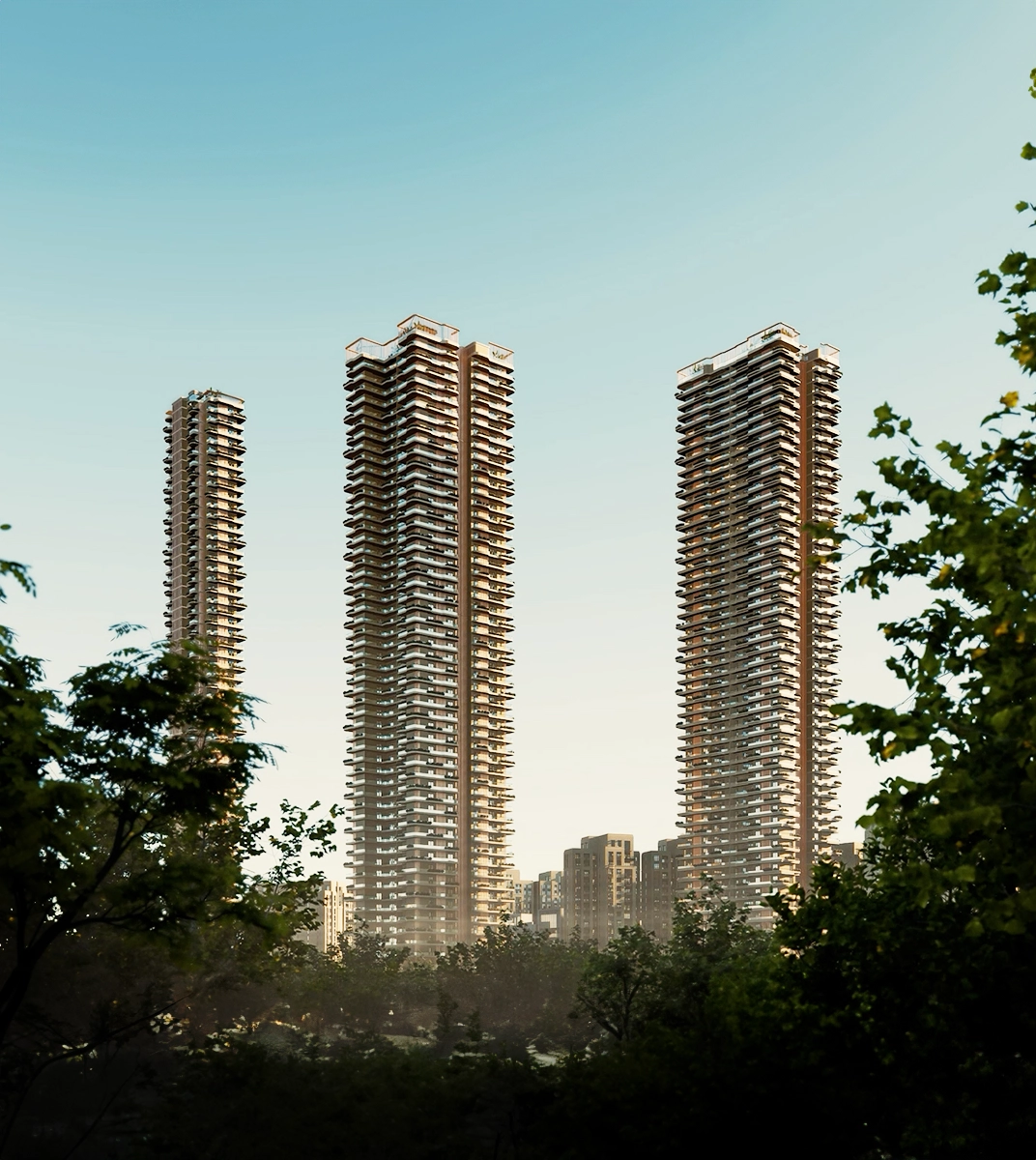
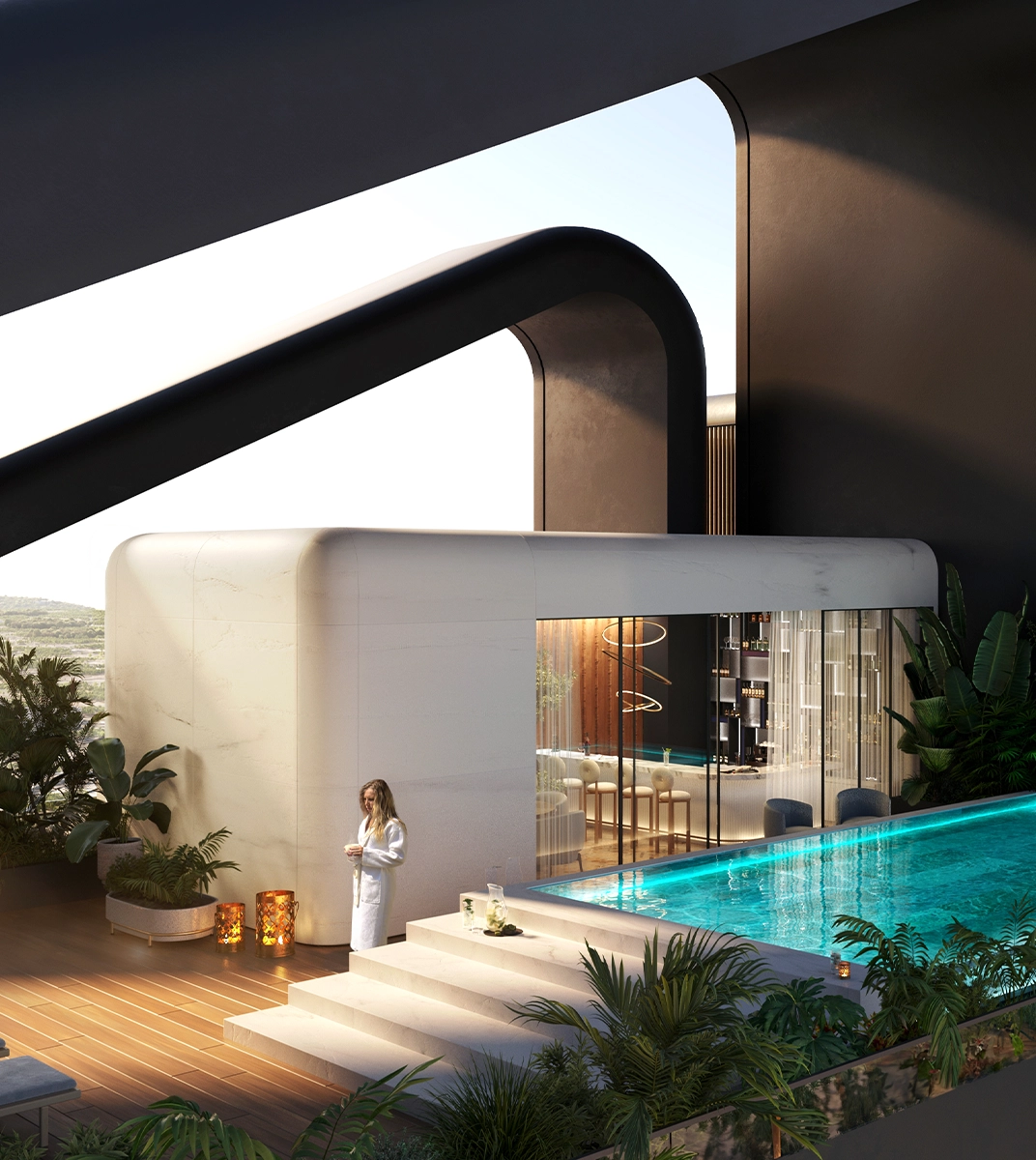
anantam85

Anantam 85

Ultra-luxury residences on Dwarka Expressway offering expansive green spaces and world-class amenities.

View Project
nandaka84

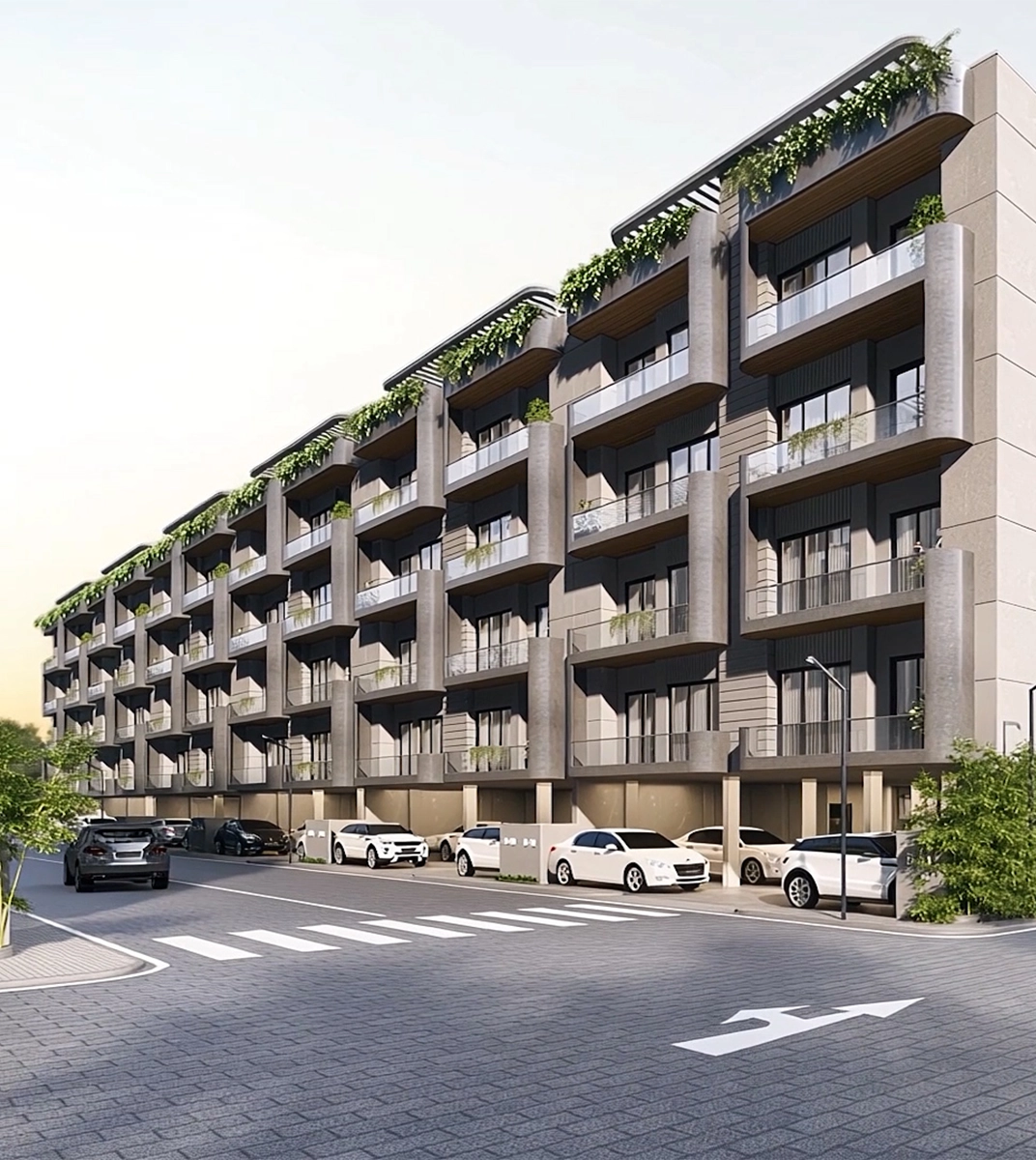
Nandaka 84

Modern residential community in New Gurgaon designed for connectivity, comfort, and lifestyle.

View Project
kashi-residences

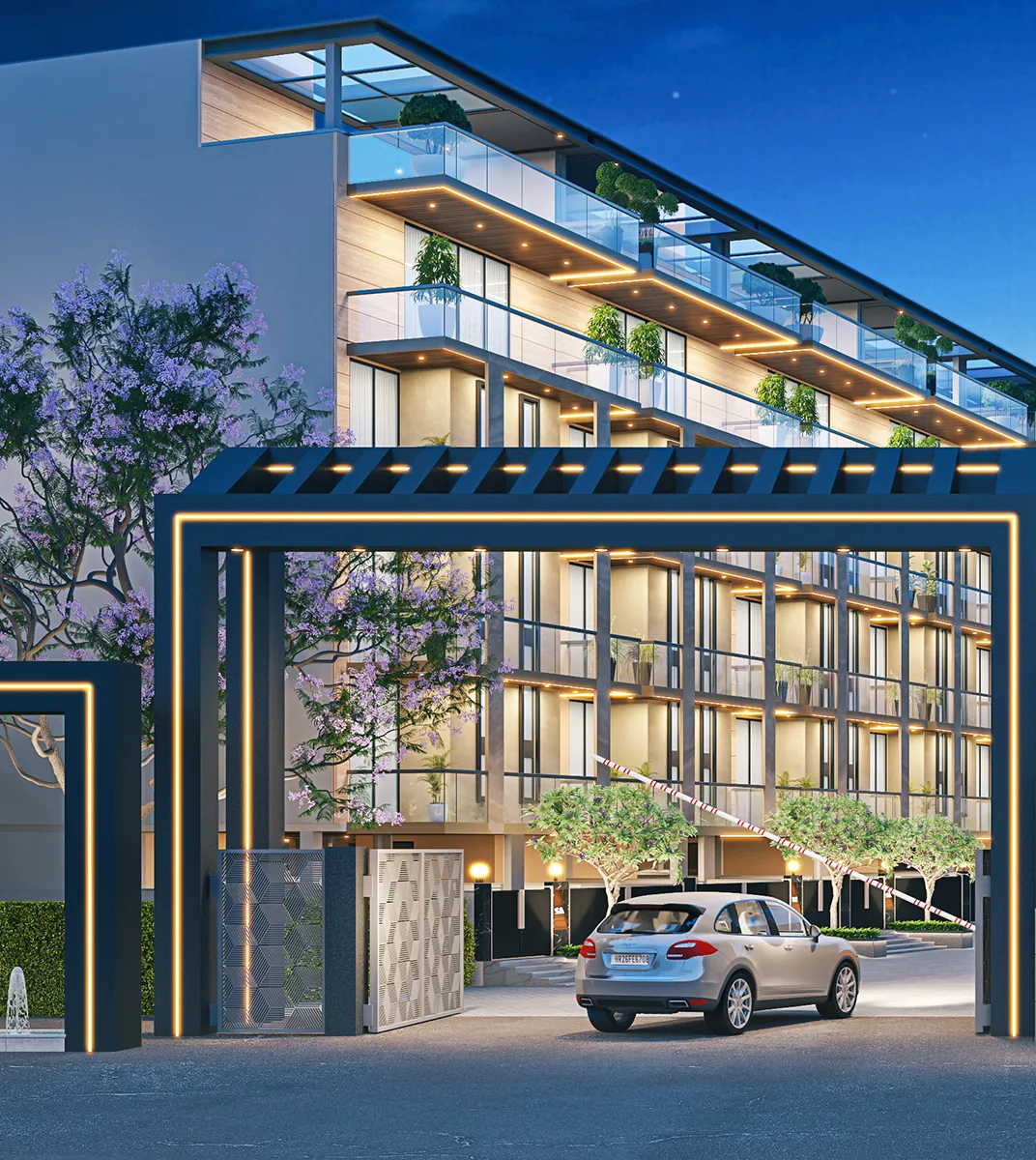
Ganga Kashi Residences

Premium residential development offering peaceful living with contemporary amenities.

View Project
ganga-valley

Ganga Valley 78

Integrated township living with lush green spaces and a complete lifestyle ecosystem.

View Project

Conclusion: Early Entry Creates the Best Returns

The benefits of investing in under-construction projects remain compelling and, in 2026, are supported by some of the strongest market fundamentals India has seen in recent years. Residential prices across India crossed the ₹10,000 per sq ft milestone, while premium housing demand continued to reshape buyer preferences and capital allocation across major cities.

Gurgaon has emerged as one of the strongest examples of this momentum. Delhi–NCR recorded a 30% year-on-year rise in housing sales in Q1 2026, with Gurugram contributing nearly 73% of residential launches in the region, led by high activity across Dwarka Expressway, New Gurgaon, and emerging premium corridors.

FAQ About Under-Construction Projects

Under-construction properties are typically 15–30% cheaper than comparable ready-to-move units in the same locality. Pre-launch properties can offer even steeper discounts of up to 20–30% below eventual market value.

Under the Old Tax Regime, you can claim up to ₹1.5 lakh under Section 80C (principal repayment) and up to ₹2 lakh under Section 24(b) (interest on home loan). Pre-construction interest can be claimed in five equal installments post-possession.

Yes, most under-construction properties can be resold or assigned before possession, subject to the developer’s transfer policy and applicable taxes. This is a common strategy for investors looking to book profits without waiting for construction completion.

pre-launch property is announced before construction begins and may not have all regulatory approvals in place — it carries higher risk but offers the lowest price. An under-construction property is RERA-registered, actively being built, and offers a more balanced risk-reward profile.

It depends on your investment goals. Under-construction properties are ideal for long-term capital appreciation and flexible payments, while ready-to-move properties suit buyers seeking immediate occupancy or rental income. For pure investment purposes, under-construction properties generally offer higher ROI.

Yes, most banks and NBFCs offer home loans for RERA-registered under-construction properties. The loan is typically disbursed in installments linked to construction milestones, and you may need to pay pre-EMI interest during the construction phase.

GST on under-construction properties is 1% for affordable housing (up to ₹45 lakh) and 5% for non-affordable housing, without input tax credit (ITC). Completed properties with an Occupancy Certificate are exempt from GST.


Enquire Now

Recent Posts

North Facing House Vastu: Simple Tips, Benefits & Complete Room Guide
01 June 2026|20 Minutes Read

North Facing House Vastu: Simple Tips, Benefits & Complete Room Guide

📌 Quick Answer A north-facing house is considered one of the most auspicious home orientations in Vastu Shastra. The north direction is associated with Lord Kuber, the deity of wealth and prosperity, and is believed to attract positive energy, financial growth, and career opportunities. With proper room placement, an appropriately positioned entrance, and adherence to key Vastu principles, a north-facing home can create a balanced, harmonious, and prosperous living environment for its residents. [ez-toc] Introduction When you step out of your front door and face the road, which direction are you looking? If your answer is north, congratulations — you live in a north facing house. And according to Vastu Shastra, the ancient Indian science of architecture and spatial energy, that matters more than most homebuyers realise. North-facing homes are consistently among the most sought-after properties in Indian cities like Delhi, Gurgaon, Mumbai, and Bengaluru. Real estate buyers — especially those who factor Vastu into their decisions — actively seek them out, and for good reason. The north direction is ruled by Kuber, the god of wealth and prosperity in Hindu mythology. It is also associated with Soma (the Moon god), representing peace, stability, and good health. Together, these associations make the north one of the most powerful and positive directions in Vastu Shastra. But what exactly makes a house "north-facing"? What are the specific rules you should follow? And if your existing home has a few Vastu issues, are there remedies that actually work? This guide covers all of it — from the basics to a complete room-by-room Vastu plan. What Is a North Facing House? A north-facing house is simply a house where the main entrance door faces north. The most straightforward way to check: stand inside your home at the front door, facing the door as if you are about to step out. Use a compass (or your phone's compass app). If the compass reads north (or within 20–30 degrees of north — i.e., north-northeast or north-northwest), your house is north-facing. It is important to note that the facing of a house is determined by the main entrance, not by the direction of the plot or the road in front. Some houses on east–west running roads have a north-facing entrance if the main door opens toward the north. Two things to confirm before assuming your home is north-facing: Use a compass, not the sun. East and north are 90 degrees apart, and it is easy to misjudge facing by eye. Confirm the main entrance, not the largest window or balcony. Multiple openings often create confusion. Is a North Facing House Good According to Vastu? The short answer is yes — and it is one of the few directions about which Vastu experts are in broad agreement. Vastu Shastra places the north under Kuber's influence and associates it with the "Soma Vithi" energy zone, which governs financial health, abundance, and opportunity. An open, unobstructed north — both on the plot level and inside the home — allows this energy to enter and circulate freely. Here is how Vastu Shastra frames it: The north direction is considered ideal for financial and career prosperity. The northeast corner (the joining of north and east) is the most sacred corner of any home — called the "Ishanya" zone — and is best suited for a Pooja room, meditation corner, or water element. The north-northwest zone supports rest and rejuvenation. Keeping the north side of the plot open and uncluttered allows positive cosmic energy (prana) to enter the home without obstruction. Common Myths About North-Facing Houses MythReality"North facing homes are only good for businesspeople"North facing houses benefit salaried professionals, homemakers, students, and business owners alike. According to Vastu, the north direction is associated with Lord Kuber and is believed to support prosperity in various forms."The entire north side must remain open"A boundary wall on the north side is acceptable. What matters is that the northern portion within the plot, such as open spaces, lawns, or setbacks, remains lighter and more open compared to the southern side."A north-facing house needs no Vastu at all"The direction of the house is only one aspect of Vastu. Proper room placement, entrance location, layout planning, and construction details are equally important for positive energy flow."North facing homes get less sunlight"In India's geographical conditions, north facing houses receive consistent, diffused natural light, making interiors comfortable while reducing excessive summer heat."All north facing houses automatically bring wealth"While the north direction is considered auspicious, financial growth depends on overall Vastu compliance, proper planning, and the occupants' actions—not just the house facing."The main entrance can be anywhere on the north side"Vastu recommends specific entrance zones on the north side. Certain locations are considered more favorable for attracting positive energy and opportunities."North-facing homes are unsuitable for families"North facing houses can be highly suitable for families when designed according to Vastu principles, with balanced room placement and adequate natural light."A north-facing kitchen is always bad"The ideal kitchen location is usually the southeast. However, a north facing house can still have a Vastu-compliant kitchen if it is positioned correctly within the layout."Vastu remedies cannot fix a poorly planned north-facing house"Many minor Vastu defects can be addressed through practical remedies, improved space management, and energy-balancing measures without major structural changes."Only the house direction matters in Vastu"Vastu considers multiple factors, including plot shape, room orientation, entrance placement, ventilation, sunlight, and interior arrangement—not just the facing direction. Benefits of a North-Facing House 1. Financial Growth and Wealth Opportunities The north direction's association with Kuber makes this the single most cited reason buyers choose north-facing homes. Vastu experts consistently advise keeping the north side open, well-lit, and clutter-free to allow financial energy to flow into the home. 2. Consistent, Comfortable Natural Light In India (which sits north of the equator), the sun travels from east to west through the southern sky. A north-facing home receives indirect, diffused sunlight throughout the day — not harsh direct sun. This translates to cooler interiors in summer, reduced glare, and more consistent light quality in living spaces. 3. Better Career and Professional Growth The north is connected to Mercury (Budh) in Vedic astrology, which governs communication, intelligence, and commerce. Vastu practitioners associate a well-aligned north-facing home with improved clarity of thought, better career opportunities, and advancement in business. 4. Positive Energy Flow Throughout the Home When the main entrance faces north, cosmic energy (prana) enters the home from the Kuber zone and flows naturally toward the south. This directional flow aligns with Vastu principles for a healthy, energetically balanced home. 5. Ideal for Water Features and Landscaping Vastu recommends water elements — fountains, water tanks, borewells — on the north or northeast side of a property. A north-facing plot naturally accommodates these features in the correct positions, making Vastu compliance easier from the start. North Facing House Vastu Tips — Room by Room Main Entrance The most important Vastu element in any north-facing home is the entrance placement. Not all positions along the north wall are equally auspicious. The north wall is divided into nine energy zones (Pada). The most favourable positions for the main entrance are: 4th Pada (Mukhya) — the most auspicious, associated with Kuber directly 3rd Pada (Jayanta) — excellent for prosperity and positivity 5th Pada (Soma) — good for peace and stability Avoid placing the entrance in the 1st Pada (northernmost corner near northwest) or the 9th Pada (closest to northeast corner) — these are considered less favourable in classical Vastu texts. Practical tips for the entrance: Keep the entrance door well-lit, especially after dark Use wood (not metal) for the main door if possible Keep the entrance area clean and unobstructed — no shoes, clutter, or dark colours A nameplate or auspicious symbol (Om, Swastika) at the entrance is considered beneficial The entrance should open inward and to the left (clockwise) Living Room Place the living room in the north or northeast zone of the home. This positions the main social space directly in the energy-receiving zone of the house. Keep furniture along the south and west walls — heavier pieces (sofas, cabinets) ground the south side The northeast and north corners of the living room should remain open and light — avoid placing tall cabinets or heavy furniture here If you have a prayer corner or a small idol in the living room, the northeast corner is ideal Use light, warm colours — cream, white, light yellow, or soft green work well in north-facing living rooms Bedroom Placement The master bedroom is best placed in the southwest corner of the home. In a north-facing plot, this translates to the rear-left area. The head of the bed should point south or east when sleeping Avoid sleeping with your head pointing north — this is one of the few Vastu points that is also supported by some sleep researchers (alignment with the Earth's magnetic field) The southwest bedroom creates a sense of stability, rest, and grounded energy Guest bedrooms or children's rooms work well in the northwest or north side of the home Kitchen Location The southeast corner is the ideal position for the kitchen, in both north-facing and other directional homes. The southeast is governed by Agni (fire), which makes it naturally aligned with cooking. In a north-facing house, the kitchen should be at the rear-right area of the home (southeast) The cook should face east while cooking — this requires the stove to be on the east wall of the kitchen Avoid placing the kitchen in the northeast — this is a critical Vastu mistake (see Common Mistakes section) Keep the kitchen sink (water) and stove (fire) on opposite walls — mixing fire and water on the same counter creates Vastu conflict Pooja Room (Prayer Room) The northeast corner is the holiest position for a Pooja room in any home, and it is particularly well-suited in a north-facing home where the northeast is naturally energised. Idols and photos should face west (worshipper faces east) or face east (worshipper faces west) Avoid placing the Pooja room under a staircase, next to a bathroom, or above a kitchen Keep the space well-lit and ventilated — natural light from the north or northeast is ideal Bathroom and Toilet Bathrooms should be placed in the northwest or west side of the home. In a north-facing house: Master bathroom attached to the southwest bedroom — acceptable on the west or south wall Common bathroom — northwest zone works well Never place a toilet in the northeast corner — this is one of the gravest Vastu errors in any home The toilet seat should ideally be positioned so the user faces north or south (not east or west, which is considered disrespectful to solar energy) Staircase In a north-facing house, the staircase is best positioned in the south, southwest, or west zone. Stairs should rise from north to south (or east to west) — meaning you walk toward the south as you climb Avoid placing a staircase in the center of the home (Brahmasthan) or in the northeast The space under the staircase should not be used as a kitchen, Pooja room, or bedroom — storage or a utility area is acceptable Study or Home Office The north or northeast zone is excellent for a study room or home office in a north-facing house. Students and professionals working from home benefit from sitting facing north or east while studying or working. A north-facing study room in a north-facing home creates a powerful alignment — the external energy matches the internal placement Keep the desk away from the north wall — leave at least 3–4 feet of space between the desk and the wall so energy can circulate Good lighting is essential; a north-facing window provides consistent, glare-free light ideal for studying Balcony and Open Spaces Open spaces, balconies, and gardens should be on the north or east side of a north-facing property. A north-facing balcony is ideal — it stays cool, receives diffused light, and aligns perfectly with Vastu Keep the south and west sides heavier — compound walls, storage, or service areas work well here Avoid heavy trees or tall structures on the north side — they block the energy flow from Kuber's direction A small water feature (fountain or pot) on the north side is considered highly auspicious Overhead Water Tank Place the overhead water tank in the southwest or south zone of the roof. Water in the southwest creates a grounding, stable energy — it also makes practical sense since the southwest is typically the highest point of a Vastu-compliant structure Avoid placing the water tank in the northeast — this is a common mistake in older constructions and considered a serious Vastu flaw Underground water sumps or borewells belong in the north or northeast — underground water here is beneficial North Facing House Vastu Plan — An Example Layout Here is how an ideal Vastu-compliant north-facing home might be laid out on a 30×40 ft plot. Approaching from the north (street side): Main entrance: Placed in the 4th Pada of the north wall (centre-left when facing south from outside) — directly in Kuber's zone Front courtyard / sit-out: Small open north lawn or porch, lower than the main floor level, with a small water feature or potted plants Living room: Northeast to north zone — open, bright, light furniture, northeast corner kept free Study / home office: North zone, parallel to living room — north-facing windows Dining room: Northwest — connected to kitchen toward the south Kitchen: Southeast corner — stove on east wall, sink on north wall of kitchen, cook faces east Master bedroom: Southwest — head of bed pointing south; attached bathroom on south or west wall Children's bedroom: Northwest — adjoining the northwest bathroom Pooja room: Northeast corner, small and self-contained — considered the spiritual anchor of the home Staircase: South zone, rising from north to south Overhead water tank: Southwest area of roof Garden / open area: North and east sides of plot — kept lower and more open than south and west This layout follows the core Vastu principle of keeping heavy, taller, and more active spaces in the south and west, while keeping the north and east open, lighter, and more energised. North Facing House Vastu — Dos and Don'ts ElementDoDon'tVastu ImpactMain EntrancePlace the entrance in the 3rd, 4th, or 5th Pada of the north wall.Avoid placing it in the 1st or 9th Pada, or exactly in the northwest corner.Influences prosperity, opportunities, and the flow of positive energy into the home.North Side of PlotKeep the northern side open, lower in height, and clutter-free.Avoid heavy structures, tall trees, or raising the ground level on the north side.Supports the flow of Kuber energy and financial prosperity.Master BedroomLocate the master bedroom in the southwest direction.Avoid placing it in the northeast or north zones.Southwest provides stability and grounding, while the northeast is too spiritually active for restful sleep.KitchenPosition the kitchen in the southeast and cook facing east.Avoid kitchens in the northeast or north direction.The northeast is a sacred zone; a kitchen here can disturb the balance of energies.Pooja RoomPlace the pooja room in the northeast with idols facing west or east.Avoid placing it under a staircase or adjacent to a toilet.The northeast (Ishanya) is considered the most auspicious spiritual zone.Bathroom/ToiletConstruct bathrooms in the northwest or west direction.Avoid toilets in the northeast or southeast.A northeast toilet is considered one of the most significant Vastu defects.Overhead Water TankInstall the overhead water tank in the southwest or south direction.Avoid placing water tanks in the northeast.A northeast water tank can create energy imbalance and block positive vibrations.StaircaseBuild staircases in the south, southwest, or west zone.Avoid staircases in the northeast.Heavy structures in the northeast can obstruct positive energy flow.Living RoomKeep the living room in the north, east, or northeast area.Avoid excessive clutter and dark interiors.Encourages social harmony, positivity, and natural light.Open Spaces & BalconiesMaintain more open space in the north and east directions.Avoid blocking these areas with storage or heavy construction.Improves ventilation, sunlight, and overall energy circulation. Common Vastu Mistakes in North-Facing Houses 1. Wrong Entrance Location Placing the entrance in the 1st Pada (northwest corner of the north wall) is among the most common errors. This position is associated with the energy of Roga (disease/obstacles) in classical Vastu texts. Always confirm the exact Pada position using a compass and the standard 9-Pada division of the north wall. 2. Kitchen in the Northeast This is the single most frequently seen critical Vastu mistake across Indian homes. The northeast is the Ishanya zone — sacred, pure, and associated with divine energy. Placing a kitchen here introduces the fire element into the most sensitive zone of the home. If your kitchen is currently in the northeast, prioritise remedies or relocation. 3. Clutter Near the Main Entrance Even in the most Vastu-correct house, a cluttered entrance blocks the flow of positive energy. Shoes, dustbins, broken furniture, or dark corners at the north-facing entrance negate much of the directional benefit. Treat the entrance as the most important 10 square feet in your home. 4. Overhead Water Tank in the Northeast A heavy water tank in the northeast corner of the roof is a very common construction mistake — especially in older homes. It creates a combination of weight and water in the most sacred energy zone, which Vastu associates with stagnation of prosperity and health issues. 5. Blocked North Side Building high walls, dense trees, or parking heavy vehicles permanently on the north side of a north-facing plot is counterproductive. The north side should ideally remain open, lighter, and lower than the south side — this allows energy to flow in from Kuber's direction rather than being blocked at the threshold. 6. Master Bedroom in the Northeast The northeast is too active and spiritually charged for sleep. Placing the master bedroom here often results in restlessness, light sleep, or difficulty fully relaxing. The southwest is always the preferred position for the master bedroom, regardless of the house facing. North Facing House Vastu Remedies If structural modifications are not possible, Vastu offers practical remedies for existing issues: IssueRemedyEntrance in an Inauspicious PadaPlace a small Kuber Yantra or Swastika symbol above the main entrance. Ensure the doorway is well-lit, clean, and welcoming. Decorate the entrance with fresh flowers or auspicious symbols to attract positive energy.Kitchen in the NortheastPlace a Vastu pyramid or copper plate beneath the stove. Avoid cooking in the northeast corner and use that area primarily for storage. Repaint the kitchen using warm, earthy shades such as cream, beige, or terracotta.Bathroom in the NortheastKeep the bathroom clean and dry at all times. Always keep the door closed. Place a bowl of sea salt inside and replace it weekly. A copper Swastika on the bathroom door is also believed to help neutralize negative effects.Overhead Water Tank in the NortheastInstall a Vastu pyramid near the water tank. Ensure there is no water leakage or stagnation. During future renovations, consider relocating the tank to the southwest or south direction.Master Bedroom in the NortheastUse deeper, grounding colors such as blue-green or deep teal. Position heavy furniture along the south and west walls. Sleep with your head facing south for better stability and restful sleep.Blocked North EntranceKeep the entrance bright and clutter-free. Install additional lighting if required. Place healthy potted plants or a small water feature near the north side to activate positive energy flow.Missing Northeast Corner (Cut Corner Plot)Place a crystal ball, Kuber Yantra, or a bowl of fresh water in the nearest northeast area of the home. For significant plot-level defects, consult a qualified Vastu expert for customized remedies.Dark or Poorly Lit EntranceImprove illumination using warm-white lights. Use mirrors on adjacent walls (not directly opposite the entrance) to reflect light and enhance the feeling of openness and positivity. Why Homebuyers Prefer North-Facing Properties The preference for north-facing homes in Indian real estate is not just rooted in tradition — it has practical legs too. Market demand: In cities like Gurgaon, Noida, Mumbai, and Hyderabad, north and east-facing flats consistently attract higher enquiries and, in premium segments, command a 3–7% price premium over other facings. Buyers who prioritise Vastu — a large and growing segment — actively filter by facing. Practical advantages: As discussed, north-facing homes receive indirect sunlight, keeping interiors cooler. In Gurgaon's hot summers, this translates to meaningfully lower air-conditioning costs. The light quality in a north-facing living room is consistent and pleasant throughout the day — designers and architects often prefer it. Resale value: Vastu-compliant homes — particularly north and east-facing — tend to hold resale appeal better in Indian markets. A buyer who is indifferent to Vastu will accept any facing; a buyer who prioritises Vastu will only shortlist certain facings. This asymmetry supports long-term demand. New-age buyers: Increasingly, younger urban homebuyers are combining Vastu considerations with practical factors — not out of superstition, but as a framework for intentional home design. The north-facing preference aligns with this hybrid approach. For homebuyers considering luxury properties in Gurgaon, it is worth asking developers specifically about apartment facing and entrance orientation before finalising a unit. Looking for a Vastu-compliant luxury home in Gurugram? Explore Ganga Realty's premium residential projects in Gurgaon and other prime locations to find a home that perfectly balances modern comfort, positive energy, and long-term investment value. Anantam 85 Ultra-luxury residences on Dwarka Expressway offering expansive green spaces and world-class amenities. View Project Nandaka 84 Modern residential community in New Gurgaon designed for connectivity, comfort, and lifestyle. View Project Ganga Kashi Residences Premium residential development offering peaceful living with contemporary amenities. View Project Ganga Valley 78 Integrated township living with lush green spaces and a complete lifestyle ecosystem. View Project Key Takeaways From This North-Facing Properties Guide A Vastu-aligned home is not just about luck or energy — it is about creating spaces that feel right, function well, and support the people living in them. North-facing homes, when thoughtfully designed, do exactly that The main entrance should be in the 3rd, 4th, or 5th Pada of the north wall Keep the northeast corner sacred — Pooja room or open space, never a kitchen or toilet Place the master bedroom in the southwest, with the head pointing south Keep the north and east sides of the plot open and lighter than the south and west Structural issues can often be improved with practical Vastu remedies Combine Vastu principles with good architecture, lighting, and ventilation for the best results. Conclusion A north-facing house is one of the most naturally aligned orientations in Vastu Shastra — and for tangible, practical reasons as well as symbolic ones. The north's connection to Kuber, the consistent natural light, the support for water features, and the alignment with prosperity and career energy make it a compelling choice for homebuyers across India. But orientation alone does not make a home Vastu-compliant. The placement of the entrance within the north wall, the position of the kitchen and master bedroom, the management of the northeast corner, and something as simple as keeping your entrance clean and well-lit — all of these matter as much as the direction your front door faces. FAQs North-Facing House

Read More
Why Sector 102 Gurugram Is Emerging as a Luxury Address on Dwarka Expressway in 2026
28 May 2026|8 Minutes Read

Why Sector 102 Gurugram Is Emerging as a Luxury Address on Dwarka Expressway in 2026

The real estate landscape of Gurugram has witnessed a massive transformation over the last few years, and the Dwarka Expressway corridor has emerged as the center of this growth. Among all the sectors gaining attention along this rapidly developing corridor, Sector 102 Gurugram is becoming one of the most preferred luxury residential destinations in 2026. Once considered a developing location, Sector 102 has now evolved into a premium address offering excellent connectivity, modern infrastructure, luxury housing projects, and strong investment potential. With the operationalization of major stretches of Dwarka Expressway, the sector is attracting luxury homebuyers, NRIs, working professionals, and real estate investors looking for future-ready developments. [ez-toc] From seamless access to Delhi and IGI Airport to the rise of high-end residential communities, Sector 102 is quickly becoming a key part of Gurugram’s luxury real estate story. In this blog, we explore why Sector 102 Gurugram is emerging as a luxury hotspot on Dwarka Expressway and why it has become one of the most promising real estate destinations in NCR. Strategic Location on Dwarka Expressway One of the biggest reasons behind the growing popularity of Sector 102 is its strategic location on the Dwarka Expressway. Dwarka Expressway has significantly improved connectivity between Delhi and Gurugram, making daily commuting easier for professionals and business owners. Sector 102 enjoys direct access to major destinations such as: IGI Airport Dwarka Delhi Cyber City NH-8 Udyog Vihar Golf Course Road Southern Peripheral Road (SPR) Upcoming Global City Gurugram The expressway has reduced travel time substantially, making the region highly attractive for luxury homebuyers who prioritize convenience and connectivity. Unlike older sectors of Gurugram that often struggle with congestion and infrastructure pressure, Sector 102 offers better urban planning, wider roads, and organized development. Rapid Infrastructure Development Boosting Real Estate Growth Infrastructure development is one of the strongest factors driving the growth of Sector 102. Over the past few years, the government has focused heavily on improving infrastructure along Dwarka Expressway. This includes: Elevated road networks Better internal connectivity Wider service roads Improved drainage systems Modern civic infrastructure Proposed metro connectivity expansion The completion of major infrastructure projects has increased buyer confidence and accelerated real estate activity in the region. As of May 2026, Dwarka Expressway has become one of NCR’s fastest-growing luxury residential corridors due to its connectivity advantages and large-scale urban development. The upcoming Global City project and commercial expansion around Dwarka Expressway are also expected to further increase the demand for luxury housing in nearby sectors like Sector 102. Rise of Luxury Residential Projects in Sector 102 Gurugram Sector 102 is witnessing rapid development of premium residential apartments designed for modern luxury living. Today’s luxury buyers are not just looking for apartments—they seek integrated lifestyle experiences with world-class amenities, wellness spaces, landscaped greens, smart home features, and resort-style living. Leading developers are increasingly focusing on luxury projects that offer: Spacious residences Premium clubhouse facilities Smart security systems Sustainable architecture Green open spaces Wellness-focused amenities Low-density living environments The rise of branded luxury projects across New Gurugram and Dwarka Expressway reflects the growing demand for premium lifestyle communities. Developers like Ganga Realty are also contributing to Gurugram’s luxury housing transformation through thoughtfully designed projects focused on elevated urban living. Premium developments like Ganga Realty Anantam 85 and Ganga Realty Nandaka 84 have gained attention among modern homebuyers seeking luxury, connectivity, and future-ready infrastructure in New Gurugram. The increasing presence of reputed developers is strengthening the overall image of Dwarka Expressway as a high-potential luxury real estate corridor. Excellent Connectivity to Delhi and Business Hubs Connectivity is one of the biggest advantages of Sector 102 Gurugram. The location offers smooth access to both Delhi and Gurugram’s major business districts, making it ideal for professionals and entrepreneurs. Approximate travel times from Sector 102: DestinationApproximate Travel TimeIGI Airport20–25 MinutesDwarka Sector 21 Metro15–20 MinutesCyber City25–30 MinutesUdyog Vihar20–25 MinutesNH-815–20 MinutesGolf Course Road35–40 Minutes This seamless connectivity is one of the biggest reasons why luxury homebuyers are increasingly shifting toward sectors along Dwarka Expressway. The location also benefits from proximity to upcoming commercial and business hubs, which is expected to drive future rental demand and capital appreciation. Strong Investment Potential and Property Appreciation Sector 102 has emerged as one of the most promising investment destinations in Gurugram’s luxury real estate market. With the rapid development of Dwarka Expressway, property prices in nearby sectors have witnessed significant appreciation over the last few years. Key reasons behind rising investment demand include: Infrastructure-led growth Increasing luxury housing demand Airport proximity Better connectivity Expansion of commercial activity Limited premium inventory Luxury residential projects along Dwarka Expressway are attracting both end-users and investors due to strong long-term growth potential. As the area continues to develop, experts expect further appreciation in property values across premium sectors connected to Dwarka Expressway. Developers like Ganga Realty are also expanding the luxury living ecosystem in Gurugram through projects designed around modern lifestyles, wellness amenities, and sustainable urban planning. This growing focus on premium developments is helping New Gurugram evolve into one of NCR’s most desirable luxury residential destinations. Better Urban Planning Than Older Parts of Gurugram One of the biggest reasons luxury buyers are choosing Sector 102 is the quality of urban planning. Older areas of Gurugram often face challenges such as: Traffic congestion Overcrowding Narrow roads Parking issues Unplanned development In comparison, Sector 102 offers: Wider roads Better traffic movement Organized infrastructure More green spaces Modern residential layouts Planned civic development The entire Dwarka Expressway corridor has been designed to support future urban expansion and modern living standards. This planned growth model is especially appealing to buyers looking for long-term lifestyle value and comfortable living environments. Growing Lifestyle and Social Infrastructure Sector 102 is rapidly evolving into a complete lifestyle destination with improving social infrastructure. Residents now have access to: International schools Hospitals Shopping complexes Entertainment centers Restaurants and cafes Wellness and fitness facilities Commercial spaces As the surrounding sectors continue to develop, the overall livability quotient of Sector 102 is increasing significantly. Luxury homebuyers today prefer destinations that offer convenience, comfort, and lifestyle integration—and Sector 102 is steadily emerging as one of those premium locations in Gurugram. Increasing Interest from NRIs and Luxury Buyers The luxury housing segment in Gurugram has seen strong demand from NRIs and affluent buyers in 2026. Sector 102 is attracting this audience because of: Airport connectivity Premium developments Better infrastructure Modern lifestyle amenities Long-term appreciation potential NRIs particularly prefer locations that offer modern urban planning and easy access to Delhi and international travel routes. With Dwarka Expressway now becoming a major luxury real estate corridor, sectors like 102 are witnessing growing interest from global investors and high-income homebuyers. Why Sector 102 Gurugram Is Becoming a Preferred Luxury Address Here are the major reasons behind the rise of Sector 102 Gurugram: Prime location on Dwarka Expressway Seamless Delhi-Gurugram connectivity Close proximity to IGI Airport Premium luxury residential projects Strong infrastructure growth Better urban planning High appreciation potential Expanding social infrastructure Increasing NRI investment Growing demand for luxury living Explore Premium Living with Ganga Realty As Gurugram’s luxury real estate market continues to expand, developers focused on premium lifestyle communities are gaining strong buyer interest. Ganga Realty has emerged as one of the notable names shaping modern luxury living in Gurugram through thoughtfully planned developments focused on design, wellness, sustainability, and connectivity. Some of the premium projects by Ganga Realty include: Anantam 85 Ultra-luxury residences on Dwarka Expressway offering expansive green spaces and world-class amenities. View Project Nandaka 84 Modern residential community in New Gurugram designed for connectivity, comfort, and lifestyle. View Project Ganga Kashi Residences Premium residential development offering peaceful living with contemporary amenities. View Project Ganga Valley 78 Integrated township living with lush green spaces and a complete lifestyle ecosystem. View Project These projects reflect the evolving preferences of luxury homebuyers who seek elevated lifestyle experiences, modern amenities, and strategic connectivity in rapidly growing sectors of New Gurugram. Conclusion Sector 102 Gurugram is rapidly transforming into one of the most desirable luxury residential destinations on Dwarka Expressway. With modern infrastructure, excellent connectivity, premium developments, and rising investment demand, the sector offers a strong combination of lifestyle and long-term growth potential. As Dwarka Expressway continues to evolve into NCR’s next major luxury corridor, Sector 102 is expected to witness even greater demand from homebuyers, investors, and NRIs in the coming years. For those looking to invest in future-ready luxury living, Sector 102 Gurugram stands out as one of the most promising real estate destinations in 2026. FAQs About Sector 102 Gurugram

Read More

Luxury Living In Gurugram

Discover thoughtfully designed residences that blend modern architecture,
premium amenities, and sustainable living in the heart of the city.

--> -->