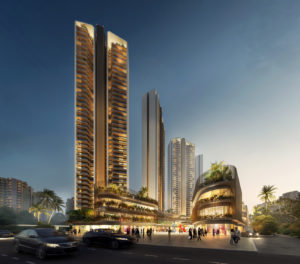
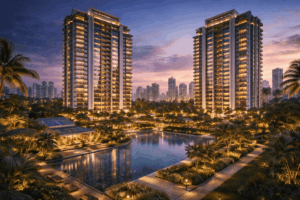
Gurgaon has evolved far beyond being a satellite city of Delhi. Today, it stands as one of India’s most dynamic real estate markets—driven by infrastructure, global employment, and long-term urban planning. From a developer’s perspective, Gurgaon offers a rare combination of economic strength, future-ready infrastructure, and sustained housing demand, making it exceptionally well-positioned for growth over the next decade.
Table of Contents
Why Gurgaon Continues to Lead India’s Real Estate Growth
Gurgaon continues to lead India’s real estate growth due to its strong economic ecosystem, infrastructure-led real estate growth in Gurgaon, and sustained end-user demand. With global corporates, robust employment generation, and seamless connectivity through expressways and metro corridors, the city offers long-term stability rather than speculative growth.
Planned urban expansion, the rise of branded developments, and increasing focus on quality, sustainability, and lifestyle living further strengthen Gurgaon’s position as one of India’s most future-ready real estate markets.
1. Strategic Location Within NCR
Gurgaon’s location gives it a natural advantage within the National Capital Region. Seamless connectivity to Delhi, IGI Airport, and key NCR cities has made it a preferred choice for both end-users and investors.
Major infrastructure corridors such as NH-48, Dwarka Expressway, Southern Peripheral Road (SPR), and the Delhi–Mumbai Expressway are transforming mobility and reducing travel time across regions. For real estate development, such connectivity creates long-term value rather than short-term speculation.
Developer insight: Locations with multi-corridor connectivity consistently outperform isolated micro-markets over time.
2. Strong Employment Ecosystem Driving Housing Demand
Gurgaon is one of India’s largest private-sector employment hubs. It hosts:
- Fortune 500 companies
- Global IT & tech firms
- Financial services and consulting majors
- Startups and innovation-led enterprises
This continuous inflow of professionals ensures steady end-user demand, which is the foundation of a stable real estate market. Unlike purely investor-driven cities, Gurgaon’s demand is backed by real occupancy and lifestyle needs.
3. Infrastructure-Led Urban Growth
Unlike unplanned urban expansion, Gurgaon’s growth is increasingly infrastructure-led.
Key developments shaping the next decade include:
- Dwarka Expressway becoming a new residential and commercial spine
- Metro expansion improving last-mile connectivity
- New sectors in New Gurgaon and Southern Peripheral Road maturing rapidly
- Improved civic infrastructure and planned road networks
For developers, this creates an ecosystem where planned residential development in Gurgaon can be designed for long-term livability, not just immediate sales.
4. Shift Toward Planned & Branded Developments
Homebuyers today are more discerning than ever. The market has clearly shifted toward:
- Branded real estate developers
- Planned residential communities
- Low-density developments
- Integrated lifestyle amenities
This shift benefits cities like Gurgaon, where land parcels allow thoughtful master planning. Over the next decade, demand will increasingly favour developments that prioritise design quality, sustainability, and community living.
5. Rising Demand for Sustainable Living
Sustainability is no longer optional—it is becoming central to real estate development.
Gurgaon is witnessing growing preference for:
- Green building practices
- Energy-efficient homes
- Landscaped open spaces
- Environmentally responsible construction
From a developer’s standpoint, sustainable developments not only reduce long-term operational costs but also future-proof assets against regulatory and environmental changes. Several emerging residential sectors in Gurgaon, particularly in New Gurgaon, are witnessing steady appreciation due to improved infrastructure and thoughtful planning.
6. Balanced Mix of Residential Asset Classes
One of Gurgaon’s key strengths is the diversity of residential formats:
- Luxury apartments
- Low-rise and mid-rise developments
- Plotted developments
- Integrated townships
This allows the market to absorb demand across income groups while maintaining price stability. For the next decade, this balance will be crucial in ensuring consistent growth without overheating the market.
7. Strong Regulatory Framework & Transparency
With the implementation of RERA, buyer confidence in Gurgaon has significantly improved. Transparency, accountability, and timely delivery have become central to market credibility.
This regulatory maturity favours serious, long-term developers and discourages speculative or short-term players—leading to a healthier real estate ecosystem overall. Policy reforms and increasing transparency in real estate development have further strengthened buyer confidence in Gurgaon’s property market.
8. Long-Term Capital Appreciation Potential
Historically, Gurgaon has demonstrated strong capital appreciation in infrastructure-led micro-markets. From now on, appreciation will be driven by:
- Completion of major expressways
- Maturity of new sectors
- Increased commercial absorption
- Lifestyle-driven residential demand
Markets with these fundamentals tend to outperform over a 10–15 year horizon, making Gurgaon a compelling choice for long-term buyers and investors alike.
Why Gurgaon’s Real Estate Story Is Just Beginning
From a developer’s perspective, Gurgaon offers something rare: a city that continues to reinvent itself while remaining grounded in economic fundamentals. Its growth is not dependent on a single industry or trend, but on a well-rounded ecosystem of infrastructure, employment, governance, and evolving lifestyle preferences.
As the city moves into its next phase of urban development, Gurgaon is set to remain one of India’s strongest real estate markets for the decade ahead.
Conclusion
Gurgaon’s continued leadership in India’s real estate growth is the result of strong economic fundamentals, infrastructure-led planning, and a clear shift toward quality-driven development. As the city evolves over the next decade, markets that prioritise long-term livability, transparency, and thoughtful urban design will continue to create real value for homebuyers and investors alike.
As a real estate developer in Gurgaon, Ganga Realty aligns its developments with this long-term vision—focusing on planned communities, sustainable design, and future-ready living environments that reflect the city’s growth trajectory. In a market shaped by trust, planning, and enduring demand, Gurgaon’s real estate story is not just about growth—it is about building for the future.
FAQs – Why Gurgaon Continues to Lead India’s Real Estate Growth
2. How does infrastructure development impact Gurgaon’s real estate growth?
Infrastructure plays a central role in Gurgaon’s growth. Projects such as the Dwarka Expressway, metro expansions, NH-48, and the Delhi–Mumbai Expressway have improved connectivity, reduced travel time, and unlocked new development zones—directly contributing to property value appreciation.
3. Is Gurgaon a good place to invest in real estate for the long term?
Yes, Gurgaon is well-suited for long-term real estate investment due to its strong economic fundamentals, regulatory transparency under RERA, and continuous infrastructure upgrades. Markets driven by real end-user demand tend to deliver sustainable appreciation over time.
4. What role do real estate developers play in Gurgaon’s growth?
Real estate developers play a key role by creating planned residential communities, integrating modern amenities, and focusing on construction quality and sustainability. Developer-led planning ensures long-term livability, which strengthens Gurgaon’s real estate ecosystem.
5. Which areas in Gurgaon are expected to see the most growth in the next decade?
Micro-markets such as New Gurgaon, Dwarka Expressway, Southern Peripheral Road (SPR), and emerging sectors like 78, 84, and 85 are expected to see strong growth due to infrastructure readiness and planned development.
6. Why is end-user demand important for Gurgaon’s real estate market?
End-user demand ensures market stability. Gurgaon’s large working population, driven by corporate and IT hubs, creates genuine housing needs rather than speculative buying—resulting in consistent absorption and long-term value creation.
7. How is Gurgaon adapting to modern homebuyer preferences?
Gurgaon’s real estate market is adapting through low-density developments, sustainable design, green spaces, and integrated lifestyle amenities. Homebuyers today prioritise quality, community living, and long-term value, which aligns with Gurgaon’s development trajectory.
8. Does RERA improve buyer confidence in Gurgaon?
Yes, RERA has significantly improved transparency, accountability, and delivery timelines in Gurgaon’s real estate market. This has strengthened buyer confidence and encouraged trust in branded and credible real estate developers.
9. What makes Gurgaon different from other real estate markets in India?
Unlike many cities, Gurgaon’s growth is driven by a combination of private-sector employment, infrastructure investment, and planned development. This balanced ecosystem helps the city avoid volatile price cycles and supports long-term growth.
10. Will Gurgaon continue to grow over the next decade?
Based on current infrastructure projects, economic activity, and urban planning trends, Gurgaon is well-positioned to remain one of India’s leading real estate markets over the next decade, particularly for planned and quality-driven developments.