At Ganga Realty, we closely track how infrastructure shapes cities — because the quality of urban growth ultimately defines the quality of living and investment. The Delhi–Mumbai Expressway is one of the most significant infrastructure projects India has undertaken in recent decades, and its impact on NCR, especially Gurgaon, will be both structural and long-term.
Table of Contents
While Gurgaon does not lie directly on the expressway’s main alignment, its strategic position within the NCR network means the expressway will influence how Gurgaon grows, where demand flows, and how real estate values evolve over the coming years.
This guide explains the Delhi–Mumbai Expressway impact on Gurgaon real estate, what it means for different parts of the city, and how homebuyers and investors can make informed decisions.
What Is the Delhi–Mumbai Expressway?
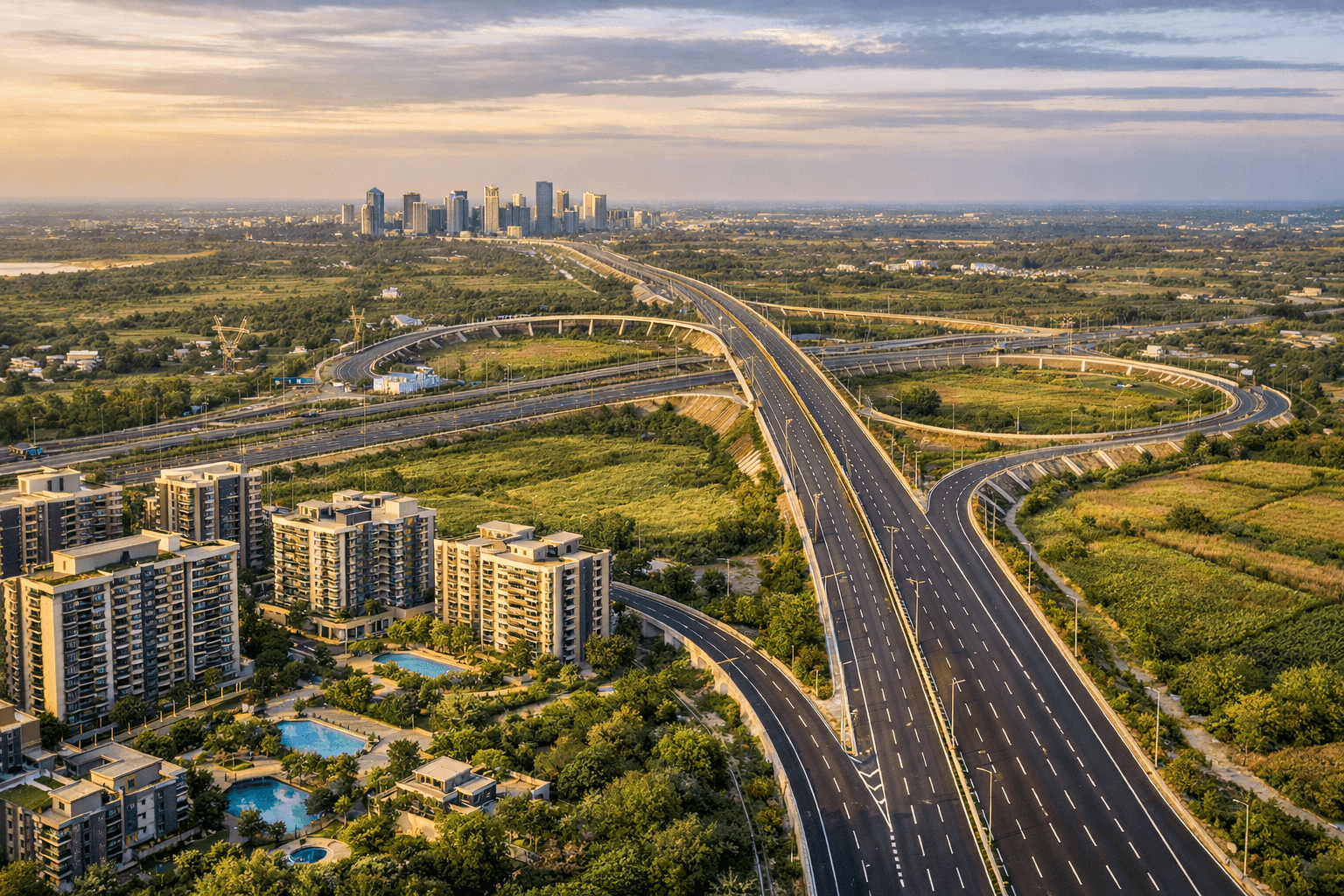
The Delhi–Mumbai Expressway is a 1,350+ km access-controlled greenfield corridor connecting Delhi to Mumbai across multiple states. It reduces travel time between the two cities by nearly half and enables faster movement of goods, people, and capital.
More importantly, it is designed as an economic corridor with planned logistics zones, industrial clusters, and urban nodes. This makes it a long-term driver of regional development rather than a short-term infrastructure upgrade.
Why the Expressway Matters for Gurgaon
Infrastructure does not impact only the locations it passes through. It reshapes entire economic regions.
Gurgaon benefits because it already functions as NCR’s business and residential hub. As industrial, logistics, and manufacturing activity grows along the expressway corridor, demand naturally flows toward the nearest mature ecosystem that can support corporate offices, housing, education, healthcare, and lifestyle — and Gurgaon fits that role.
With strong connectivity via NH-48, Dwarka Expressway, SPR, and upcoming metro corridors, Gurgaon acts as the bridge between new economic zones and established urban infrastructure.
How Infrastructure Drives Property Prices
Infrastructure influences real estate through a well-defined cycle:
- Improved connectivity lowers operational and commuting costs.
- Businesses expand or relocate.
- Employment increases.
- Residential demand rises around job hubs.
- Commercial, retail, and social infrastructure follow.
- Property values strengthen sustainably.
Gurgaon sits at a point where this cycle can accelerate because the city already has the corporate base, talent pool, and social infrastructure required to absorb growth efficiently.
Discover why Gurgaon remains a strong real estate market in our Gurgaon real estate market overview.
Gurgaon Real Estate Growth Corridors That Will Benefit
Not every part of Gurgaon will benefit equally. Certain zones are better aligned with future infrastructure and planning.
Different parts of Gurgaon will benefit in different ways from enhanced connectivity:
📍 New Gurgaon (Sectors 85–95)
These sectors are planned for modern, organized expansion. Ganga Realty’s Anantam offers ultra-luxury apartments in Sector 85 gurgaon with premium amenities and skyline views — perfect for buyers looking for a home that combines strategic location with long-term value.
📍 Sector 84 — Nandaka 84
Ganga Realty Nandaka 84 sits near major road networks and offers spacious 4 BHK luxury apartments in Gurgaon designed for contemporary family living — ideal for professionals and investors alike.
📍 Sector 78 — Ganga Valley 78
Ganga Valley in Sector 78 features vibrant living spaces close to transport corridors and urban amenities, making it a compelling choice for quality residential living.
These developments reflect how quality urban planning aligned with infrastructure can shape liveability and long-term growth.
Residential vs Commercial Impact
Residential
As business activity expands, demand for quality housing increases. Homebuyers increasingly look for:
- Well-planned communities
- Green spaces and lifestyle amenities
- Proximity to workplaces and transport
This supports stable demand for both ownership and rental housing.
Commercial
Commercial real estate benefits through:
- Office expansion
- Growth in co-working and flexible spaces
- Increased demand for retail, hospitality, and logistics
This reinforces Gurgaon’s role as a business destination. If you’re exploring more housing options in Gurgaon, check out our Residential Projects in Gurgaon.
Price Outlook: Short, Medium, and Long Term
- Short term: Gradual appreciation driven by investor interest and improving infrastructure visibility.
- Medium term: Stronger absorption as businesses expand and demand deepens.
- Long term: Stable, sustainable value growth as Gurgaon evolves into a multi-node urban ecosystem.
This pattern reduces volatility and improves long-term investment confidence.
Dwarka Expressway vs Delhi–Mumbai Expressway
| Factor | Dwarka Expressway | Delhi–Mumbai Expressway |
|---|---|---|
| Type | Urban connectivity | National economic corridor |
| Impact | Localised city development | Regional economic expansion |
| Primary role | Decongest Delhi–Gurgaon | Enable industrial and logistics growth |
| Effect on Gurgaon | Direct connectivity boost | Indirect but larger economic influence |
What Home Buyers Should Look For
- Connectivity over hype
- Long-term liveability
- Credibility and execution of the developer
- Quality of urban planning
At Ganga Realty, our focus remains on building projects that align with how cities grow — not just how markets move.
Future Outlook: Gurgaon Real Estate in 2026 and Beyond
By 2026 and beyond, Gurgaon is likely to become more decentralised, with multiple employment and residential hubs rather than a single dense core. This improves both quality of life and investment resilience.
Infrastructure like the Delhi–Mumbai Expressway acts as a foundation for this balanced growth.
Conclusion
The Delhi–Mumbai Expressway will not bypass Gurgaon. It will strengthen it indirectly by expanding regional economic activity, improving connectivity, and supporting business growth.
For homebuyers and investors, the opportunity lies in understanding this structural change and aligning decisions with long-term urban evolution rather than short-term speculation.
At Ganga Realty, we view infrastructure as the backbone of sustainable real estate — and Gurgaon’s future remains closely tied to how well it connects, grows, and lives.
FAQs About the Delhi–Mumbai Expressway and Gurgaon Real Estate
2. Why is the Delhi–Mumbai Expressway important for real estate?
The expressway boosts connectivity, reduces travel time, and opens up new investment zones by improving access between major cities. These improvements increase housing demand, support commercial expansion, and catalyse infrastructure upgrades across connected regions — including the NCR and Gurgaon.
3. How will the Delhi–Mumbai Expressway impact Gurgaon’s property market?
The expressway is expected to positively influence Gurgaon’s real estate by elevating demand, enhancing infrastructure, and promoting growth in emerging corridors. Improved regional connectivity leads to stronger investor confidence and rising property values in key sectors of Gurgaon.
4. Which areas in Gurgaon are set to benefit most from the expressway?
Sectors near major highways and connectivity hubs — such as parts of New Gurgaon, Dwarka Expressway corridor, Sohna Road, Manesar, and emerging residential sectors — are likely to show stronger growth due to enhanced access and increased mobility.
5. Will the expressway improve commuting for Gurgaon residents?
Yes. As more segments become operational, travel times to major hubs like Delhi, Jaipur, and other parts of NCR reduce significantly. This makes daily commuting easier and more efficient for residents and businesses alike.
6. Is investing near the expressway a good idea?
For long-term investors and end-users focused on sustainable growth and future infrastructure benefits, investing in areas with strong connectivity to the expressway can offer robust appreciation and rental demand.
7. When is the Delhi–Mumbai Expressway expected to be fully operational?
Government and infrastructure updates indicate that the full expressway is expected to be completed and operational by around 2026, with several segments already easing regional connectivity ahead of full commissioning.