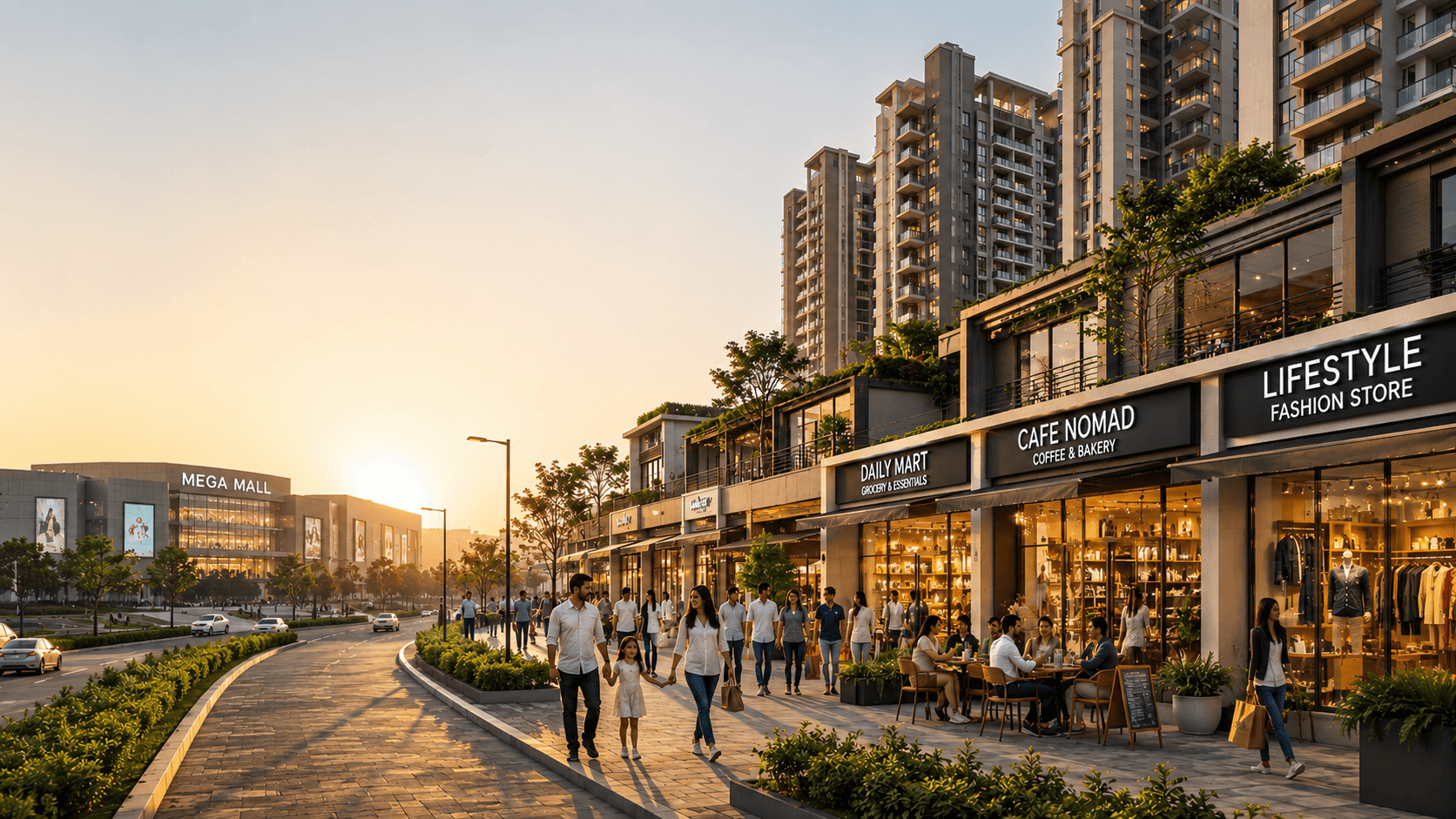
Consumer behavior in real estate has evolved dramatically over the last few years. Today, convenience often wins over destination shopping. Instead of driving across the city to visit a mall, people increasingly prefer quick-access retail options within or near their residential communities.
This shift is creating new opportunities in commercial property. For investors evaluating shop investment near residential complex Gurgaon, neighborhood retail spaces are emerging as a smarter alternative to traditional mall-based investments.
With integrated communities and growing residential ecosystems reshaping urban planning, these commercial spaces are attracting both business owners and investors seeking long-term value.
Table of Contents
Introduction
The era when malls dominated retail demand is gradually changing. While malls still attract entertainment and lifestyle traffic, daily consumption patterns have become more localized. Residents now prefer grocery stores, pharmacies, cafés, salons, clinics, and convenience services close to home.
Gurgaon’s expanding urban landscape is accelerating this trend. Large-scale residential communities are evolving into self-sustained ecosystems where homes, retail, and lifestyle amenities coexist.
Premium developments such as Anantam 85 and Nandaka 84 reflect how integrated communities are reshaping modern urban living and supporting stronger commercial demand.
This evolution is influencing commercial property investment Gurgaon, making neighborhood retail spaces increasingly attractive.
1. Daily Footfall Creates Consistent Business Activity
One of the strongest advantages of a retail space near a residential project is predictable foot traffic.
Mall footfall often depends on weekends, events, holidays, or entertainment-driven visits. Residential retail spaces, however, benefit from recurring customer behavior. Residents need everyday essentials regardless of season or trends.
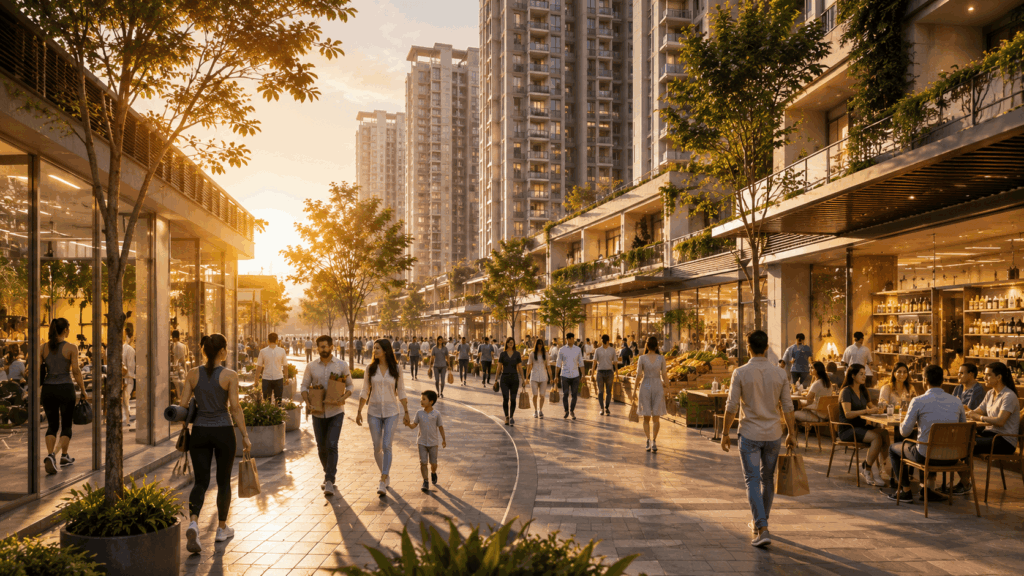
Morning coffee runs, grocery shopping, pharmacy visits, fitness activities, and quick dining create a constant customer flow throughout the day.
For investors, this translates into a high footfall commercial property with more sustainable business activity.
This recurring demand becomes even stronger in large integrated communities where thousands of families live within one ecosystem. Projects designed around residential density naturally create stronger retail engagement and sustained customer movement.
2. Lower Competition Compared to Large Mall Environments
Mall environments often place businesses among dozens—or even hundreds—of competing stores.
A clothing outlet, café, or service brand inside a mall competes for attention with multiple alternatives under one roof. Visibility can become challenging, especially for smaller businesses.
By contrast, a retail space near residential projects generally operates in a more focused ecosystem.
A salon serving a residential catchment area may become the preferred option for local residents. Similarly, convenience stores and healthcare services often benefit from repeat customer behavior.
Lower competition can improve tenant stability and enhance the overall shop investment benefits for property owners.
3. Higher Convenience Means Stronger Demand
Modern consumers value speed and accessibility.
Whether ordering groceries, visiting a pharmacy, or grabbing a quick meal, convenience-driven purchasing behavior is shaping commercial demand patterns.
People increasingly prefer nearby services over destination shopping experiences.
This shift is particularly visible in Gurgaon’s emerging sectors, where large residential developments are designed around daily lifestyle requirements.
As a result, investment in neighborhood retail spaces is becoming more aligned with evolving customer expectations.
Businesses positioned close to residential communities naturally gain stronger demand because they solve immediate needs.
4. Better Rental Yield Potential for Investors
Rental income remains one of the most important factors in commercial real estate decisions.
Mall shops often involve higher maintenance costs, stricter operational requirements, and dependence on broader market conditions.
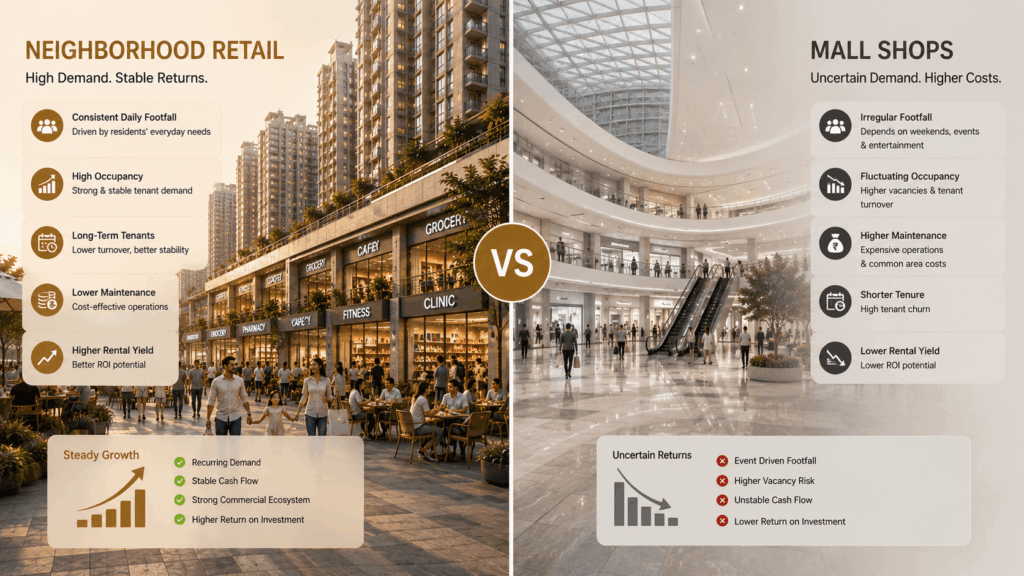
Neighborhood retail spaces frequently attract necessity-driven businesses such as:
- Grocery stores
- Medical clinics
- Pharmacies
- Restaurants
- Fitness studios
- Daily convenience outlets
These categories generally maintain stable demand even during changing market conditions.
For investors evaluating commercial real estate Gurgaon, this can create stronger occupancy rates and potentially improve retail property ROI over the long term.
When businesses serve recurring residential needs, the probability of tenant continuity often increases.
5. Mixed-Use Developments Are Driving Future Growth
The rise of mixed-use developments Gurgaon is transforming urban investment strategies.
Modern developments increasingly integrate residential towers, retail zones, workspaces, recreational areas, and community amenities within one ecosystem.
Large-scale communities are already moving in this direction. Developments like Ganga Realty Anantam 85 reflect how integrated living environments can support both residential convenience and long-term commercial activity.
Unlike standalone mall locations that rely heavily on destination traffic, integrated developments benefit from built-in audiences.
Shop Near Residential Complex vs Mall Shop
| Factors | Shop Near Residential Complex | Mall Shop |
|---|---|---|
| Daily Footfall | Recurring and predictable | Event and weekend dependent |
| Competition | Limited and localized | High competition |
| Rental Stability | Strong due to essential demand | Can fluctuate |
| Customer Loyalty | Higher repeat customer base | Lower loyalty patterns |
| Entry Cost | Often comparatively lower | Frequently higher |
| Accessibility | Immediate convenience | Destination-based |
Why Investors Are Looking Beyond Malls
Smart investors are increasingly recognizing that retail success is no longer defined solely by premium mall addresses.
The future of commercial investment lies in understanding customer behavior. Residential retail spaces serve everyday needs, generate recurring engagement, and benefit from long-term community development.
As luxury residential projects in Gurgaon continue evolving into integrated lifestyle ecosystems, they are creating stronger demand for neighborhood retail spaces that support daily convenience and long-term commercial sustainability.
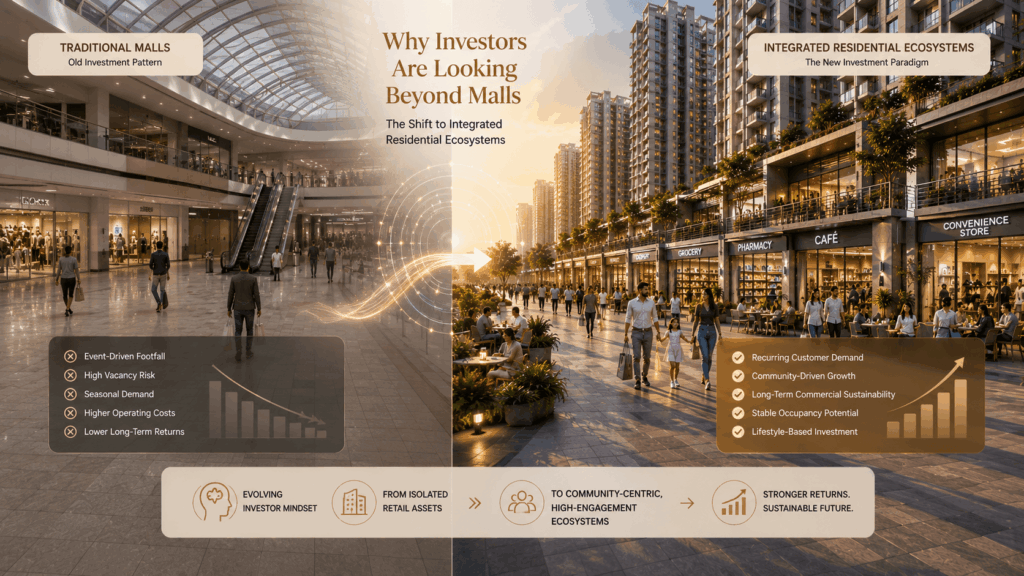
As Gurgaon expands through integrated communities and premium residential developments, investors are increasingly exploring opportunities connected with projects by Ganga Realty and other large-scale developers shaping future urban ecosystems.
Conclusion
Retail investment decisions today require looking beyond traditional assumptions. While malls remain relevant for entertainment and premium experiences, neighborhood retail is creating a different value proposition.
For anyone considering shop investment near residential complex Gurgaon, the advantages extend beyond immediate rental opportunities. Stable footfall, lower competition, convenience-driven demand, and integrated community growth create a stronger foundation for long-term returns.
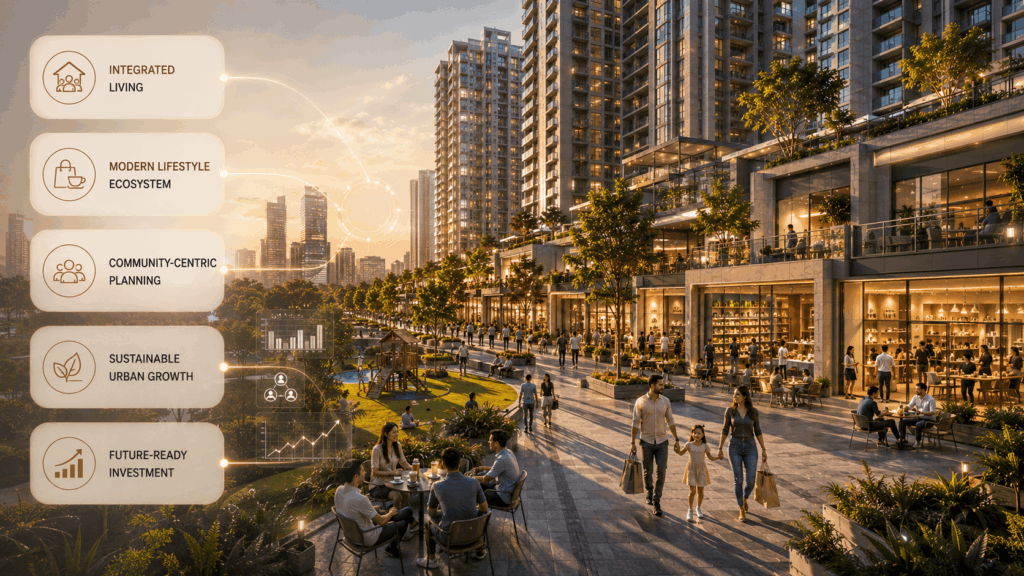
As a leading real estate builder in Gurgaon, Ganga Realty is contributing to this shift through thoughtfully planned communities designed around modern lifestyle and convenience needs. Commercial spaces located close to such residential ecosystems may emerge as some of the most future-ready investment opportunities in the city.
FAQs About Commercial Property Investment
2. Is shop investment near residential complex Gurgaon a good long-term option?
Yes. Shop investment near residential complex Gurgaon can offer long-term advantages due to stable customer demand, better accessibility, and growing residential density. As integrated communities expand across Gurgaon, retail spaces near residential hubs are becoming increasingly attractive for investors.
3. What types of businesses perform best near residential communities?
Businesses that serve everyday needs usually perform well, including:
- Grocery and convenience stores
- Pharmacies
- Cafés and restaurants
- Fitness studios
- Salons and wellness centers
- Healthcare clinics
These categories often benefit from repeat customers and higher occupancy stability.
4. Are luxury residential communities increasing retail demand in Gurgaon?
Yes. Modern luxury residential projects in Gurgaon increasingly focus on integrated lifestyles where residents prefer quick access to retail and daily conveniences. This trend is creating stronger demand for neighborhood commercial spaces.
5. Do shops near residential complexes provide better rental returns?
In many cases, yes. Shops located near established residential communities often benefit from steady demand generated by daily consumer needs. Essential businesses typically prefer such locations because of recurring customer traffic and stronger visibility.
6. Why is Gurgaon becoming a hotspot for commercial real estate investment?
Gurgaon has seen rapid infrastructure growth, expanding residential sectors, corporate hubs, and integrated urban developments. These factors continue driving demand for both residential and commercial spaces, making commercial real estate Gurgaon a key area for investors.
7. Can first-time investors consider commercial shop investments?
Yes. Commercial shops can be suitable for first-time investors when selected carefully. Understanding location dynamics, customer demand, developer credibility, and future growth potential can help reduce investment risks.