Union Budget 2026–27-Real Estate
02 February 2026|8 Minutes Read
By : Ganga Realty

Union Budget 2026–27: What It Means for Gurgaon’s Real Estate Growth Story

The Union Budget 2026–27 reinforces a clear message from the Government of India: infrastructure is the backbone of sustainable economic growth. With a record capital expenditure allocation, enhanced connectivity initiatives, and continued support for housing, the budget lays the foundation for the next phase of urban expansion and real estate development.

For developers, homebuyers, and investors alike, union budget 2026–27 signals long-term confidence, stability, and opportunity. At Ganga Realty, we view this budget not just as a financial document but as a roadmap for future cities, housing demand, and lifestyle transformation.

Gurgaon’s growth story is best reflected in premium residential projects in Gurgaon, where infrastructure, planning, and lifestyle converge to create long-term value. Lets explores how the key announcements in the Union Budget 2026–27 will shape India’s real estate sector in the years ahead.

What Union Budget 2026–27 Means for Gurgaon’s Real Estate Ecosystem

For the overall ecosystem, the budget brings:

  • Confidence in long-term demand
  • Improved execution environment for developers
  • Better urban planning outcomes
  • Sustainable growth aligned with national priorities

Rather than short-term incentives, the budget focuses on structural strength, which is critical for a mature and evolving market like Gurgaon.

Infrastructure Push of ₹12.2 Lakh Crore: Strengthening the Real Estate Backbone

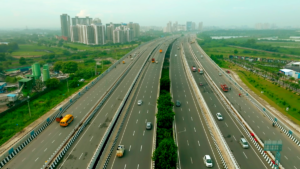
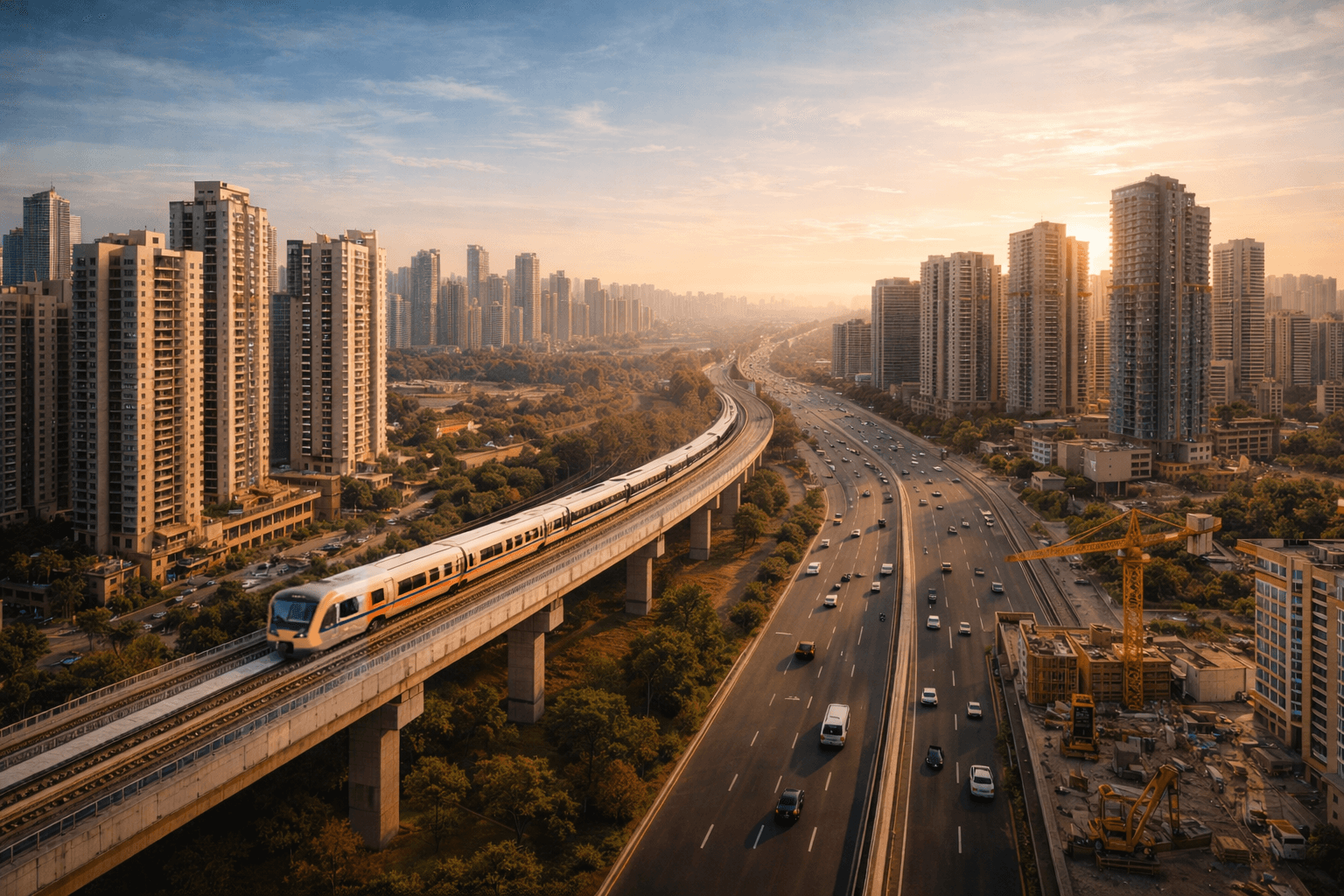
One of the most impactful announcements in the Union Budget 2026–27 is the allocation of ₹12.2 lakh crore towards capital expenditure, marking one of the highest-ever public infrastructure spends in India’s history.

Infrastructure investment has a direct and proven correlation with real estate growth. Roads, highways, metro networks, freight corridors, utilities, and urban infrastructure act as catalysts that unlock land value, enhance livability, and stimulate housing demand.

Infrastructure-led growth enhances the value of homes located in Ganga Realty Kashi Residencies in Sector 89—strategically positioned with superb connectivity and neighbourhood access.

Why Infrastructure Matters to Real Estate

  • Improved accessibility increases demand for residential and commercial developments.
  • Reduced travel time makes peripheral and emerging locations more attractive.
  • Job creation through infrastructure projects boosts housing absorption.
  • Private investment confidence rises when public infrastructure is robust.

For developers focused on quality, planning, and long-term value creation, this sustained infrastructure push provides the necessary foundation for delivering well-connected, future-ready communities.

High-Speed Rail Corridors: Creating New Growth Belts and Micro-Markets

The announcement of seven high-speed rail corridors is expected to redefine inter-city travel across major economic regions. For Gurgaon, strategically located within the Delhi–NCR belt, this enhanced connectivity further strengthens its appeal as a residential and business destination.

Real Estate Impact on Gurgaon

  • Reduced travel time to neighbouring cities and business hubs
  • Increased demand for premium and mid-segment housing
  • Growth of transit-oriented developments
  • Enhanced attractiveness for professionals seeking work-life balance

High-speed connectivity has historically led to appreciation in property values and demand in well-connected cities.

The private and public sector focus on rail and rapid transit infrastructure means areas like Sector 78, 84, 85, and 90 will continue gaining interest from homebuyers and investors alike.

Affordable Housing & PMAY-Urban: Supporting Inclusive Growth in Gurgaon

The continuation of Affordable Housing initiatives and PMAY-Urban under Union Budget 2026–27 reinforces the government’s commitment to inclusive urban development.

Gurgaon continues to see steady demand for value-driven homes, such as Ganga Valley in Sector 78, which combines location advantages with long-term lifestyle potential.

Why Affordable Housing Matters for Gurgaon

  • Enables homeownership for working professionals
  • Supports sustainable population growth
  • Encourages organised, compliant development
  • Strengthens long-term demand stability

Policy continuity ensures that developers and buyers can plan with confidence while maintaining momentum in one of the most important housing segments of the city.

Tier-1 City Focus: Gurgaon as a Key Urban Growth Engine

Union Budget 2026–27 places strong emphasis on Tier-1 city expansion and urban economic regions, positioning cities like Gurgaon as critical drivers of India’s economic and real estate growth.

Gurgaon’s evolution into a global business hub — with world-class office spaces, residential developments, retail centres, and social infrastructure — aligns seamlessly with this vision.

Why Gurgaon Continues to Attract Buyers and Investors

  • Proximity to Delhi and IGI Airport
  • Robust corporate and employment ecosystem
  • Growing social infrastructure (schools, hospitals, retail)
  • Strong rental demand and end-user interest

The budget’s focus on urban infrastructure ensures Gurgaon remains competitive, liveable, and future-ready.

Buyers looking for long-term value increasingly prefer Ganga Realty Nandaka in Sector 84—a project that combines thoughtful design with excellent connectivity and neighbourhood infrastructure.

Homebuyer Expectations: Affordability, Stability, and Long-Term Value

While the Union Budget 2026–27 did not announce immediate enhancements to Section 24(b) home loan deductions, it reinforces the broader economic factors that influence homebuying decisions in Gurgaon.

What Homebuyers in Gurgaon Gain

  • Improved infrastructure and connectivity
  • Long-term price stability supported by demand
  • Better quality of life through planned development
  • Continued housing supply across segments

For homebuyers, Gurgaon remains one of the most promising real estate markets, combining employment proximity with lifestyle amenities and growth potential.

Investor Sentiment: Gurgaon’s Strength as a Long-Term Asset Market

Projects developed by trusted real estate developers in Gurgaon like Ganga Realty, continue to attract investor interest—especially in zones benefiting from infrastructure investments

Gurgaon has consistently attracted real estate investors due to:

  • Strong rental yields
  • High absorption in residential and commercial segments
  • Presence of multinational companies
  • Long-term infrastructure growth

Budget 2026–27 reinforces investor confidence through:

  • Infrastructure-driven demand
  • Continued urban development focus
  • Growing institutional participation in real estate

While clarity on capital gains and indexation reforms remains a topic of discussion, Gurgaon’s fundamentals continue to make it a preferred investment destination within NCR.

Commercial Real Estate: Gurgaon’s Office Market Stays Strong

Beyond residential real estate, Gurgaon’s commercial sector stands to benefit from:

  • Improved regional connectivity
  • Expansion of business corridors
  • Increased domestic and global business activity

The budget’s focus on infrastructure and economic growth supports office absorption, mixed-use developments, and retail spaces — reinforcing Gurgaon’s position as a leading commercial hub.

Ganga Realty’s Perspective: Building Thoughtfully in Gurgaon

At Ganga Realty, Gurgaon is not just a market — it is home. Our developments are guided by the belief that real estate must evolve alongside infrastructure, community needs, and future lifestyles.

Union Budget 2026–27 aligns with our core values:

  • Responsible urban development
  • Quality construction
  • Transparency and trust
  • Long-term value creation

As Gurgaon continues to grow, our focus remains on creating residential spaces that offer comfort, connectivity, and lasting value.

Conclusion: A Positive Outlook for Gurgaon’s Real Estate Future

The Union Budget 2026–27 sets a strong foundation for Gurgaon’s continued real estate growth. With record infrastructure investment, enhanced connectivity, urban expansion, and housing continuity, the city is well-positioned to remain one of India’s most attractive real estate destinations.

For homebuyers, investors, and businesses, the message is clear:
Gurgaon’s real estate story is entering its next phase — driven by infrastructure, stability, and sustainable growth.

At Ganga Realty, we are committed to being part of this journey — shaping spaces that reflect Gurgaon’s future aspirations.

FAQ about Union Budget 2026–27

Infrastructure development typically leads to better accessibility, reduced travel time, and improved urban amenities. In Gurgaon, such improvements are expected to support steady property value growth, especially in well-connected sectors and emerging residential corridors.

Yes, Gurgaon remains one of NCR’s most attractive real estate markets due to strong job opportunities, expanding infrastructure, and high housing demand. Budget 2026–27 further reinforces these fundamentals, making it suitable for both homebuyers and long-term investors.

While Budget 2026–27 did not introduce new home loan tax deductions, it focused on improving infrastructure, housing supply continuity, and urban development — all of which indirectly benefit homebuyers through better connectivity and long-term value.

Sectors along major connectivity corridors such as Dwarka Expressway, Southern Peripheral Road (SPR), and New Gurgaon are expected to see sustained demand due to infrastructure upgrades and improved regional connectivity.

High-speed rail improves inter-city mobility, making Gurgaon more accessible for professionals and businesses. This typically increases demand for residential and mixed-use developments near major transport corridors.

Yes. Gurgaon’s strong rental demand, expanding corporate presence, and infrastructure-led growth make it a preferred destination for real estate investment in the medium to long term.


Enquire Now

Recent Posts

Why Sohna Sector 9 is the Most Underrated Address Right Now
12 May 2026|6 Minutes Read

Why Sohna Sector 9 is the Most Underrated Address Right Now

Most homebuyers in Gurgaon are chasing the same zip codes — Golf Course Road, Dwarka Expressway, New Gurgaon. They're not wrong. But they're also not early. There's a location quietly rewriting the real estate story in this Sohna Gurgaon. And the buyers who are paying attention right now are the ones who will look back in three years and call it their smartest decision. That location is Sohna Sector 9, a rapidly evolving micro-market backed by improving infrastructure, rising investor confidence, and strong future growth potential. To understand the bigger picture behind the region’s transformation, explore this detailed guide on Sohna Gurgaon: Property Rates, covering connectivity, pricing trends, investment potential, and why Sohna is emerging as Gurgaon’s next real estate hotspot. [ez-toc] The Address Everyone Overlooks — For Now Sohna has long lived in Gurgaon's shadow. The name conjures up images of a sleepy hill town, far from the action. That perception is now dangerously outdated. Sohna Sector 9, in particular, sits at a unique inflection point — where infrastructure is catching up faster than prices are. That gap is precisely where real estate opportunity lives. The Rise of Sohna Sector 9: Gurgaon’s Hidden Investment Gem If you're a homebuyer looking for a 2 or 3 BHK that doesn't require a 30-year compromise, or an investor tracking where the next wave of appreciation is headed, here's why Sohna Sector 9 deserves your full attention. 1. The Sohna Road Extension Is Changing Everything The single biggest driver of Sohna Sector 9's rise is its direct access via the Southern Peripheral Road (SPR) and its seamless link to NH-248A — the upgraded Gurgaon–Sohna highway. This isn't a "coming soon" promise. Six-lane connectivity is already operational. What used to be a 45-minute journey from Cyber City has been cut to under 25 minutes on most days. For professionals working in Huda City Centre, Golf Course Extension, or Manesar, Sohna Sector 9 is no longer "far." It's a commutable address — which is the first condition any residential pocket needs before values climb. 2. Prices Are Still in the Window That Won't Stay Open Long Walk into any project on Golf Course Extension Road today and you'll find per sq. ft. rates that have already baked in years of appreciation. The early money has been made there. Sohna Sector 9 is at a completely different stage of the pricing curve. The infrastructure is done. The master planning is in place. The prices haven't caught up yet. That lag is your window — and windows like this don't stay open indefinitely. Residential properties here are currently available in a range where buyers can own full-sized apartments or independent floors — with room for meaningful appreciation still ahead. This is not a signal to wait. It's a signal to move before the market prices in what's already coming. 3. Haryana's master plan has Sohna as a notified urban hub The Haryana government has officially notified Sohna as part of the NCR planning zone, with an active master plan to develop it as a Tier 2 hub to decongest Gurgaon. This means systematic road and utility development is budgeted, construction norms protect your investment from unplanned development, and long-term government intent to build Sohna as a self-sustaining township zone. When government planning and private developer interest converge on the same geography, prices follow. Every time. 4. Reputed Developers Are Already Here The presence of credible developers in a micro-market is the clearest signal of its trajectory. Sohna Sector 9 has already attracted projects from builders with proven track records in NCR. This matters for two reasons. First, construction quality and delivery timelines are far more reliable when established names are involved. Second, it signals that these developers — who conduct their own deep-market due diligence before committing capital — see Sohna Sector 9 as a high-conviction bet. When developers with options choose a location, buyers should pay attention. 5. The Aravalli Advantage — A Premium You're Getting for Free Right Now Sohna sits at the foothills of the Aravalli range. This isn't just a scenic backdrop — it's a meaningful quality-of-life differentiator. In an NCR where air quality is a genuine daily concern, Sohna's green belt, lower density, and Aravalli proximity translate to measurably better air, lower ambient noise, and a living environment that feels fundamentally different from Gurugram's concrete core. Lifestyle real estate commands a premium globally. In India, that premium is only beginning to get priced in. Buyers in Sohna Sector 9 are getting it at base price today. 6. Social Infrastructure Is Filling In Fast The common knock on emerging locations is the absence of schools, hospitals, and retail. That gap is closing rapidly in Sohna Sector 9. Educational institutions — Several reputed schools are already operational or in advanced stages of launch in the Sohna belt Healthcare — Multi-specialty healthcare facilities are being established along the NH-248A corridor Retail and F&B — Commercial development is following residential demand, as it always does 7. Low Supply, Growing Demand — The Equation That Drives Appreciation Sohna Sector 9 is relatively underdeveloped compared to its potential. The approved floor area ratio and ongoing development activity suggest that supply will catch up — but not immediately. In the interim, a growing base of end-users and investors chasing the same limited inventory creates the demand-supply imbalance that delivers appreciation. This is not speculation. It's how every underrated pocket in the NCR — from Dwarka Expressway five years ago to Sector 108 more recently — has played out. Who is buying in Sohna Sector 9 right now? First-time homebuyers who want a full-sized home without stretching themselves beyond comfort, in an area where prices have room to grow. Upgrade buyers from Faridabad and South Delhi who want better connectivity to Gurgaon's job corridors without Gurgaon's price tags. NRI investors looking for a long-term hold in a location where the appreciation story is still ahead of them, not behind. Professionals from Manesar and IMT corridors for whom Sohna Sector 9 is actually closer to work than central Gurgaon. Conclusion Real estate wealth is rarely built by following the crowd into markets that are already celebrated. It's built by identifying where fundamentals are strong, perception hasn't caught up, and the window is still open. Sohna Sector 9 checks every box that has historically preceded a breakout micro-market in the NCR: upgraded connectivity, active government planning, reputed developer interest, strong lifestyle credentials, and prices that haven't yet reflected any of it. At Ganga Realty, we believe the best real estate decisions are informed ones. Whether you're a first-time homebuyer tired of stretching for an overpriced 2BHK, an NRI investor looking for a long-horizon hold, or a professional tired of trading commute time for a cheaper address — Sohna Sector 9 deserves more than a casual look. It deserves your full due diligence. Frequently Asked Questions

Read More
How Tall Buildings Are Constructed: Engineering, Design & Execution
04 May 2026|16 Minutes Read

How Tall Buildings Are Constructed: Engineering, Design & Execution

From bedrock to skyline — the extraordinary engineering, phased planning, and invisible science behind the world's most ambitious vertical structures. "A skyscraper is not built from the sky down. It is a story told from the earth up — one floor, one beam, one carefully engineered decision at a time." Stand at the base of a skyscraper and look straight up. The sheer scale of it is disorienting — hundreds of metres of steel, glass, and concrete climbing toward the clouds. Yet that structure did not appear overnight. It was the product of years of calculation, excavation, material science, and human ingenuity working in precise sequence. [ez-toc] How Skyscrapers Are Built: Complete Construction Process Explained So how exactly does a tall building get built? The answer involves far more than cranes and concrete. It's a multi-year, multi-discipline endeavour that begins deep underground and only reveals itself to the world long after the hardest work is already done. 01 Site & Survey Geotechnical analysis and site preparation 02 Foundation Deep piles and concrete mat construction 03 Core & Frame Structural skeleton rises floor by floor 04 Envelope Facade, glazing, and weatherproofing 05 MEP & Interior Systems, fit-out, and finishing 06 Commissioning Testing, certification, and handover Phase 1 — Site Investigation and Planning Before a single shovel of earth is moved, engineers spend months — sometimes years — studying the ground beneath a proposed site. Geotechnical surveys drill deep bore holes to understand soil composition, groundwater levels, bearing capacity, and seismic risk. This data is not optional. It dictates everything: how deep the foundations must go, what type of foundation system to use, and whether the site is viable at all. Simultaneously, architects and structural engineers develop the building's design in tandem. This is not a linear handoff — it's an iterative conversation. The structural system must be resolved early because it affects the layout of every floor above. In dense urban settings, planners also model the impact on neighbouring structures, traffic, wind patterns, and sunlight access before permits are granted. Phase 2 — Excavation and Foundations The foundation is the most consequential and least visible part of any tall building. For a 50-storey tower, excavation can descend 20 to 30 metres below ground level to create space for basement floors, car parks, and — critically — the foundation mat itself. KEY CONCEPT Pile Foundations vs. Mat Foundations In weak or variable soil, engineers drive steel or concrete piles — sometimes hundreds of them — down to load-bearing bedrock. In more uniform ground, a thick reinforced concrete "mat" or "raft" is poured to distribute the building's weight across a wide area. Many supertall buildings use a combination of both. The excavation process itself requires retaining walls to hold back surrounding earth and groundwater — often using contiguous or secant pile walls, sheet piling, or diaphragm (slurry) walls. Temporary steel struts or permanent tiebacks anchor these walls as excavation deepens. In urban environments, this stage carries enormous risk: the ground beneath adjacent roads, utilities, and buildings must remain stable throughout. Once the excavation is ready, the foundation mat is poured — often in a single continuous pour that can last 24 to 72 hours, using hundreds of ready-mix trucks arriving in tightly coordinated sequences. The concrete generates enormous heat as it cures; cooling pipes are sometimes embedded to prevent thermal cracking. 0 hours a singlefoundation pour canlast 0 floors in the BurjKhalifa, the world'stallest building 0 typical excavationdepth for a majortower 0 of total build timespent below grade Phase 3 — The Structural Core and Frame This is the phase that most people associate with tall building construction — the visible steel skeleton rising floor by floor against the skyline. But the sequence is more nuanced than it appears from the street. Most tall buildings are built around a central reinforced concrete core — typically housing lift shafts, stairwells, and mechanical risers. This core is constructed using jump-form or slip-form shuttering: a self-climbing steel framework that holds the formwork in place while concrete is poured, then hydraulically "jumps" upward to the next lift once the pour has gained sufficient strength. A well-run jump-form operation can complete one floor every three to four days. Steel vs. Concrete vs. Composite Construction The building's structural frame extends outward from the core via columns and floor plates. Three primary structural approaches are used in tall buildings: Steel frame: Prefabricated steel columns and beams are bolted and welded together. Fast to erect, highly accurate, and allows large column-free floor plates. Common in the US and UK. Reinforced concrete frame: Columns, beams, and slabs are poured in situ. Heavier but more inherently fire-resistant and acoustically dense. Prevalent in Asia and the Middle East. Composite construction: The dominant approach for supertall buildings — using a concrete core with a steel perimeter frame, or concrete-encased steel columns. Combines the speed of steel with the stiffness and mass of concrete. As the building rises, work on lower floors continues simultaneously. While the structural frame climbs at the top, floors below are receiving their concrete slabs, and floors further down are receiving MEP rough-in (mechanical, electrical, and plumbing installations). This parallel sequencing is what makes tall building construction economically viable — the building is effectively being built on multiple fronts at once. "The genius of a tall building's construction schedule is that it treats the structure as a vertical production line — not a single project, but dozens of projects stacked on top of one another." Phase 4 — Wind, Sway, and Structural Engineering Challenges A tall building must be designed not just to stand, but to survive. At height, wind forces are not merely a nuisance — they are a primary structural load that can exceed the building's own weight in lateral force during a severe storm. Engineers use wind tunnel testing (often with 1:300 or 1:500 scale models) to study how wind flows around and between buildings in a city, and to optimise the building's shape accordingly. Many supertall towers use a tapered profile, twisted geometry, or carved corners precisely to disrupt wind vortex shedding — the phenomenon where alternating low-pressure zones on either side of a building cause rhythmic swaying. The Burj Khalifa's Y-shaped cross-section and the Shanghai Tower's spiralling form are directly attributable to wind engineering, not pure aesthetics. For unavoidable sway, buildings above roughly 200 metres are often fitted with a tuned mass damper (TMD) — a large pendulum or fluid-filled tank mounted near the top that oscillates counter to the building's sway, dissipating energy. Taipei 101's 660-tonne steel sphere remains one of the most famous examples. Phase 5 — The Building Envelope Once the structural frame reaches or nears full height, the building envelope — its outer skin — begins installation. For most contemporary towers, this means a unitised curtain wall system: factory-manufactured glass-and-aluminium panels, typically one storey tall and one or two columns wide, that are craned into place and clipped to the structural frame. The envelope serves multiple functions simultaneously: it keeps weather out, provides thermal insulation, controls solar gain, allows natural light, and contributes to the building's acoustic performance. High-performance double or triple-glazed units with selective coatings are standard on energy-efficient buildings. The rate of envelope installation typically follows the structural frame by around 10 to 15 floors, sealing lower levels for fit-out work to begin in conditioned space. Phase 6 — MEP, Fit-Out, and Vertical Transport The largest volume of work in a tall building — by labour hours — happens after the structural frame is complete. Mechanical (HVAC), electrical, and plumbing systems account for a significant portion of a building's total cost and require intricate coordination to install in the correct sequence without clashing. Lift (elevator) installation is a particular challenge. In supertall buildings, a single lift shaft cannot service the full height efficiently — travelling too slowly and consuming too much shaft space. Instead, buildings are divided into sky zones, each served by dedicated lift banks, with sky lobbies at intermediate levels where passengers transfer. KONE, Otis, and Schindler have developed machine-room-less and even rope-free magnetic levitation systems for the latest generation of supertall towers. Concrete Pumping at Height One underappreciated challenge is simply moving concrete upward. On a conventional building, concrete is poured within accessible reach of cranes or hoists. On a 100-storey tower, concrete must be pumped under enormous pressure through pipes running the full height of the building. High-strength concrete mixes with low water content and special admixtures are formulated specifically to remain pumpable at pressures exceeding 200 bar — a feat of materials chemistry as much as engineering logistics. Phase 7 — Technology and Modern Construction Methods Modern tall building construction is increasingly driven by digital technology. Building Information Modelling (BIM) creates a precise three-dimensional digital twin of the entire building before construction begins — allowing clashes between structural, mechanical, and electrical elements to be identified and resolved on screen rather than on site. Prefabrication and modular construction are also transforming the industry. Bathroom pods, plant rooms, and even entire structural modules can be manufactured off-site in controlled factory conditions, then delivered and craned into position. This reduces on-site labour, improves quality control, and compresses programme duration. Drones now conduct regular aerial inspections of facades and structural elements. Robotic total stations track structural movement with millimetre precision throughout construction. And wearables monitoring worker location and fatigue are increasingly deployed on complex high-rise sites. The Invisible Depth of a Skyline Next time you pass a tall building under construction, look past the cranes. Understand that what you're watching is not simply a building going up — it's a precisely coordinated, multi-disciplinary engineering programme executing simultaneously across dozens of floors, built on foundations you'll never see, resisting forces you'll never feel, and designed by teams who resolved hundreds of invisible problems before the first concrete was ever poured. From geotechnical surveys to tuned mass dampers, from slip-form cores to unitised curtain walls, tall buildings represent the full depth of what modern engineering and construction science can achieve. They are, quite literally, the most complex objects human beings regularly build from scratch. And every one of them starts with a hole in the ground. Gurgaon's Tallest Residential Tower - Anantam 85 At 210 metres across 55 to 57 storeys, Anantam by Ganga Realty is Gurgaon's tallest residential tower under construction. Not yet complete — but already the most ambitious residential structure rising on the Dwarka Expressway corridor. All three towers are active on site. Mivan formwork is in place. And for buyers who understand how pre-possession pricing works, that timeline is precisely the point. How Anantam compares to other major luxury towers in Gurgaon: Project Height Floors Location Anantam by Ganga Realty ★ 210m 55–57 Sector 85, Dwarka Expressway Trump Tower NCR (M3M) ~201m 55 Sector 65, Golf Course Ext. Raheja Revanta ~180m 50+ Sector 78, Gurgaon M3M Altitude ~150m 40 Sector 65, Golf Course Ext. DLF Ultima ~130m 37 Sector 81, SPR Conclusion Gurgaon is the clearest example of this transformation. A city that barely existed as an urban entity 30 years ago now hosts over 1,892 high-rise buildings and 14 completed skyscrapers. The Trump Towers Delhi NCR, topping out in 2024 at 201.53 metres, currently stand as the tallest completed structures in the city. But that record won’t last long. With over 170 skyscrapers and 280 high-rises under construction, the Dwarka Expressway corridor is rapidly redefining modern residential architecture in India. At the centre of this shift is Ganga Realty, a luxury real estate developer in Gurgaon, with its flagship Anantam 85 — three towers rising 55 to 60 floors in Sector 85. Designed with global collaborators like UHA London and Macfarlane + Associates, the project reflects a new era of AI-enabled smart homes and resort-style living. More importantly, it signals how New Gurgaon’s Sector 84–85 belt is emerging as a serious contender to the long-dominant Golf Course Road — with developers like Ganga Realty shaping the city’s next luxury address. FAQ: Tall Buildings & Gurgaon Real Estate

Read More

Luxury Living In Gurugram

Discover thoughtfully designed residences that blend modern architecture,
premium amenities, and sustainable living in the heart of the city.

--> -->