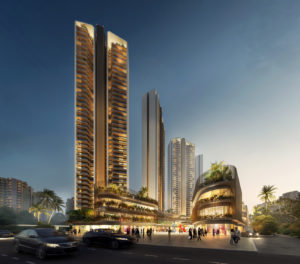
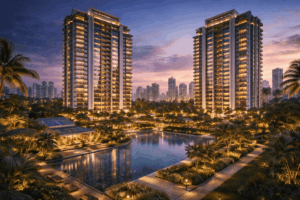
Gurgaon, now known as Gurugram, has rapidly transformed from a quiet suburb of Delhi into one of India’s most prominent real estate hubs. While the city owes much of its growth to the IT and corporate boom, the real catalyst behind its meteoric rise in property value and real estate development is infrastructure advancement.
Table of Contents
Let’s explore how massive infrastructure investments—past, ongoing, and upcoming—are reshaping Gurgaon’s real estate landscape and making it a magnet for homebuyers and investors alike.
The Expressway Effect: NH-48 & Dwarka Expressway
The rise of Gurgaon as a real estate powerhouse is deeply intertwined with its strategic connectivity—particularly through two game-changing expressways: NH-48 (formerly NH-8) and the Dwarka Expressway (Northern Peripheral Road). These mega infrastructure projects have drastically improved access, cut down travel time, and unlocked massive real estate potential across multiple sectors of Gurgaon. Two highways are redefining connectivity in Gurgaon:
NH-48 (Delhi–Jaipur Expressway): The Economic Artery of Gurgaon
National Highway 48 is not just a road—it’s Gurgaon’s lifeline. Connecting Delhi to Jaipur via Gurgaon and Manesar, this six-lane highway plays a pivotal role in regional mobility.
✅ Key Impacts on Real Estate:
- Prime Commercial Growth: Areas like Cyber City, Udyog Vihar, and MG Road have flourished due to immediate NH-48 access, becoming home to Fortune 500 offices, MNCs, and IT parks.
- Residential Demand Surge: Proximity to NH-48 has made sectors such as 15, 17, 21, and 47 prime residential zones. These areas offer excellent rental income due to their accessibility for professionals.
- Logistics & Industrial Boom: Manesar’s development into an industrial and warehousing hub is largely due to seamless connectivity via NH-48.
✅ Current Trends:
With flyovers and underpasses easing congestion at IFFCO Chowk, Signature Tower, and Hero Honda Chowk, property values in adjacent sectors have appreciated by 20–25% in the last few years.
Dwarka Expressway (Northern Peripheral Road):
Gurgaon’s Most Promising Growth Corridor. The Dwarka Expressway, a 29-kilometer, 8-lane elevated expressway connecting Dwarka (Delhi) to Kherki Daula (Gurgaon), is being dubbed the “New Lifeline of Gurgaon Real Estate.”
✅Why It’s a Game-Changer:
- Bypasses Traffic Bottlenecks: Provides an alternate route to the Delhi-Gurgaon Expressway, reducing dependence on NH-48.
- Boosts Accessibility: Connects directly to the upcoming India International Convention Centre (IICC) in Dwarka and IGI Airport via the proposed tunnel.
- Infrastructure-Driven Premium Localities: Sectors 102 to 113 and 84 to 95 have seen a wave of premium residential and commercial developments.
✅Real Estate Impact:
Luxury and ultra-luxury projects in Gurgaon by top developers (like DLF, M3M, Ganga Realty, Sobha, etc.) are thriving along this corridor. These sectors are witnessing annual price appreciation between 8–12%, with expectations to rise sharply post full expressway operationalization. Buyers and NRIs are investing early to leverage long-term capital gains and rental income.
Metro Expansion: Fueling Transit-Oriented Development
In modern urban planning, Transit-Oriented Development (TOD) is the gold standard—and Gurgaon is a leading example of how metro infrastructure can reshape a city’s real estate dynamics. The Delhi Metro and the Rapid Metro Gurgaon have not only improved mobility but also triggered a strategic shift in how and where people live, work, and invest.
Delhi Metro in Gurgaon: Building the Backbone of Mobility
Gurgaon is serviced by the Yellow Line of the Delhi Metro, extending from HUDA City Centre (Sector 29) to Samaypur Badli in North Delhi. This connectivity has revolutionized commuting patterns for professionals, students, and residents alike.
✅Key Benefits:
- Seamless Delhi–Gurgaon Commute: Rapid access to Central Delhi, Connaught Place, and NCR regions without the hassles of road traffic.
- Increased Liveability Near Stations: Sectors near metro stations (like 29, 30, 44, 45, 46, 47) have seen significant property value appreciation and rental demand.
- Catalyst for Office Leasing: Companies prefer office spaces within walking distance from metro stations, boosting demand in Cyber City, Golf Course Road, and MG Road.
Rapid Metro: The Corporate Corridor’s Lifeline
Gurgaon’s very own Rapid Metro connects the corporate and residential belt, covering stations from CyberHub to Sector 56, passing through DLF Phase 2, Phase 3, and Golf Course Road.
✅Impact on Real Estate:
- Boosted Commercial Zones: The presence of stations at DLF Cyber City, Vodafone Belvedere Towers, and Phase 2 has made these areas premium office destinations.
- Enhanced Residential Appeal: Areas like Sector 42, 53, and 54 offer metro access within walking distance—translating into higher resale value and faster home occupancy.
Upcoming Metro Projects: Unlocking New Growth Corridors
Several new metro projects under the Haryana Mass Rapid Transport Corporation (HMRTC) and DMRC are set to transform the real estate map further:
🔹 HUDA City Centre to CyberHub Line (New Metro Corridor):
28.5 km line passing through Old Gurgaon, SPR, and parts of New Gurgaon.
Will connect residential hubs in Sectors 45, 47, 48, 56, 57, 70, and 77.
Expected to increase real estate demand in SPR and Southern Sectors due to better connectivity with corporate zones.
🔹 Inter-State Metro Links:
Plans to connect Gurgaon’s metro network with Dwarka Expressway and IGI Airport.
Tunnel from Dwarka Expressway to Terminal 1 under construction will enhance international accessibility.
✅Real Estate Benefits:
- 10–15% higher property prices near metro corridors
- Increased rental yield due to accessibility
- Greater demand from working professionals and tenants
Metro connectivity is no longer just a convenience—it’s a deciding factor in real estate decisions. In Gurgaon, the expansion of metro lines is driving residential choices, boosting commercial viability, and fostering a new wave of high-growth urban zones. As new corridors come online, expect emerging sectors along SPR, New Gurgaon, and Dwarka Expressway to witness a surge in investor interest and long-term value creation.
Southern Peripheral Road (SPR) & Central Peripheral Road (CPR): Gurgaon’s Emerging Lifelines
While Golf Course Road and NH-48 have long been the backbone of Gurgaon’s real estate growth, the Southern Peripheral Road (SPR) and the upcoming Central Peripheral Road (CPR) are fast becoming the new engines of urban and residential development.
These infrastructure corridors are strategically planned to decongest the city, improve inter-sector connectivity, and open up new investment hotspots in Gurgaon—especially in the luxury, mid-income, and plotted development segments.
Southern Peripheral Road (SPR): The Next Real Estate Goldmine
The SPR is a 16-km, six-lane wide corridor that connects Golf Course Road Extension (Sector 55/56) to NH-48 at Kherki Daula via Sohna Road. It passes through several emerging residential and commercial sectors, including 68, 69, 70, 71, 72, 73, and 74.
✅Key Highlights of SPR:
- Direct access to prime business hubs like Cyber City and Golf Course Extension Road
- Close proximity to renowned schools, malls, and hospitals (GD Goenka, Scottish High, Medanta)
- Seamless integration with the Dwarka Expressway via CPR (once completed)
✅Real Estate Impact:
- SPR has become a focal point for luxury high-rises, mid-segment apartments, and gated plotted developments.
- Developers like DLF, M3M, Smart World, Ganga Realty, and Signature Global are launching integrated projects with smart amenities, catering to professionals and HNIs alike.
- Home prices in the SPR belt have appreciated by 18–30% in the last 3 years, with significant future upside expected post metro and CPR integration.
Central Peripheral Road (CPR): The Missing Link with Huge Potential
Still under phased development, the CPR is envisioned as a connector between the SPR and Dwarka Expressway, creating a seamless transit loop around Gurgaon’s rapidly expanding urban zones.
✅Strategic Advantages:
- Reduces traffic load on internal roads and NH-48
- Provides a direct link between sectors along SPR, Golf Course Road, and Dwarka Expressway
- Connects emerging sectors like Sector 81–95 and New Gurgaon, increasing their accessibility
✅Future Impact:
- CPR will open up land banks and encourage the development of integrated townships, commercial hubs, and retail corridors
- Will become a strategic logistics and connectivity route supporting multi-modal transit, including metro corridors and bus rapid transit (BRT)
Sohna Elevated Road & Gurgaon–Sohna Connectivity: Unlocking the Southern Real Estate Belt
One of the most transformative infrastructure projects in South Gurgaon is the Sohna Elevated Road—a six-lane access-controlled corridor that has significantly improved connectivity between Gurgaon and Sohna, and is now redefining the city’s southern urban frontier.
With the completion of this elevated expressway in 2023, Sohna is no longer seen as a peripheral town but as a natural southern extension of Gurgaon, paving the way for large-scale residential, commercial, and institutional development.
What is the Sohna Elevated Road?
- A 22-km elevated corridor developed along NH-248A, connecting Rajiv Chowk (Gurgaon) to Sohna town.
- Built in two phases: Rajiv Chowk to Badshahpur (Phase 1) and Badshahpur to Sohna (Phase 2).
- Constructed by NHAI as part of the Delhi–Mumbai Expressway feeder road network.
- Designed to reduce travel time between Gurgaon and Sohna from over 45 minutes to under 20 minutes.
Key Connectivity Benefits
- Seamless commute for daily travelers, professionals, and students between Gurgaon and educational institutions in Sohna.
- Enhanced access to Delhi–Mumbai Expressway, boosting inter-city logistics and long-distance travel.
- Integration with Southern Peripheral Road (SPR) and Golf Course Extension Road, creating a robust mobility network in South Gurgaon.
- Direct access to the IMT Sohna industrial zone, making it a strategic location for businesses and employment hubs.
Impact on Real Estate Growth
The improved Gurgaon–Sohna corridor has opened up a new real estate frontier in the region, with several advantages:
✅ Affordable Yet High-Quality Housing:
- Sohna has emerged as a budget-friendly alternative to central Gurgaon, attracting first-time homebuyers and young professionals.
- Projects offer modern amenities at competitive prices, with options in the ₹45–80 lakh range.
✅ Rise of Integrated Townships & Plotted Development:
- Leading developers like Signature Global, Raheja, Ashiana, Ganga Realty, and Central Park are launching townships, plotted projects, and mid-segment apartments in Sohna.
- Sector 33, 36, 47, 48, and 63A are seeing increased traction due to their proximity to the elevated road.
✅ Investor Interest & Appreciation:
- Property values along this corridor have appreciated by 15–20% in the last two years.
- Experts project further growth as the Sohna–Palwal–Alwar industrial belt continues to develop.
✅ Educational & Healthcare Hub:
Home to reputed institutions like GD Goenka University, KR Mangalam University, and Ryan International.
Proximity to Medanta, Artemis, and Fortis hospitals boosts residential appeal.
For an in-depth look at why Sohna Road is rapidly becoming Gurugram’s most sought-after investment corridor—thanks to its connectivity, infrastructure and ROI—read this post: Why Sohna Road Real Estate is a Smart Investment Strategy in Gurgaon.
IGI Airport Proximity & Multimodal Connectivity: Gurgaon’s Strategic Advantage
Gurgaon’s close proximity to IGI Airport (20–30 mins) gives it a major real estate edge. The upcoming Dwarka Expressway Tunnel will reduce travel time to Terminal 3 to under 10 minutes, significantly boosting property values in nearby sectors (102–113).
The city is also evolving into a multimodal transport hub, with:
- Metro + road + airport integration,
- Upcoming Bijwasan & Basai logistics terminals, and
- Connectivity to Delhi–Mumbai Expressway.
- This seamless access attracts corporates, NRIs, expats, and logistics players—fueling demand for luxury homes, rentals, and commercial spaces.
Emerging Smart Infrastructure & Social Amenities: Building a Future-Ready Gurgaon
Gurgaon is evolving into a future-ready city with smart infrastructure like underground cabling, EV charging stations, solar utilities, and CCTV-enabled roads. These upgrades, especially in sectors along SPR, Dwarka Expressway, and Golf Course Extension, are boosting real estate appeal.
The city also offers top-tier social amenities—renowned schools (GD Goenka, DPS), hospitals (Medanta, Artemis), malls (CyberHub, Ambience), and green spaces—making it highly livable. Projects with smart features and access to lifestyle infrastructure like Nandaka in Sector 84 and Anantam Sector 85 in Gurgaon enjoy higher demand, faster sales, and better ROI.
Conclusion
Infrastructure is the backbone of real estate growth—and Gurgaon is a textbook example of how well-planned development leads to skyrocketing property value. From expressways to metro corridors and smart urban planning, every new infrastructure boost acts as a catalyst—attracting top developers, investors, and discerning homebuyers.
Best real estate company in Gurgaon, like Ganga Realty, are at the forefront of this transformation, developing future-ready projects that align with the city’s evolving infrastructure and lifestyle demands.
If you’re looking to invest or buy a home in a city that promises high ROI, exceptional livability, and long-term growth, Gurgaon should be at the top of your list.
FAQs on Infrastructure & Real Estate in Gurgaon
2. Which areas in Gurgaon are growing fastest due to infrastructure upgrades?
Sectors along Dwarka Expressway (102–113), Southern Peripheral Road (68–75), and New Gurgaon (82–95) are seeing rapid development due to better roads, metro access, and proximity to IGI Airport.
3. Is Dwarka Expressway a good investment for real estate?
Yes, Dwarka Expressway is one of the most promising real estate corridors in Gurgaon, with high appreciation potential due to its direct airport access, luxury housing, and nearing project completion.
4. What are the benefits of living near the Sohna Elevated Road?
The Sohna Elevated Road offers faster connectivity to Gurgaon and Delhi–Mumbai Expressway, making nearby sectors ideal for affordable housing, rental income, and long-term investment growth.
5. Why is IGI Airport proximity important for Gurgaon real estate?
Proximity to IGI Airport enhances Gurgaon’s appeal to NRIs, business travelers, and multinational companies, increasing demand for luxury homes and commercial spaces in connected sectors.
6. Are metro-connected sectors in Gurgaon better for investment?
Yes, sectors with metro access (like 29, 42–54, and upcoming lines on SPR) offer higher rental yields, faster occupancy, and long-term appreciation due to ease of commuting.
7. Which developers are leading real estate development in Gurgaon?
Top developers like Ganga Realty, DLF, M3M, and Signature Global are driving Gurgaon’s transformation with smart, sustainable, and infrastructure-aligned projects across key growth corridors.
8. Is Gurgaon a good location for long-term real estate investment?
Absolutely. With continuous infrastructure upgrades, smart city planning, and strong job markets, Gurgaon offers high ROI, future-ready developments, and consistent property value appreciation.