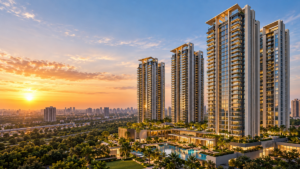
Buying a home has always been about location, layout and long-term value. Today a fourth factor has entered the conversation, and it is reshaping how developers build and how families choose. Buyers of eco-friendly homes want to know how a building treats the planet, how much it costs to run, and how healthy it feels to live inside. Green building certifications answer exactly those questions, and they have become the most reliable way to separate genuine eco-friendly homes from projects that simply borrow the vocabulary of sustainability.
Table of Contents
What a Green Building Certification Actually Measures
A green home certification is an independent audit of how a building performs across its entire life cycle. Assessors examine the site, the design, the materials, the construction process and the systems that will run the property for decades. Points are awarded across categories such as energy efficiency, water conservation, waste management, indoor environmental quality and material sourcing.
The result is a rating, not a slogan. Any brochure can promise a greener lifestyle, but only a certified project has submitted its drawings, equipment specifications and consumption data to a third party for verification. For a buyer comparing options, certification converts a vague claim into evidence.
The Certifications That Matter in India
Four systems dominate the market for eco-friendly homes in India. IGBC, run by the Confederation of Indian Industry, offers ratings tailored to Indian climate zones, including a dedicated framework for residential projects. GRIHA, developed with the Ministry of New and Renewable Energy, emphasises site planning and resource conservation. LEED, from the US Green Building Council, carries weight with global buyers. EDGE, created by IFC, focuses on measurable reductions in energy, water and embodied energy in materials.
Ratings are usually tiered, moving from Certified through Silver and Gold to Platinum. A higher tier signals deeper investment in performance rather than cosmetic features. When you are evaluating eco-friendly homes, ask which system was used, which tier was achieved, and whether the certification is provisional or final.
Why Certification Changes the Everyday Experience?
The benefits are not abstract. Certified buildings cut electricity consumption through better orientation, high performance glazing, insulated envelopes and efficient cooling. Households in such projects report meaningfully lower utility bills, and that saving compounds year after year.
Water is the second gain. Rainwater harvesting, dual plumbing, low flow fixtures and on-site treatment reduce dependence on external supply, a serious advantage in corridors where groundwater is under pressure.
Then there is air. Certification frameworks reward low emission paints, adhesives and composite wood, along with ventilation strategies that keep carbon dioxide and particulate levels down. Given how much time families spend indoors, this is arguably the most personal benefit of eco-friendly homes, and one that residents notice within weeks of moving in.
Sustainable Luxury Homes and the New Definition of Premium
For a long time, luxury was measured in marble and square footage. Sustainable luxury homes deliver comfort through intelligence rather than excess, using passive design, daylight, landscaped microclimates and smart building management to create spaces that feel effortless. In other words,sustainable luxury homes are engineered to perform, not merely to impress.
Buyers at the premium end understand that a poorly designed large apartment is expensive and uncomfortable to run, while a well designed one stays cool with less mechanical help. This is why Sustainable Homes now command attention among purchasers who view efficiency as sophistication rather than compromise.
Developers have responded. Across the National Capital Region, the best residential properties in Gurugram increasingly arrive with green certification built into the design brief from day one, not added as an afterthought during marketing. Many of the luxury residences in Gurugram now entering the market are positioned squarely as sustainable luxury homes.
The Financial Case
Certification also protects value, because operating advantages transfer to the next owner and support resale pricing. Several banks offer preferential terms for green rated properties, and regulatory direction continues to favour efficient construction, which means non-certified stock may face retrofit costs later.
Lower running costs, stronger resale positioning and reduced regulatory risk together make a straightforward argument. Buyers shortlisting the best residential properties in Gurugram are right to treat certification as a financial document as much as an environmental one, since certified Energy-Efficient homes carry a measurable operating advantage.
How to Evaluate a Project Before You Buy
Ask for the certification letter or pre-certification documentation rather than accepting a logo on a hoarding, and confirm the rating tier and issuing body. Ask what share of energy demand is met by renewables. Prospective luxury residences in Gurugram should also disclose whether solar has been provisioned for common areas.
Look at the landscape plan, since native planting reduces irrigation load significantly. Check whether recycled or regionally sourced materials were specified. Finally, ask about post-occupancy monitoring, because a certificate earned at handover means little if systems are not maintained.
Genuine eco-friendly homes stand up to this questioning comfortably. Projects that rely on green language without substance rarely do.
Looking Ahead
Ganga Realty is a Gurugram-based developer building residences where luxury and environmental responsibility are designed together rather than traded off. Its portfolio reflects a consistent emphasis on energy-efficient systems, water conservation, and healthier indoor environments, the same principles that underpin Green Building Certifications. Kashi Residences illustrates this approach, developed as a green-certified project where sustainability informs orientation, material selection, and long-term operating costs rather than serving as a marketing label.
For buyers, the certification landscape can be difficult to navigate. Ganga Realty shares transparent project documentation and helps homeowners understand what different certification tiers actually measure, so decisions about sustainable luxury homes rest on verifiable details rather than assumptions.
Frequently Asked Questions
Do green certified homes actually reduce monthly bills?
Yes, and this is where most buyers see the return. Efficient glazing, insulated envelopes, better orientation and low flow fixtures cut electricity and water consumption. The saving is recurring, so it compounds over the years you hold the property.
Does a green certification increase resale value?
It generally supports it. The operating advantages transfer to the next owner, several lenders offer preferential terms on green rated properties, and tightening efficiency norms mean non-certified stock may face retrofit costs later.
How do I verify a project is genuinely certified and not just marketed as green?
Ask for the certification or pre-certification letter naming the issuing body and rating tier, rather than accepting a logo on a hoarding. Also ask whether the rating is provisional at design stage or final at handover, since the two are not the same.
Are sustainable luxury homes more expensive to buy?
There can be a modest premium on the purchase price, driven by better specification. That is usually offset over the holding period by lower running costs, stronger resale positioning and reduced exposure to future regulatory retrofits.