
Buying a home is one of the biggest financial decisions most people make in their lives. In recent years, the Indian real estate sector has become more transparent and buyer-friendly due to the implementation of the Real Estate Regulatory Authority (RERA). If you are planning to invest in property in Haryana, understanding RERA Haryana (HRERA) is absolutely essential in 2026.
Whether you are buying a property in Gurgaon, a plot in Faridabad, or an affordable home in Panchkula, HRERA protects your rights as a buyer. It ensures transparency, timely delivery, legal accountability, and financial safety.
If you’re planning to purchase a home, our real estate investment guide explains the key factors every buyer should evaluate before making a decision.
Table of Contents
Quick Summary
| Particular | Details |
|---|---|
| Full Form | Haryana Real Estate Regulatory Authority (HRERA) |
| Governing Law | Real Estate (Regulation and Development) Act, 2016 |
| Established | 2017 |
| Jurisdiction | State of Haryana |
| Regional Authorities | HRERA Gurugram & HRERA Panchkula |
| Purpose | Regulate the real estate sector and protect homebuyers |
| Project Registration | Mandatory for eligible real estate projects under the Act |
| Complaint Filing | Available online |
| Official Website | haryanarera.gov.in |
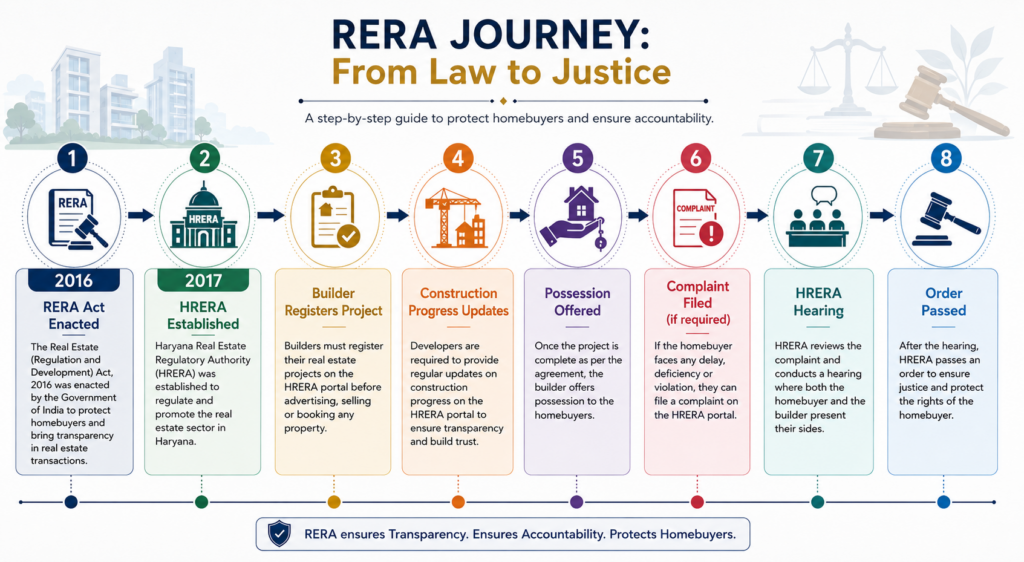
What is HRERA?
Many homebuyers confuse RERA with HRERA. The Real Estate (Regulation and Development) Act, 2016, is a central law enacted by the Government of India. Every state implements this law through its own Real Estate Regulatory Authority.
In Haryana, this authority is known as the Haryana Real Estate Regulatory Authority (HRERA). It oversees project registration, promotes transparency, safeguards homebuyer interests, and resolves disputes between buyers and developers.
The Central Government passed the RERA Act on May 1, 2016, with the objective of:
- Bringing transparency to real estate transactions
- Protecting homebuyers from fraudulent builders
- Ensuring timely delivery of projects
- Creating an accountable, dispute-resolution mechanism
Haryana notified its RERA rules and formally established HRERA in 2017, making it one of the early states to operationalize the authority. Since then, HRERA has registered thousands of residential and commercial projects and handled a significant volume of consumer complaints across the state.
Quick Fact: As of 2025–26, Haryana ranks among the top states in RERA registrations, driven largely by the massive real estate activity in Gurgaon and Faridabad.
Haryana Real Estate Regulatory Authority is the state-level regulatory body responsible for monitoring and regulating real estate projects in Haryana. It operates through:
- HRERA Gurgaon
- HRERA Panchkula
The authority ensures that developers follow legal guidelines and buyers receive verified information before investing. HRERA plays an important role in ensuring transparency for buyers looking at luxury apartments in Gurgaon and other residential developments.
HRERA Gurugram vs HRERA Panchkula
| HRERA Gurugram | HRERA Panchkula |
|---|---|
| Covers Gurugram district | Covers the remaining districts of Haryana |
| Handles registrations, complaints, and project monitoring within its jurisdiction | Performs similar functions for districts under its authority |
| Dedicated regional authority | Dedicated regional authority |
What Is the Real Estate Regulation and Development Act?
The Real Estate (Regulation and Development) Act, 2016, commonly known as RERA, is an Indian law created to regulate the real estate sector, protect homebuyers, and improve transparency between developers and buyers. It came into effect in 2016 and became fully operational from May 2017.
Key Facts About RERA:
| Aspect | Details |
|---|---|
| Enacted | March 24, 2016 |
| Fully Operational | May 1, 2017 |
| Ministry | Ministry of Housing and Urban Affairs |
| Main Purpose | Establish Real Estate Regulatory Authority to regulate & promote the sector, ensure transparent sales, and protect consumers |
Core Objectives
- Regulation & Promotion: Create a regulatory authority in each state to oversee real estate projects
- Transparency: Mandate developers to register projects and disclose all details (plans, approvals, timeline) publicly
- Consumer Protection: Protect homebuyers from fraud, delays, and unfair practices
- Dispute Redressal: Establish adjudicating mechanisms and Appellate Tribunals for speedy resolution of disputes
- Escrow Account: Require 70% of buyer payments to be kept in a separate escrow account to prevent fund diversion
Understanding HRERA is only one part of the buying process. You should also understand the property registration process in Haryana before completing your purchase.
Why HRERA Matters for Homebuyers in 2026
Before RERA, the Indian real estate market was heavily skewed in favor of developers. Builders could:
- Delay possession indefinitely with vague timelines
- Alter project plans without buyer consent
- Divert funds collected from one project to another
- Deny basic amenities promised in brochures
HRERA changed this by creating a structured, enforceable accountability framework. Here is what that means for you as a buyer in 2026:
- Legal possession timelines — Builders must commit to a completion date in the registered agreement and face financial penalties for delays.
- Escrow protection — 70% of buyer funds collected must be deposited in a designated escrow account and used only for that specific project’s construction.
- Standardized agreements — The sale agreement format is regulated, removing one-sided clauses that builders previously inserted.
- Real-time project tracking — You can verify project progress, approved plans, and completion certificates on the HRERA portal before and after purchase.
- Fast-track dispute resolution — Complaints must be resolved within 60 days, bypassing lengthy civil court proceedings
HRERA helps homebuyers by:
- Bringing transparency to real estate transactions
- Ensuring timely project updates
- Reducing the risk of fraud
- Regulating builder commitments
- Providing an online complaint mechanism
- Improving accountability among developers
- Standardising carpet area disclosures
- Encouraging financial discipline through designated escrow accounts
Steps For Home Buyers to Verify RERA Project Registration
If you’re deciding between emerging micro-markets, read our comparison of Sector 84 vs Sector 85 Gurgaon. Hare the steps for home buyers to verify RERA project registration:
Step 1: Visit the Official HRERA Website
Start by opening the official Haryana Real Estate Regulatory Authority (HRERA) website. This portal contains the complete database of all RERA-registered residential, commercial, and plotted developments in Haryana. It is the most reliable source for checking a project’s legal status before making a property purchase.
Step 2: Select the Appropriate Regional Authority
HRERA operates through two regional offices:
- HRERA Gurugram – Covers projects located in Gurugram district.
- HRERA Panchkula – Covers projects in the rest of Haryana.
Choose the authority based on the project’s location to ensure you’re searching in the correct database.
Step 3: Click on ‘Registered Projects’
Navigate to the Registered Projects section on the website. This page lists all projects that have obtained HRERA registration and allows you to search for a specific project.
Step 4: Search for the Project
You can locate the project using any of the following details:
- Project Name – Enter the official name of the housing or commercial project.
- Builder/Promoter Name – Search using the developer’s registered company name.
- HRERA Registration Number – The quickest and most accurate method if the builder has shared the registration number.
Once you enter the information, the system will display matching registered projects.
Step 5: Verify the Project Details
After opening the project profile, carefully review the following information:
Registration Certificate
Confirm that the project has a valid HRERA registration number and check its registration validity period. Avoid projects with expired or suspended registrations.
Promoter Details
Verify the developer’s legal name, registered office address, contact information, and previous project history. This helps confirm you’re dealing with the genuine promoter.
Project Status
Review the current construction status to see whether the project is under construction, nearing completion, or completed. This provides transparency about actual development progress.
Quarterly Progress Reports
HRERA requires builders to upload quarterly updates on construction milestones, financial disclosures, approvals, and project progress. Comparing these reports helps you assess whether construction is proceeding on schedule.
Approved Layout and Sanctioned Plans
Check the approved site layout, building plans, and project specifications submitted to HRERA. Ensure the amenities and unit configuration promised by the builder match the approved documents.
Completion Timeline
Review the committed completion and possession dates registered with HRERA. If the project experiences unreasonable delays, buyers can use this information while seeking relief under the RERA Act.
If you’re evaluating projects in Sector 84 Gurgaon or Sector 85 Gurgaon, always verify the HRERA registration number before booking.
Benefits of HRERA for Homebuyers and Developers
The Haryana Real Estate Regulatory Authority (HRERA) has transformed the real estate sector in Haryana by introducing greater transparency, accountability, and legal protection. In 2026, HRERA plays a major role in creating trust between buyers and developers while ensuring smoother and safer property transactions.
Benefits of HRERA for Homebuyers
| Benefit | How It Helps Buyers |
|---|---|
| Transparency in Projects | Buyers can verify approvals, layouts, legal documents, and project timelines online. |
| Protection Against Delays | Buyers can claim compensation or interest for delayed possession. |
| Financial Security | 70% of buyer funds are kept in an escrow account to prevent misuse. |
| Faster Dispute Resolution | Buyers can file complaints online for quicker legal resolution. |
| Reduced Fraud Risks | HRERA helps prevent fake projects, misleading ads, and unauthorized developments. |
Benefits of HRERA for Developers
While HRERA introduced stricter compliance, it also created long-term advantages for genuine and professional developers.
| Benefit | How It Helps Developers |
|---|---|
| Increased Buyer Trust | HRERA registration improves credibility and boosts customer confidence. |
| Better Brand Reputation | Transparent and compliant developers gain stronger market recognition. |
| Organized Business Operations | HRERA encourages professional documentation and financial discipline. |
| Higher Investor Confidence | A regulated market attracts more investors and serious buyers. |
| Competitive Advantage | Buyers prefer HRERA-registered projects, improving sales opportunities. |
What Projects Must Be Registered Under HRERA?
Not every real estate project requires RERA registration. Here is the threshold:
| Project Type | Registration Required If |
|---|---|
| Residential plotted development | Plot area exceeds 500 sq. meters OR more than 8 units |
| Residential apartment/flat project | More than 8 apartments OR plot area > 500 sq. meters |
| Commercial projects | Building area exceeds 500 sq. meters or involves more than 8 units |
| Mixed-use projects | Either the residential or commercial component meets above thresholds |
Buyer tip: Always insist on seeing the RERA Registration Number before making any payment — even a token amount. If a builder claims the project is “exempt,” verify this independently on the HRERA portal before proceeding.
RERA Haryana vs. MahaRERA vs. TNRERA — Key Differences
All state RERA bodies operate under the same central Act, but their implementation varies.
| Feature | HRERA (Haryana) | MahaRERA (Maharashtra) | TNRERA (Tamil Nadu) |
|---|---|---|---|
| Number of Benches | 2 (Gurgaon + Panchkula) | 1 central authority | 1 central authority |
| Online Complaint Portal | Yes | Yes (highly advanced) | Yes |
| Conciliation Forum | Available | Well-established | Available |
| Recovery Mechanism | Strong — revenue arrears | Strong | Moderate |
| Agent Registration | Mandatory | Mandatory | Mandatory |
| Quarterly Updates | Mandatory | Mandatory | Mandatory |
Documents Every Buyer Should Verify
| Document | Why It Matters |
|---|---|
| HRERA Registration Certificate | Confirms project registration |
| Building Plan Approval | Verifies approved development |
| License Details | Confirms regulatory approvals |
| Quarterly Progress Reports | Tracks construction progress |
| Completion Timeline | Helps assess delivery expectations |
| Promoter Information | Identifies the responsible developer |
| Approved Layout Plan | Confirms project configuration |
| Occupancy/Completion Certificates (when applicable) | Indicates project completion status |
HRERA Rules You Must Know in 2026
After purchasing a property, homeowners should also understand Property Tax in Gurgaon, including payment methods and due dates. The real estate regulatory landscape continues to evolve. Here are the key rules and updates relevant to buyers in 2026:
Force Majeure Clarification
Post-COVID, RERA authorities across India — including HRERA — issued guidance on what qualifies as a force majeure event (genuine extraordinary circumstance warranting timeline extension). Builders cannot arbitrarily invoke force majeure to delay projects without documented evidence.
Stricter Escrow Compliance
HRERA has stepped up audits on escrow accounts. Developers found diverting funds face registration cancellation and financial penalties.
Digital Document Submission
All quarterly updates, completion certificates, and occupancy certificates are now filed and available digitally on the HRERA portals — reducing physical paperwork and improving transparency for buyers.
Carpet Area Definition
RERA mandates that all transactions are based on carpet area (the actual usable floor area within the walls), not super built-up area. This eliminates inflated per-square-foot pricing and ensures you pay for what you actually receive.
Carpet Area = Net usable floor area, excluding walls, balconies, and common areas.
This is a critical distinction — super built-up area can be 30–40% higher than carpet area, which means pricing on carpet area is a fairer, more transparent standard.
HRERA requires builders to sell homes based on carpet area. Learn the difference in our guide on Carpet Area vs Built-up Area.
Common Mistakes Homebuyers Make
Many homebuyers focus only on the property’s price and location while overlooking important legal and financial checks. Avoid these common mistakes to make a safer investment.
1. Booking Without Checking HRERA Registration
One of the biggest mistakes is booking a property without verifying its HRERA registration. Every eligible real estate project in Haryana must be registered under HRERA before being marketed or sold. Purchasing an unregistered project can expose buyers to legal issues, project delays, and limited regulatory protection.
2. Ignoring Project Updates
Many buyers stop tracking the project after paying the booking amount. However, developers are required to publish regular construction updates, approvals, and financial disclosures on the HRERA portal. Reviewing these updates helps you monitor whether construction is progressing according to the promised timeline.
3. Believing Verbal Commitments
Sales representatives may promise additional amenities, discounts, possession dates, or specifications during discussions. Unless these commitments are documented in official brochures, allotment letters, or the Builder Buyer Agreement, they are generally difficult to enforce legally. Always rely on written documentation rather than verbal assurances.
4. Not Reading the Builder Buyer Agreement
The Builder Buyer Agreement (BBA) outlines the rights and obligations of both the buyer and the developer. Many homebuyers sign it without reading the clauses related to payment schedules, possession timelines, delay compensation, maintenance charges, cancellation terms, and dispute resolution. Understanding these terms beforehand can help avoid future conflicts.
5. Confusing Carpet Area with Super Built-up Area
Many buyers assume they’re paying only for the usable area inside the apartment. In reality:
- Carpet Area is the actual usable floor space inside the apartment.
- Built-up Area includes carpet area plus the thickness of walls and balconies.
- Super Built-up Area also includes a proportionate share of common areas such as lobbies, lifts, staircases, and clubhouses.
Since HRERA mandates the sale of apartments based on carpet area, buyers should always verify the carpet area before comparing prices.
6. Buying Through Unregistered Intermediaries
Purchasing through unauthorized brokers or agents increases the risk of misinformation, hidden charges, and fraudulent transactions. Always verify whether the real estate agent is registered under HRERA before proceeding. Registered agents are accountable under the Act and are required to follow regulatory guidelines.
7. Ignoring Litigation History
Before making a purchase, check whether the project or developer has ongoing legal disputes, consumer complaints, or HRERA cases. Reviewing the litigation history can reveal issues related to land ownership, approvals, delayed possession, or previous buyer grievances. This due diligence helps you assess the project’s credibility and avoid unnecessary legal complications.
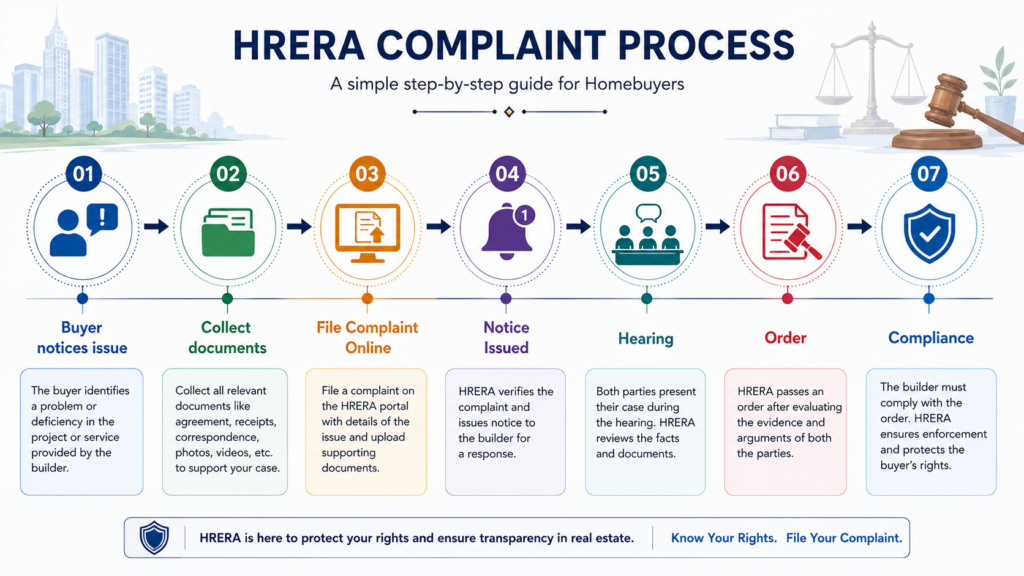
HRERA Complaint Process
You can file a complaint with the Haryana Real Estate Regulatory Authority (HRERA). The process is designed to help homebuyers seek timely resolution.
HRERA vs Non-Registered Project
| Feature | HRERA Project | Non-Registered Project |
|---|---|---|
| Registration | Yes | May not be applicable or compliant |
| Quarterly Updates | Yes | Limited visibility |
| Complaint Forum | Available | Other legal remedies may apply |
| Transparency | Higher | Varies |
| Buyer Protection | Governed by applicable RERA provisions | Depends on circumstances |
Final Checklist Before Buying a Property in Haryana in 2026
Before signing any agreement or making any payment for a property in Haryana, run through this checklist:
RERA Verification
- Confirm the project’s RERA registration number on hrera.in
- Check that the registration is currently active (not expired)
- Review the developer’s other registered projects and their completion history
Document Verification
- Land title is clear and free of encumbrances
- Commencement certificate issued by the relevant authority
- Environmental clearance (for large projects)
- Layout plan and building plan are sanctioned and match what is being sold to you
Agreement Check
- Agreement is based on carpet area, not super built-up area
- Possession date is clearly stated in the agreement
- Penalty clause for builder delay is present
- No arbitrary one-sided clauses that override your RERA rights
- Force majeure clause is reasonable and not a blanket cover for delays
Payment Safety
- Payment schedule is linked to construction milestones, not arbitrary dates
- All payments go into the escrow account of the project (confirm account details)
- Get a proper receipt for every payment
Post-Booking Vigilance
- Set a reminder to check quarterly construction updates on the HRERA portal every 3 months
- Join the official buyer group or RWA for your project
- Keep all communication with the builder in writing
Whether you are buying your first home, investing in luxury real estate property, or exploring commercial property opportunities in Gurgaon and Haryana, understanding HRERA can help you make informed and secure decisions.
If you’re planning to invest in Gurgaon, always verify the project’s HRERA registration before making a decision. At Ganga Realty, transparency and regulatory compliance are central to our developments. Explore our HRERA-registered residential projects, review project details, and connect with our team for verified information.
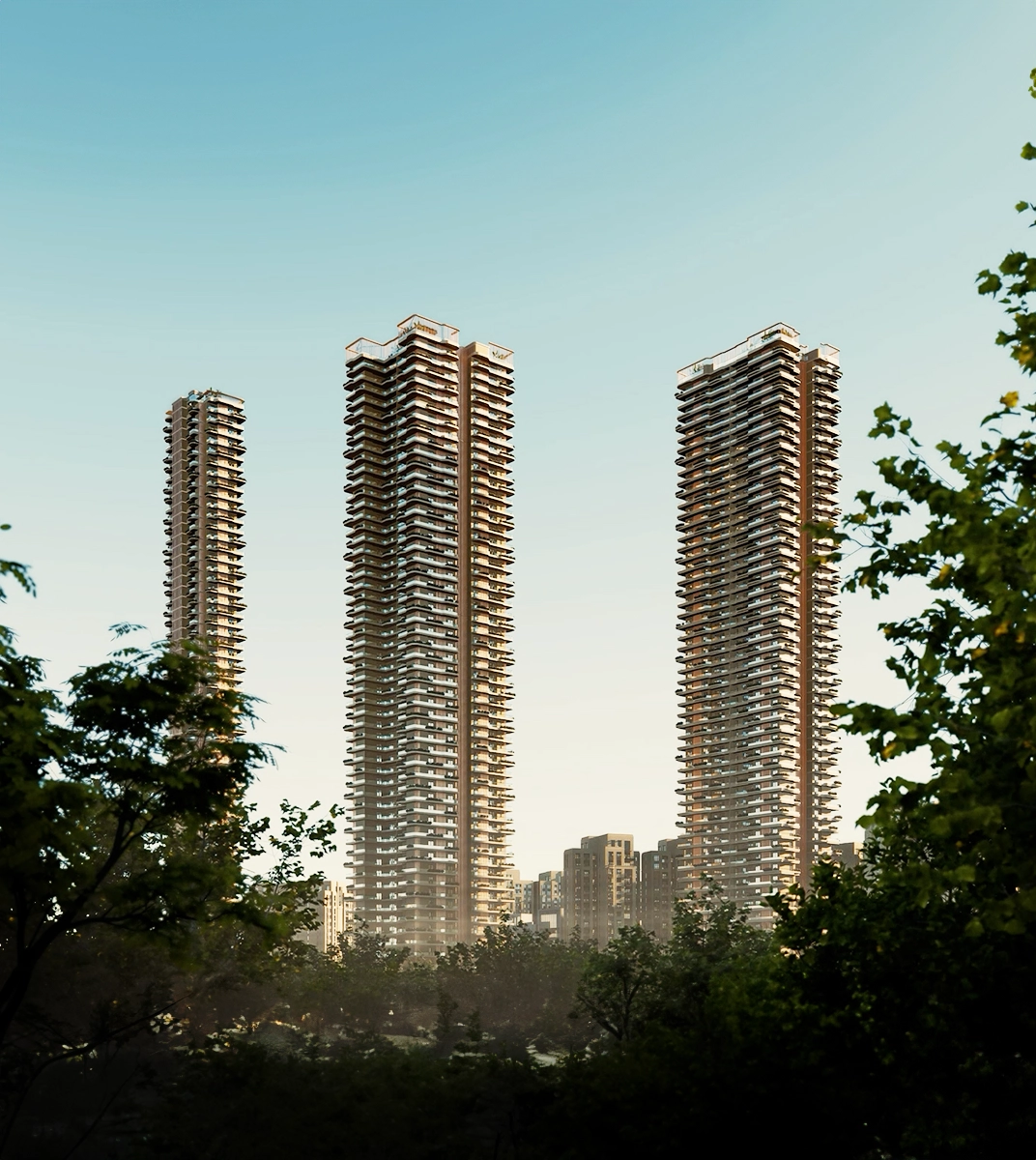
Anantam 85
Ultra-luxury residences on Dwarka Expressway offering expansive green spaces and world-class amenities.
View Project
Nandaka 84
Modern residential community in New Gurgaon designed for connectivity, comfort, and lifestyle.
View Project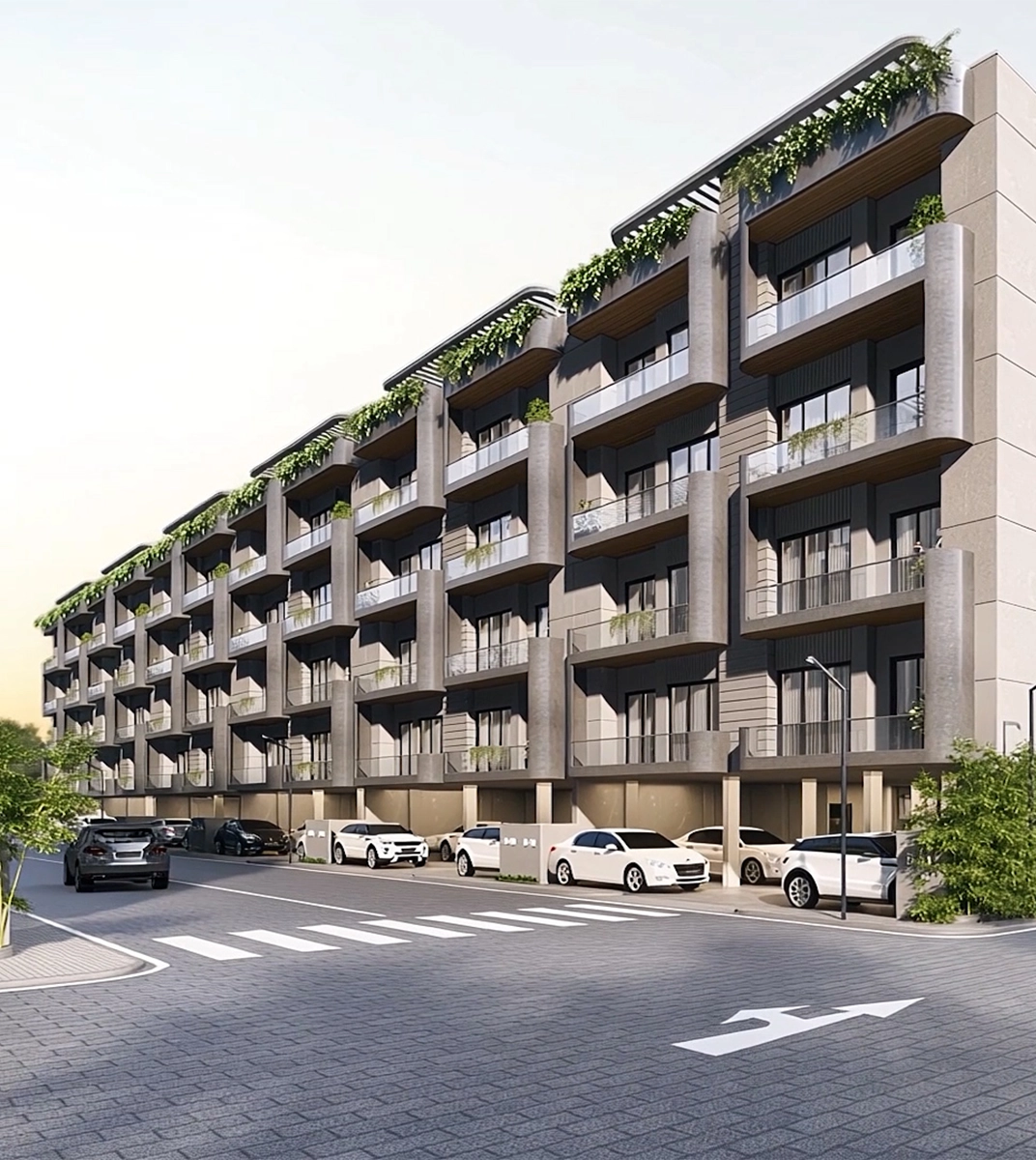
Ganga Kashi Residences
Premium residential development offering peaceful living with contemporary amenities.
View Project
Ganga Valley 78
Integrated township living with lush green spaces and a complete lifestyle ecosystem.
View ProjectConclusion
RERA Haryana (HRERA) has become one of the most important regulatory reforms in Haryana’s real estate sector. It empowers homebuyers with transparency, legal protection, financial security, and access to verified project information.
As a leading Gurgaon real estate builder, Ganga Realty strongly supports transparent, compliant, and customer-centric real estate practices aligned with HRERA guidelines. With a focus on modern luxury developments, timely delivery, and sustainable living, Ganga Realty continues to contribute to a more trustworthy and future-ready real estate ecosystem in Gurgaon and Haryana.
In 2026, choosing an HRERA-registered property is no longer optional — it is an essential step toward safer and smarter real estate investment. Use our Home Loan EMI Calculator to estimate your monthly repayments before making a booking decision.
FAQs About RERA Haryana (HRERA)
How can I verify a project’s HRERA registration?
You can verify a project’s registration by visiting the official HRERA portal and searching for the project using its name, developer name, or HRERA registration number. The portal provides details such as registration status, approvals, sanctioned layout plans, quarterly construction progress reports, completion timelines, and promoter information.
Can I file an HRERA complaint online?
Yes. HRERA allows homebuyers to file complaints online through its official portal. You can submit complaints related to delayed possession, refund claims, false advertisements, construction quality, agreement violations, or other disputes by uploading supporting documents and paying the prescribed fee. You can also track your complaint status online.
What documents should I verify before booking a property?
Before booking, verify the following documents:
- HRERA registration certificate
- Approved building and layout plans
- Land ownership documents
- Builder Buyer Agreement
- Payment schedule
- Environmental and statutory approvals (where applicable)
- Construction progress reports
- Occupancy Certificate (OC) or Completion Certificate (CC), if the project is ready for possession
Reviewing these documents helps reduce legal and financial risks.
What is the difference between RERA and HRERA?
RERA refers to the Real Estate (Regulation and Development) Act, 2016, which is a central law applicable across India. HRERA (Haryana Real Estate Regulatory Authority) is the state authority responsible for implementing and enforcing the Act in Haryana. HRERA registers projects and agents, resolves disputes, monitors compliance, and protects the interests of homebuyers within the state.
How long does an HRERA complaint usually take?
The RERA Act encourages the disposal of complaints as quickly as possible, and many matters are intended to be decided within about 60 days where feasible. However, the actual timeline depends on the complexity of the dispute, availability of evidence, adjournments, and case backlog. Straightforward cases may conclude relatively quickly, while complex disputes can take several months.
Can NRIs file complaints under HRERA?
Yes. Non-Resident Indians (NRIs) who have purchased property in Haryana can file complaints under HRERA if they face issues such as delayed possession, refund disputes, breach of agreement, or unfair trade practices. They may file the complaint themselves or authorize a legal representative through a valid power of attorney.
What happens if a builder delays possession?
If a builder fails to deliver possession within the agreed timeline without a valid legal reason, the buyer may seek remedies under the RERA Act. Depending on the facts of the case, HRERA may direct the builder to pay interest for the delay, provide compensation, refund the amount paid with applicable interest, or comply with other legal obligations.
Can a builder advertise a project before HRERA registration?
No. A developer cannot advertise, market, book, sell, or invite buyers for a project that requires HRERA registration unless the project has first been registered with the authority. This requirement helps ensure transparency and protects buyers from investing in unauthorized developments.
How do I check if a real estate agent is HRERA-registered?
Visit the official HRERA website and open the Registered Agents section. Search using the agent’s name or registration number to verify whether the agent holds a valid HRERA registration. Dealing with registered agents helps ensure greater transparency and legal protection.